Don't Know Where to Post to Get Results? You Will Now.
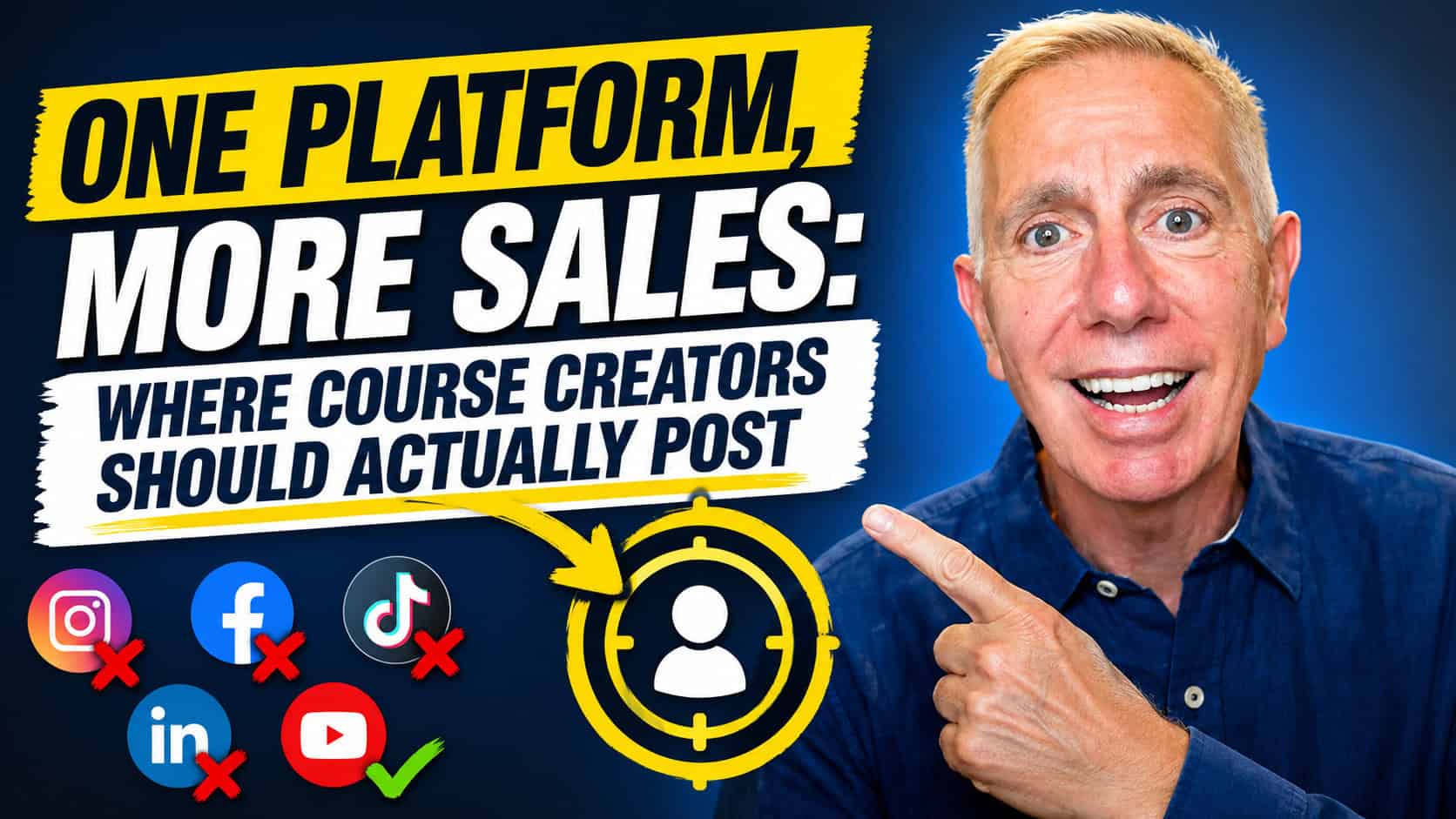
If you're a course creator trying to keep a presence going on Instagram, Facebook, TikTok, LinkedIn, and YouTube all at once — posting constantly, getting traction nowhere, and quietly wondering why none of it is working — this article is going to feel like permission. Permission to stop, to focus, and to start actually making progress. The argument is simple and slightly heretical: being on every platform is not a strategy. It's the most efficient way to feel busy while getting nowhere. Here's why, and what to do instead.
Why being everywhere quietly guarantees you get nowhere
The everywhere approach usually starts innocently. You've heard social media matters, so you open accounts on all the major platforms. Maybe a podcast and a newsletter too. What nobody tells you is that these are not variations on a single job. Instagram rewards Reels posted several times a week. YouTube rewards longer videos posted consistently. TikTok rewards high-frequency short-form content, often daily. LinkedIn rewards written posts with real professional insight. Facebook rewards community engagement and video. Different formats, different equipment, different skills, different rhythms.
Try to do all of them and the result is predictable. You produce content that's mediocre everywhere, because you can't make it excellent anywhere. You post inconsistently, because the volume required to do five platforms well is unsustainable while you're also building a course. You learn the basics of every platform and command none. And because no platform gets the consistent, high-quality attention it needs to build momentum, nothing compounds. The line I'd ask you to hold onto is this: you're not building five audiences, you're failing to build one audience five times over. And it's rarely a failure of effort — the people doing this tend to work incredibly hard. It's a failure of direction. Effort spread thin doesn't compound; effort concentrated in one direction does.
The hidden cost nobody adds up
Before the fix, it's worth being honest about what the everywhere approach actually costs, because the price isn't just mediocre content — it's paid in three currencies most creators never total up. The first is time. Producing even a modest presence on five platforms, each with its own format and rhythm, can consume fifteen to twenty hours a week that a solo creator does not have spare while also building a course. The second is quality: every hour split across five platforms is an hour not spent making one piece of content genuinely excellent, and excellent is the only thing that compounds. The third, and the most damaging, is morale. When you work that hard and see almost nothing back on any single platform, the natural conclusion is that you're not cut out for this — when the real problem was never your ability, only the way your effort was distributed.
There's a comparison trap buried in here too. Scrolling five platforms all day, you're constantly measuring your beginner numbers against established creators who went deep on one channel for years. You conclude you're behind on everything, when in fact you're simply early on too many things at once. Concentrating your effort doesn't just improve your results; it repairs your sense of whether the work is worth continuing at all.
The one thing every algorithm actually rewards
Underneath their very different surfaces, every platform algorithm has one thing in common: they reward consistency and relevance sustained over time. Not perfection, not viral moments, not the biggest follower count. Consistency and relevance, over time. Which means a creator who posts once a week on one platform for six months will almost always build more traction than a creator who posts on five platforms irregularly over the same period.
The reason is mechanical. Every algorithm interprets consistent posting as a signal that you're reliable, then starts to learn what your content is about and who to show it to, building a picture of your audience and surfacing your work to similar people. That learning takes time and requires consistency to happen at all. Spread yourself across five platforms and you're asking five algorithms to learn who you are simultaneously, while giving each half the signal it needs. Concentrate on one and you give a single algorithm everything — and you develop real fluency in that platform's format and rhythm.
There's no shortage of scale on a single platform, either. Facebook now has over three billion monthly users, Instagram around three billion, YouTube roughly two and a half billion, and TikTok about two billion. You do not need a second platform to reach enough of the right people. You need to properly reach the right people on one. And when that platform is genuinely working — consistently feeding your email list, with an effort-to-result ratio that makes sense — you add a second, carefully, without abandoning the first. One at a time, each established before the next begins.
How to choose your one platform
If everywhere is wrong, how do you choose where to focus? Answer three questions; the overlap between the answers is your platform.
First, where does your ideal student actually spend time? This is the most important question and the one most people skip in favour of the platform they personally find comfortable. Your comfort matters, but your audience matters more. Professional coaches and consultants spend professional time on LinkedIn. Young entrepreneurs and side-hustlers live on TikTok and Instagram. People actively searching for a solution to a specific problem go to YouTube, which behaves like a search engine as much as a social feed, handling something in the order of three and a half billion searches a day. Think about where the specific person your course serves goes when they want to learn something or find help with the exact problem you solve.
Second, which content format suits the way you naturally communicate? Every platform has a primary format — YouTube is long-form video, TikTok and Reels are short-form video, LinkedIn is written posts, podcasting is audio. You'll be markedly better at some than others, not because of talent but because of how you naturally think. The honest test: which format could you produce consistently, to a reasonable standard, without it feeling like an enormous effort every time? That's your format, and it largely determines your platform. For most course creators I'd argue video should be the default, because video is the medium closest to teaching — something you already do.
Third, which platform rewards a posting frequency you can sustain? TikTok rewards several posts a day; if you can't keep that up alongside building a course, it will frustrate you. YouTube rewards consistent weekly posting, which is sustainable for most creators. Instagram sits in the middle. Choose a platform whose optimal frequency matches what you can maintain for a year, not for a month before you burn out — because a year is the timeline that matters, and the creators who win are the ones still there in month eight. Run these three questions honestly and, for a typical course creator, the answer is most often YouTube. Yours might differ, and that's fine. What matters is a clear answer you commit to.
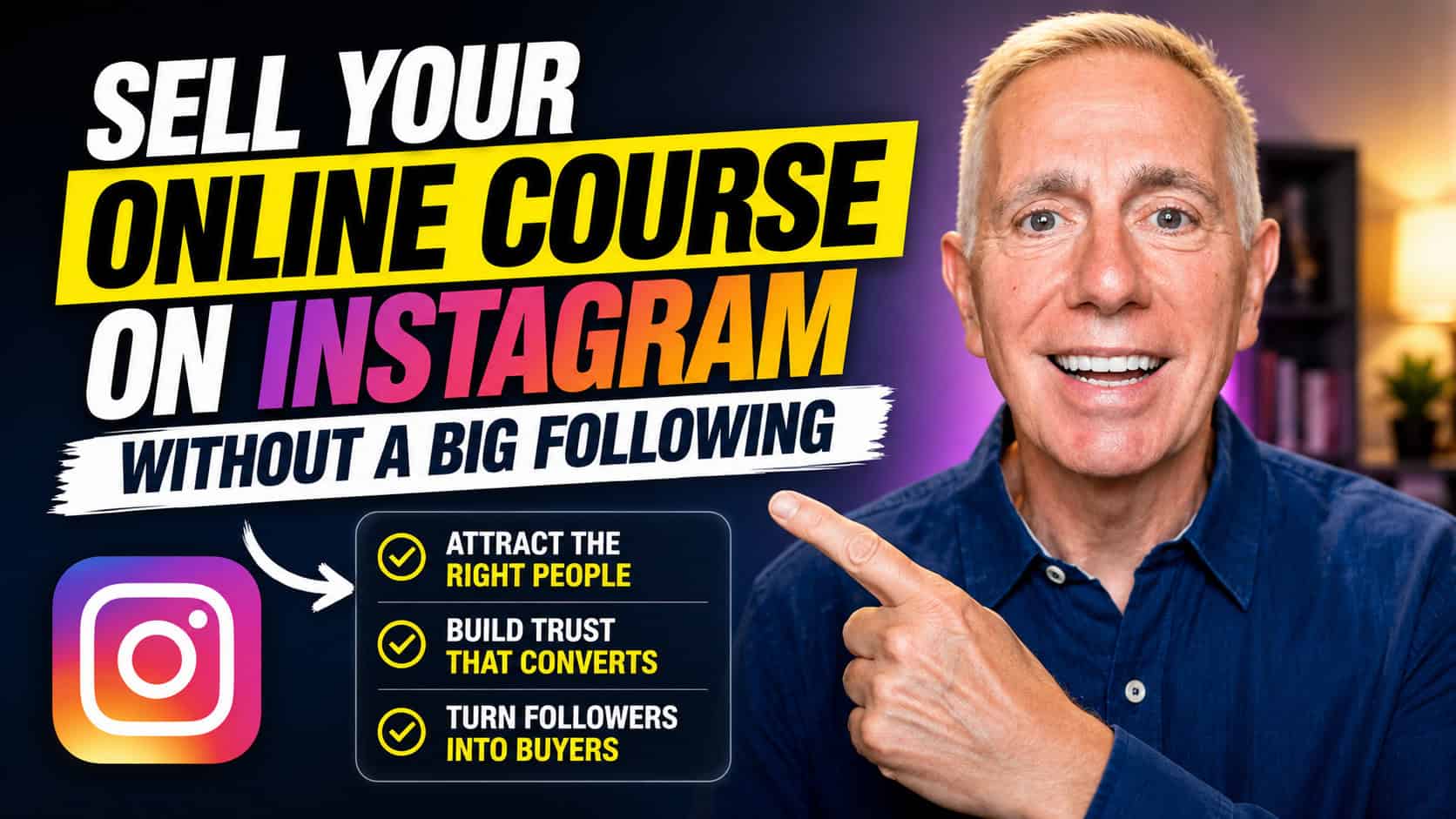
As a rough guide once you've answered those questions: choose YouTube if your students search for solutions and you can commit to one polished video a week. Choose Instagram if your ideal student browses visually and short-form video comes naturally to you. Choose LinkedIn if you're selling to professionals and you write more comfortably than you speak on camera. Choose TikTok only if you can genuinely sustain near-daily short video, and choose a podcast if your strength is conversation and you can hold a regular recording schedule. None of these is objectively best — the best platform is simply the one where the right person, your natural format, and a frequency you can sustain all overlap. Pick it, and give it at least six months before you judge whether it's working, because almost nothing meaningful happens on any platform in the first eight to twelve weeks.
The hub-and-spoke model (so you're not really giving anything up)
The fear that stops people committing to one platform is the feeling that they're missing out everywhere else. The hub-and-spoke model dissolves it. Think of your email list as the hub — everything connects to it, and every platform and piece of content ultimately exists to bring people into it, where you have direct, owned access to them. Your chosen platform is the main spoke: the biggest driver of traffic to the hub, and the thing that gets most of your energy.
Here's the part that makes single-platform focus feel expansive rather than restrictive. Your primary platform almost certainly produces content you can repurpose elsewhere with very little extra effort. One YouTube video, made once, can become two Shorts clipped from its most self-contained moments, three to five Instagram Reels from the same clips, a LinkedIn post sharing the core argument in writing, a Facebook post linking to the video, and a blog post covering the same ground in text — which also helps you show up in Google search. All of that from one piece of content, distributed into the formats each platform wants. That is not the same as maintaining a full presence on five platforms: the primary one gets your full creative energy, and the rest get the overflow. As a secondary platform starts to gain traction, you can decide whether to invest more — not from a plan made on day one, but from evidence that it's worth it.
What this looks like in practice
A real example is more useful than a theoretical one, so here's how it works on this channel. The primary platform is YouTube — where the full-length videos live, where the search traffic comes from, and where the long-form trust-building happens. Every video is clipped into two Shorts, and those Shorts are repurposed as Instagram and Facebook Reels with lightly adapted captions. Facebook is the one exception to the repurposing model, because its text-post format rewards a different kind of content, so those are written fresh — but even they take about thirty minutes each, not hours.
The result is a presence across YouTube, Shorts, Instagram, and Facebook from one primary piece of content a week. Not five content strategies — one strategy, distributed. And honestly: the Instagram account is new, Facebook is being rebuilt after lying dormant, and YouTube is the investment where the compound interest is accumulating. That's a deliberate choice, not an accident of available time. Your version might centre on Instagram or LinkedIn instead. The specific platforms matter far less than the model: hub and spoke, one primary, the email list at the centre, everything else in service of getting people onto that list.
“But isn't putting everything on one platform risky?”
This is the sharpest objection to single-platform focus, and it deserves a straight answer. Yes — depending on any one platform is a real risk. Algorithms change, reach gets throttled, accounts occasionally get suspended, and a platform you've poured a year into can shift its priorities overnight. If your entire business lived inside one social platform, that would be a genuine vulnerability.
But that's precisely why the hub is your email list and not the platform. The platform is rented land; your list is owned land. When you build on one platform with the deliberate aim of moving people onto an email list you control, the platform becomes a discovery engine rather than the foundation of the business. If the algorithm turns against you, your reach suffers — but the audience you've already converted into subscribers is untouched, because you can reach them directly, on your terms, forever. Single-platform focus for discovery, combined with an email list you own, is not the risky option. It's the hedge. The genuinely risky strategy is spreading yourself so thin across rented platforms that you never build enough momentum on any of them to move people onto owned land at all.
The permission
If you've been trying to keep several platforms alive and feeling like you're failing at all of them, you're probably not failing because you're lazy. You're failing because you were handed advice that doesn't fit where you are. “Be everywhere” is advice for brands with marketing teams and budgets, not for a solo creator building a course, an audience, and a business at the same time. So take the permission: stop posting on the platforms that aren't working, delete the accounts you opened out of obligation, and choose one platform to go deep on without the nagging sense you should be doing more. Every creator I've watched build something real got there by going deep on one thing, not shallow on many.
The infrastructure underneath it all
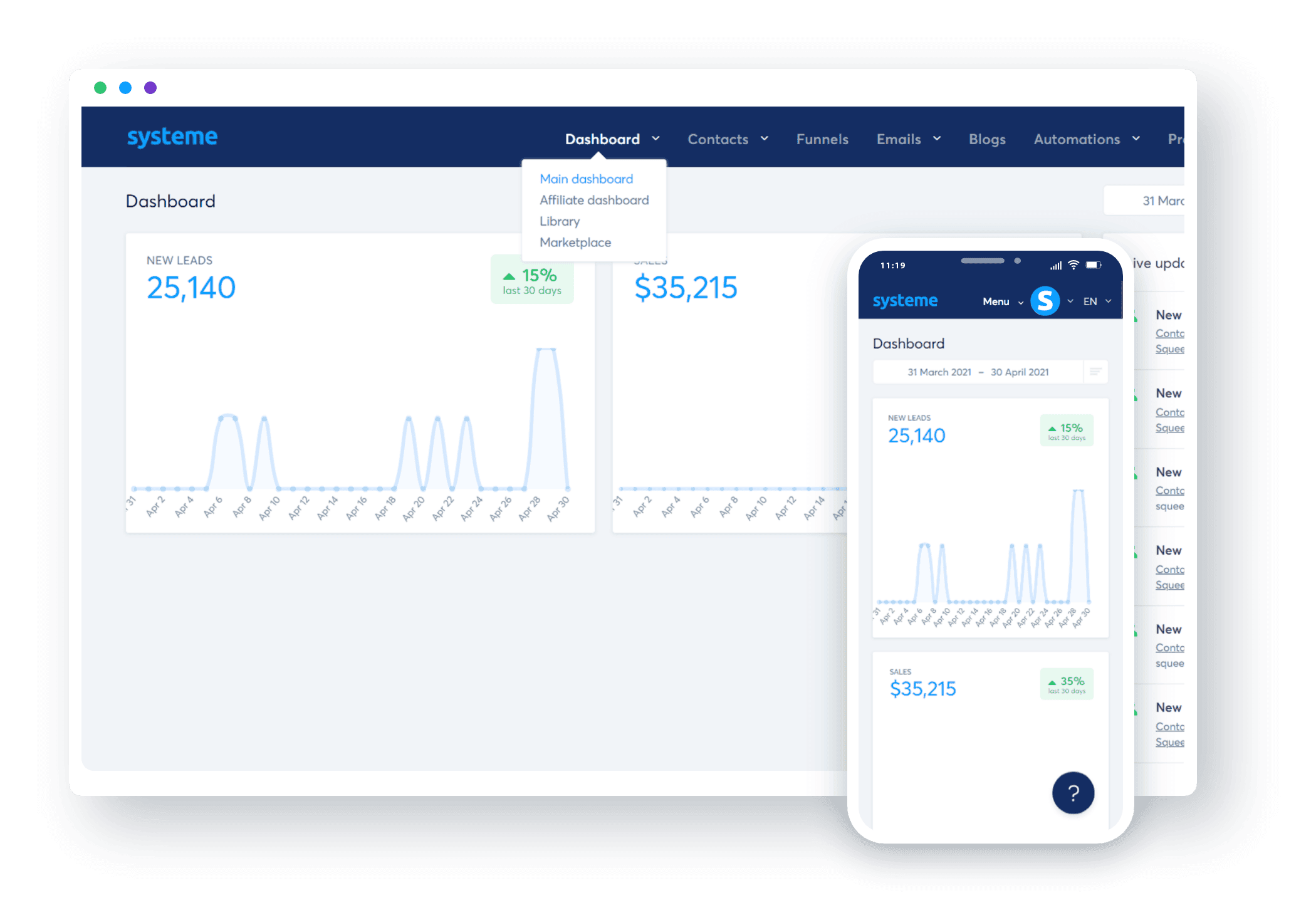
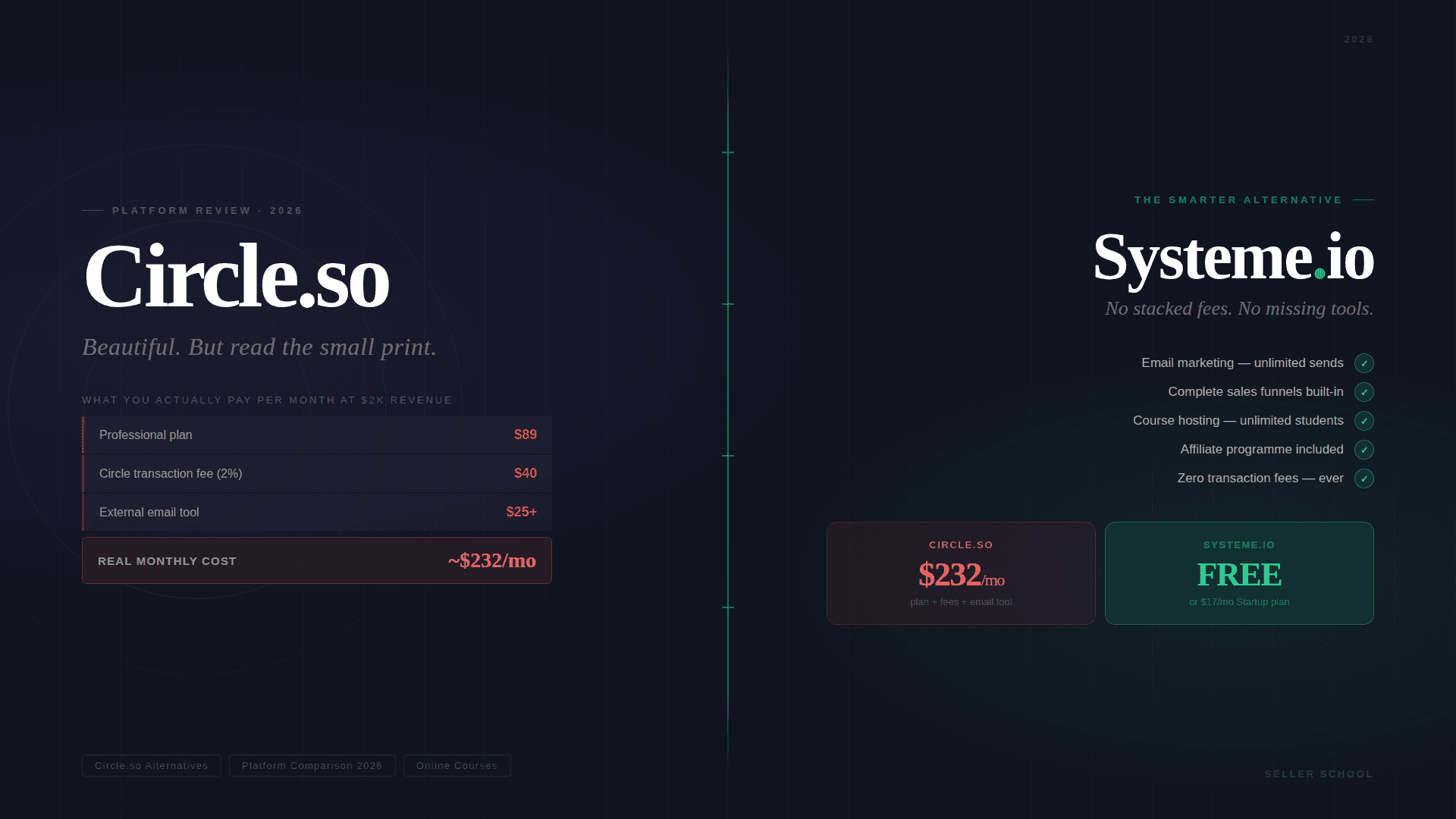
Once you've chosen your platform, the thing that turns its audience into something you own is an email list — an opt-in page, a lead magnet, and a welcome sequence that builds trust automatically. I build all of it inside systeme io, with the whole thing in one login, and the free plan covers everything you need to begin: an opt-in funnel, email marketing for a couple of thousand contacts, and automated sequences that nurture subscribers while you sleep, with no monthly fee and no card required. If you want to start with the platform itself, you can create a free account here: iosysteme.com. Pick your one platform, commit to it, and point everything it produces at your list. That's the whole strategy — and it's the one that actually sells courses.
Note on the figures above: the monthly-active-user counts are round approximations drawn from 2025–26 industry roundups and vary by source and definition; YouTube's search volume is a widely-reported figure. Treat them as the shape of the landscape rather than precise, current-to-the-day statistics.