
Selling Your Online Course on Instagram Without a Big Following
If you've been putting off Instagram because you assume you need a hundred thousand followers before it's worth anything, this article is for you. You don't. The belief that a big following is the entry fee is exactly what stops most course creators before they start — and it's wrong. What sells a course on Instagram isn't the size of your audience; it's whether the right people can find you, understand in three seconds why you're worth following, and be moved off Instagram and onto an email list you control. Here's how to build that, from a small or brand-new account.
Followers feel good. Buyers pay the bills.
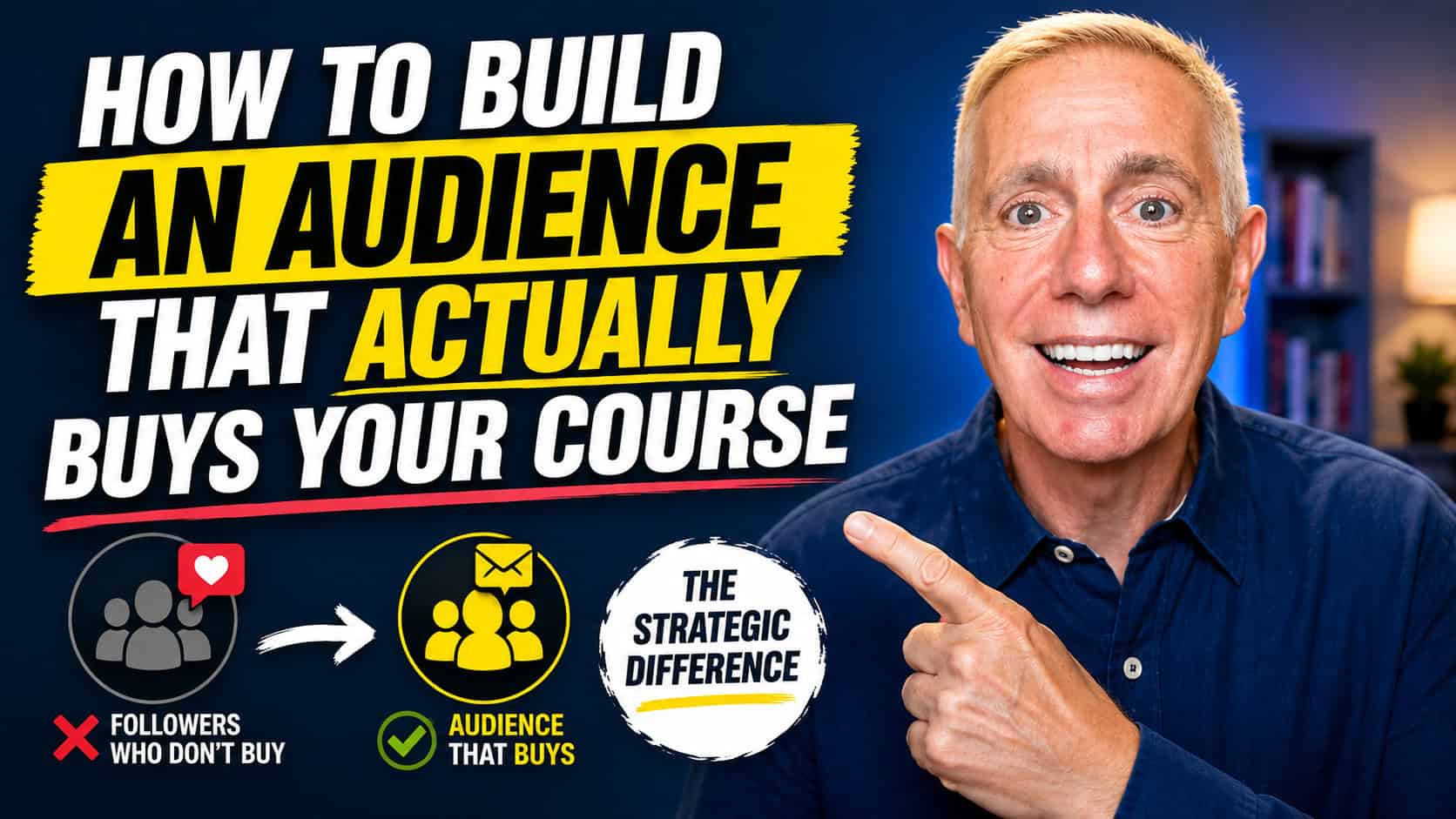
The uncomfortable truth about Instagram for course creators is that most people use it in a way that builds followers without building buyers. They accumulate likes, comments, and follows, and make no course sales. The whole game changes once you understand that a presence which merely feels good and one that actually converts are built differently, and that the difference comes down to three things: a bio that does real work in about three seconds, content that attracts the right person rather than the largest audience, and a clear path off Instagram and onto your email list. Get those three right and a few thousand of the right followers will out-earn a hundred thousand of the wrong ones. Let's take them in order.
The bio: your three-second test
Your bio is the single most important piece of real estate on your profile — more than your latest post, your highlights, or your follower count — because it's where every interested visitor lands and makes a snap decision. The sequence is always the same: someone meets your content, gets interested enough to want more, and taps your profile. They land on your bio and have roughly three seconds to decide whether you're worth following and, better still, whether to click the link.
Most course-creator bios fail that test. They read like “Coach | Speaker | Helping people live their best life | New course coming soon | DM for details,” which tells a visitor nothing useful — not who you help specifically, not what result they get, not why they should care, not what happens if they click. So they leave. A bio that converts has four elements, and since you get about 150 characters, every word has to earn its place. First, who you help — specific, not “entrepreneurs” but “new online coaches.” Second, the result they get — not “helping you grow” but “launch your first course in 30 days.” Third, what you offer — one line that makes the link worth clicking, like “free step-by-step launch guide below.” Fourth, the link, pointing to your opt-in page rather than your homepage or a Linktree of eight competing options.
Assembled, it reads something like: “Helping new course creators launch their first course in 30 days. Free step-by-step launch guide below.” Specific person, specific outcome, specific offer, one link — a bio that does real work in three seconds, so the right person reads it and thinks, that's for me. And about that single link: resist the urge to cram everything into a Linktree. Point it at your opt-in page and let your welcome sequence handle the rest. Someone who joins your list from Instagram will discover your YouTube channel and your course through the emails that follow. You don't need everything in the bio; you need them on your list.
Content that builds buyers, not just followers
This is the part that decides whether Instagram ever turns into money. There's a distinction most creators never make: content that builds an audience versus content that builds a buying audience. On Instagram it matters more than anywhere, because the algorithm rewards engagement, and the content that gets the most engagement is often not the content that attracts buyers. Broad, relatable content — motivational quotes, universal observations, humour — resonates with a wide audience and racks up likes, but those people aren't necessarily your ideal student. They found it entertaining, and entertainment doesn't convert.
Specific, problem-focused content gets fewer likes because it's built for a smaller, more precise audience — but the people who engage are disproportionately your ideal students, engaging because it speaks to a problem they actually have. And people with a problem buy solutions. So the instruction, even though it fights your instincts, is to optimise for relevance to your ideal student, not for broad appeal: content that names the exact problem your course solves, demonstrates that you understand it at a level only real experience produces, and shows the concrete outcome on the other side.
A four-part framework makes this repeatable. Problem posts name a specific problem in enough detail that the right person recognises themselves — you don't solve it, you prove you understand it — and they generate saves and comments from people who feel seen. Process posts share one genuinely useful step or framework, which builds the perception of expertise: if the free content is this good, the paid content must be excellent. Proof posts share a specific result, yours or a student's, with real numbers and timeframes, because “she went from zero to her first paying client in three weeks” beats “my students get results.” Personal posts share the parts of your own story that connect to your student's journey — your version of their path, your mistakes, your turning points. Rotate through all four and you build a feed that demonstrates expertise, builds trust, shows results, and creates human connection, which together are what turn a follower into a buyer.
Reels: how a small account gets discovered
If content is what converts, Reels are what get you discovered — and for building an audience from zero, they're the most important format on the platform, precisely because they reach people who don't already follow you. For many creators, well over half of Reel views come from non-followers, and a Reel that performs can reach tens of thousands of people who've never heard of you, whereas a static post is mostly shown to existing followers. Since new followers are the lifeblood of list growth, this is where a small account punches above its weight.
It helps to know exactly what the algorithm rewards. In early 2025, Instagram's head Adam Mosseri confirmed the signals that matter most for reach: watch time, sends per reach — how often people share your Reel in DMs — and likes per reach, with sends weighted several times more heavily than likes, because a share to a friend is the strongest signal that content deserves to spread. So the goal isn't “get likes,” it's “make something people watch to the end and send to a friend.” In practice that means four things. The hook is everything: the first one to two seconds decide whether someone keeps watching, and on Instagram there's no title or thumbnail to help, only the opening frame and line. One idea per Reel: it's not a tutorial, it's a single useful idea in under sixty seconds. A specific call to action at the end, not the weak “follow for more” but “the full framework is in my free guide, link in bio.” And a sustainable frequency of three to five Reels a week — consistency beats volume, and three a week for six months will outperform seven one week and none the next.
Getting people off Instagram and onto your list
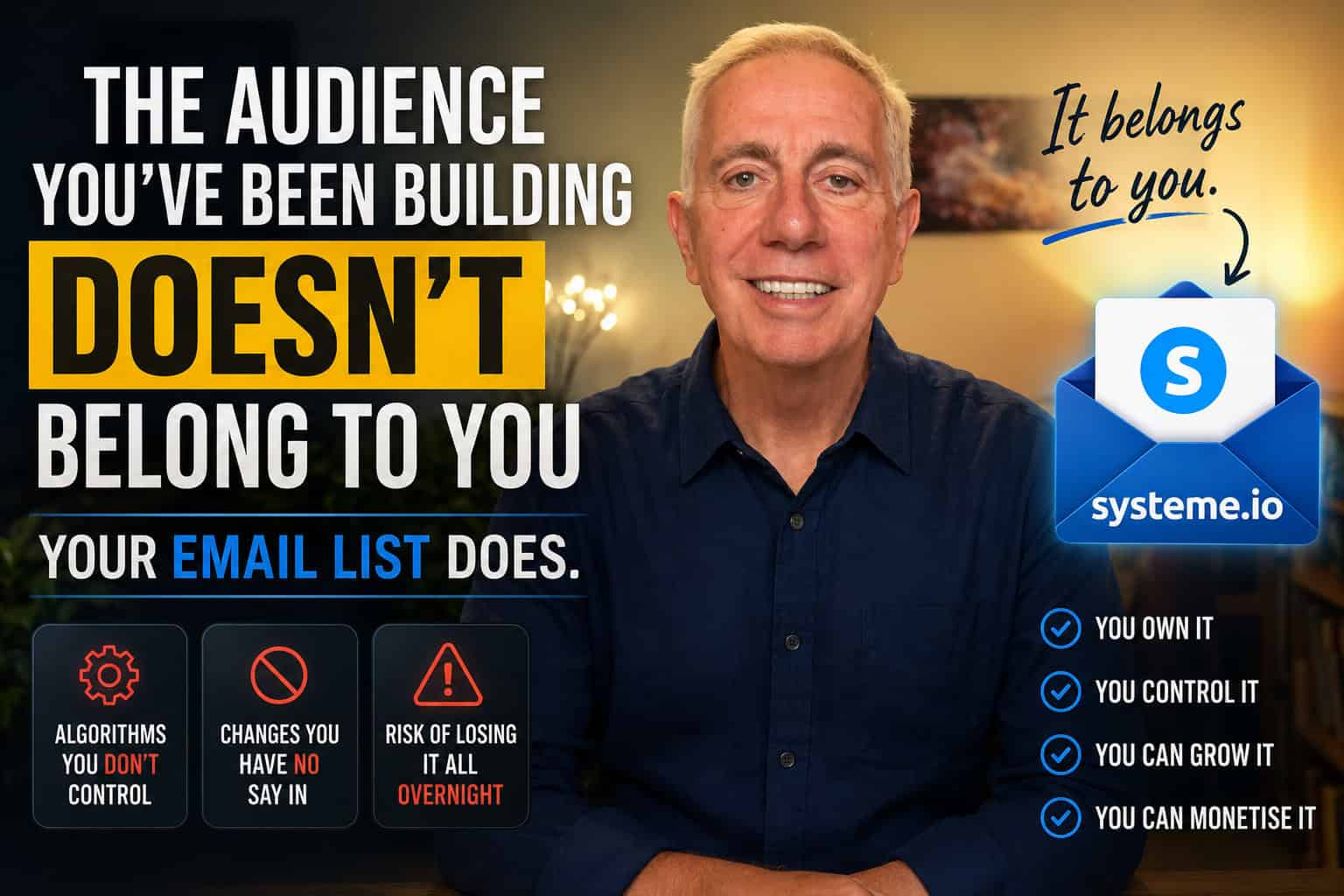
This is the step most Instagram strategies skip, and it's the most important one. Instagram is rented land; your email list is owned land. The goal of every post, Reel, and Story is to move the right people from the rented land to the owned land, where you control the relationship rather than borrowing access to it from an algorithm. The path runs like this: someone sees your Reel because the hook stopped their scroll, finds it useful, taps your profile, reads a specific bio, clicks the link, lands on your opt-in page, exchanges their email for your lead magnet, goes through your welcome sequence, and becomes a subscriber. Every step earns the next — a weak hook and they scroll past, a vague bio and they don't click, an unclear opt-in page and they don't sign up.
Set up properly, that whole path runs automatically. The bio link points to your opt-in page; a visitor taps it, lands on a clean page with one offer and one form, signs up, and receives the delivery email within seconds while they're still thinking about it. You post the Reel; the system handles everything else. One extra feature is worth using deliberately: Stories, which let you add a link sticker straight to your opt-in page without requiring someone to visit your profile first. When you post a Reel related to your lead magnet, follow it with a Story that says “free guide on exactly this — link above” and add the sticker. Stories vanish after twenty-four hours, but for a direct, time-limited push, they convert well.
Conversations convert better than broadcasts
One thing that gets lost in all the talk about the algorithm: the fastest way for a small account to build genuine traction is direct conversation, not just broadcasting into the feed. Because sends and DM shares are weighted so heavily for reach, and because a real reply builds more trust than any number of likes, the small-account creators who grow quickest tend to be the ones who actually talk to people. When someone leaves a thoughtful comment, reply properly rather than with an emoji. When someone shares your Reel to their story, thank them. When a follower asks a genuine question in your DMs, answer it usefully — and, where it's natural, mention that you've covered it in more depth in your free guide.
This isn't a growth hack; it's the opposite of one. It doesn't scale, and that's exactly why it works when your numbers are small. A hundred real conversations in your first two months will teach you more about your ideal student's language, objections, and desires than any analytics dashboard — and that understanding feeds straight back into sharper Problem posts and more relevant lead magnets. Treat the early, small-audience phase as your research period, not a waiting room. The intimacy you can offer at a few hundred followers is an advantage a hundred-thousand-follower account has permanently lost.
A realistic timeline (so you don't quit too early)
Instagram growth timelines are consistently misrepresented, and misplaced expectations are what make people quit right before it works. Here's the honest shape of it for a new course-creator account. Months one and two are slow: your Reels reach a small audience while the algorithm works out what you're about, engagement is modest, and follower growth is single digits a week — all normal. Around month three the algorithm starts to get it, and if you've been consistent, individual Reels begin reaching further. Months four to six is where compounding begins: strong Reels keep getting surfaced, your follower count grows more steadily, and your bio link starts getting clicks regularly rather than occasionally.
The creators who quit at month two never see what month five looks like. The ones still posting consistently at month six, improving based on what's working, are the ones who build something real. None of this requires a big following to start — it requires the right bio, the right content, and enough patience to stay in the game past the slow opening months. A few hundred of the right people, moved steadily onto an email list, is a genuine asset. A hundred thousand followers who never leave Instagram is a vanity metric.
If you want a concrete starting point, the first thirty days are simple. Week one: rewrite your bio to pass the three-second test and set the link to your opt-in page. Week two: publish your first three Problem-and-Process Reels and reply personally to every comment. Week three: add Proof and Personal posts to the rotation, and start following the Story-sticker habit whenever a Reel relates to your lead magnet. Week four: review which Reels held attention longest and make more like them. That's it — no big following required, just a real bio, relevant content, genuine conversation, and a clear path onto a list you own.
The infrastructure that makes it work
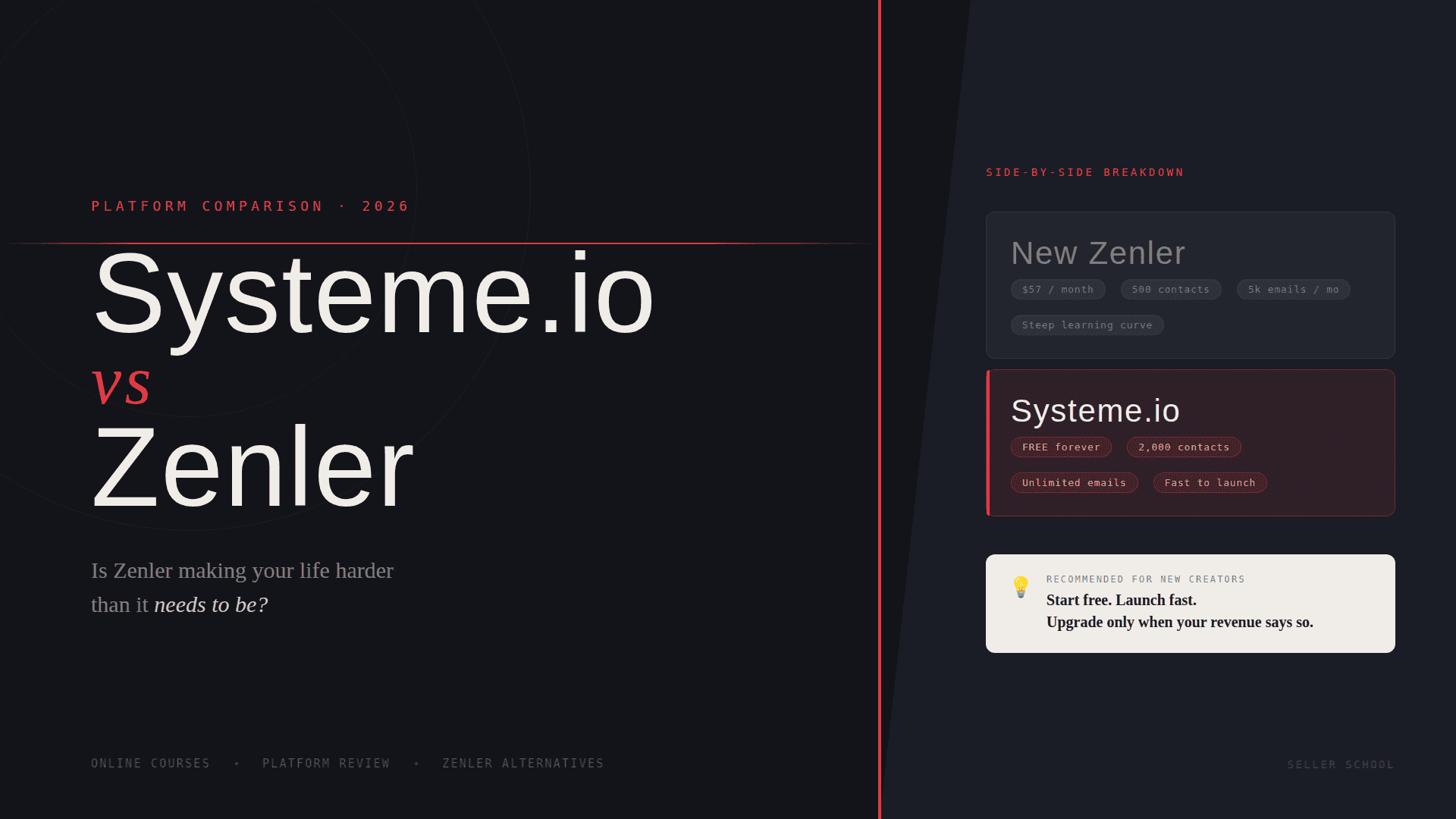
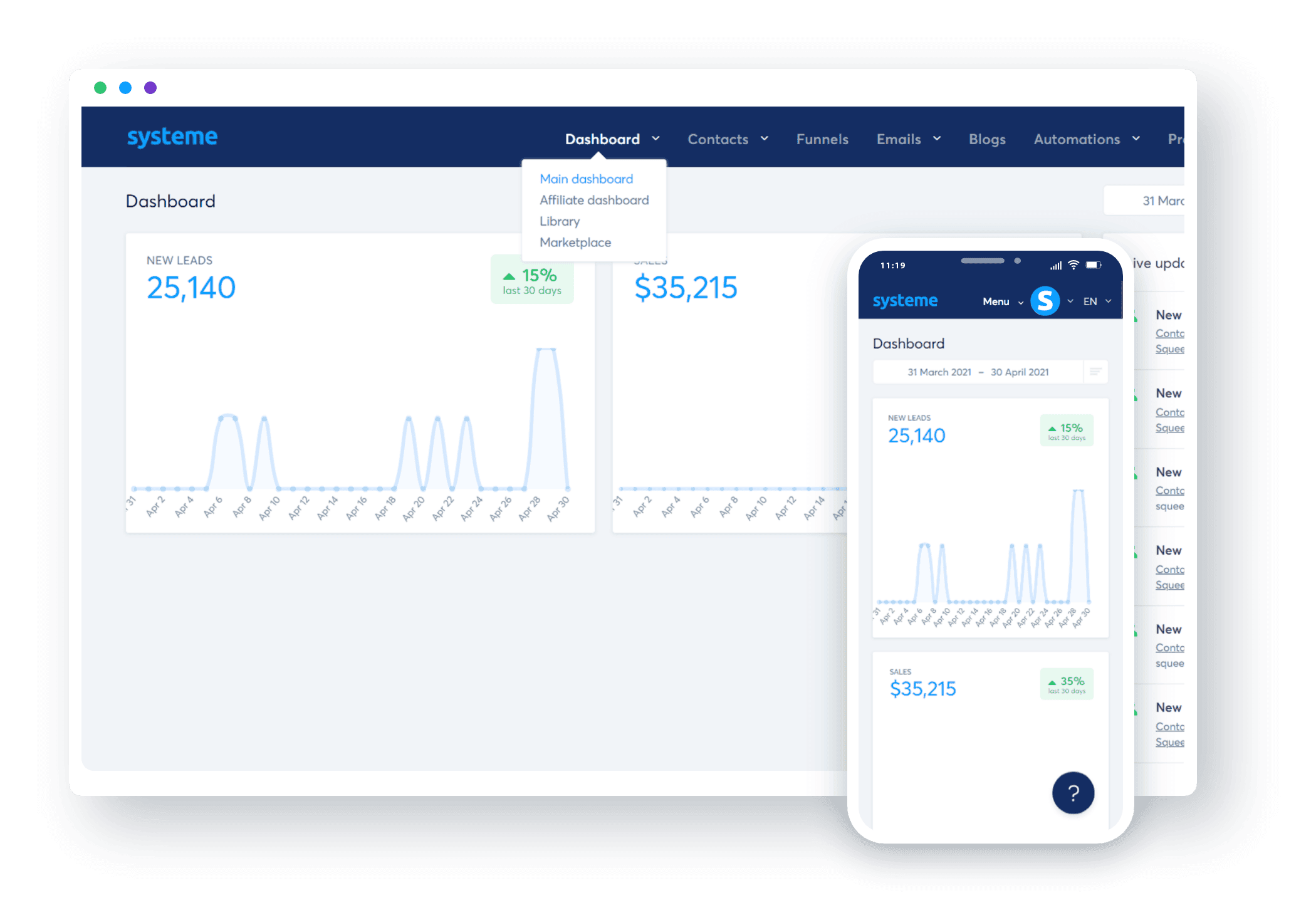
Everything above depends on one piece of infrastructure: an opt-in page connected to a lead magnet and a welcome sequence, so that the people your Instagram content attracts actually get captured and nurtured rather than drifting away. I build all of it inside systeme io, with the whole thing in a single login, and the free plan covers what you need to start — an opt-in funnel, email marketing for a couple of thousand contacts, and automated sequences that nurture subscribers while you sleep, with no monthly fee and no card required. If you want to start with the platform itself, you can create a free account here: iosysteme.com. Then the job is simple to describe and worth doing well: a bio that passes the three-second test, content built for the right person, Reels that get you discovered, and a clear path onto a list you own. Do that consistently and you'll sell courses on Instagram without ever needing a big following.
Note on the figures above: Mosseri's confirmed Reels ranking signals are well documented, but the non-follower reach percentage is drawn from 2025 industry roundups and varies by source and account, so treat it as indicative rather than exact. The month-by-month timeline is an experience-based generalisation, not a guaranteed schedule.