


Content Strategy That Gets Sales for Course Creators
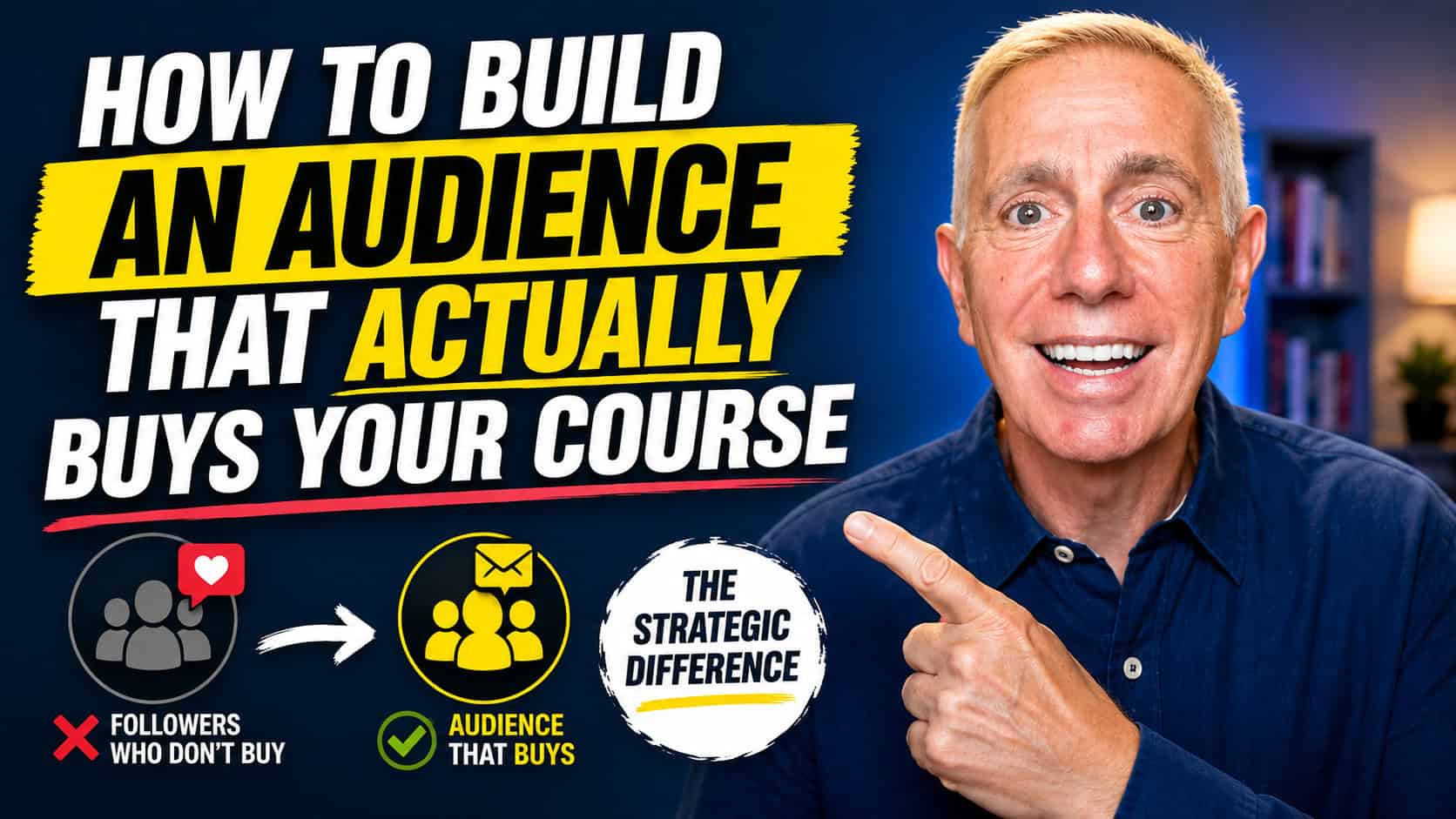
Here's a possibility most course creators never consider until it's happening to them: you can have a growing audience and a failing course business at the same time. Not because the audience is bad or the course is bad, but because the audience you've built and the audience you need are two different groups of people. One watches your content, enjoys it, follows you, and never buys. The other trusts you, joins your email list, and eventually becomes a paying student. The difference between them isn't luck or follower count — it's the type of content you create. This article gives you the framework for building the second kind.
Two audiences, and only one of them buys
The distinction is more nuanced than it sounds, so let's define both carefully. A browsing audience follows you because your content is interesting, entertaining, or relatable. They consume passively and enjoy the experience without necessarily having a specific problem that needs solving; they represent reach, the number of people your content touches. A buying audience follows you because your content speaks to a specific problem they have and shows that you know how to solve it. They consume actively — taking notes, saving posts, clicking links, hunting for the next step; they represent relevance, the depth of connection between your content and their real situation.
The uncomfortable truth is that these two goals often pull against each other. The content that builds the largest browsing audiences — broad, relatable, emotionally resonant, universally applicable — is frequently the worst content for building buyers. And the content that builds the strongest buying audiences — specific, problem-focused, technically detailed, relevant only to a particular kind of person — often looks least impressive on reach and engagement. That creates a trap: you look at your analytics, see that broad content gets the most likes and shares, make more of it, watch your reach grow — and watch your course sales stay flat. You've optimised for the metric that feels good rather than the one that matters. The metric that predicts sales isn't how many people liked your last post; it's how many people who saw it have the specific problem your course solves.
Specificity is the engine
Underneath every method for building a buying audience is one mechanism: specificity. Not “be specific” as vague encouragement, but specificity as the thing that does the actual work of filtering your audience toward the people most likely to buy. Create broad content — “five ways to grow your business” — and you attract a broad audience at different stages, with different problems, most of whom aren't your ideal student. Create specific content — “five ways to get your first coaching client when you have no testimonials and no following” — and you attract exactly the people your course is for. The broad content gets more views; the specific content gets the right views, and right views convert into subscribers and sales at rates broad views never match.
Specificity does a second job that's just as important: it builds credibility. When you describe someone's problem in precise, accurate detail — the exact frustration, the exact obstacle, the exact moment they get stuck — they don't think “this person understands my type of problem,” they think “this person understands my situation specifically.” That sense of being deeply understood is one of the most powerful trust signals in marketing, and it's created almost entirely by specificity. The creator who says “building an audience is hard” is one of thousands. The creator who names “the three-month stretch where the content is going out and nothing seems to be happening, and the temptation to quit right before traction starts” is speaking directly to someone living that exact experience. That's the foundation the whole framework is built on.
The framework: Problem, Process, Proof, Personal
The framework is four content types — better understood as four orientations your content should rotate between in roughly equal measure over time. Each does a specific job, and it only works if each is understood correctly.
Problem content names and describes the specific problem your ideal student has, in enough detail that the right person feels genuinely seen. The goal isn't to solve it but to prove you understand it completely. Most creators make this too shallow — “struggling to get clients?” is something anyone could write. “You've set up your business, told people what you do, posted about it three times, and the enquiries haven't come — and you're starting to wonder whether you've missed something fundamental or whether everyone else is just better at this” is a description. The specificity makes it land: the person living it doesn't just recognise the problem, they feel recognised, and people who feel seen take your next step.
Process content shares a specific technique, framework, or step — not a vague tip, something applicable. Its job is to show you don't just understand the problem, you know how to solve it, and your approach is tested and trustworthy. This is where expertise becomes visible, and visible expertise converts interest into trust. The common mistake is cramming in too much; a post covering seven techniques covers none properly. One technique, explained clearly and usefully, is the sample — and if the sample is good enough, the full course feels like an obvious next step. Don't hoard your best ideas for the paid product; the best free content is precisely what convinces people the paid content is worth buying.
Proof content shows the outcome your course promises is real and achievable — student results, your own results, or documented early progress. The most effective proof is specific: not “my students get results,” but “Sarah came to me six weeks ago with no clients and no testimonials, followed the framework in module three, and three weeks later landed her first paying client at five hundred pounds.” Specific person, starting point, method, result, timeframe. And be scrupulously honest — don't overstate, don't present exceptional outcomes as typical. Honest proof, caveated appropriately, builds more trust than inflated proof every time, and trust is the only thing that sustains a course business over the long run.
Personal content shares the parts of your story, perspective, or experience that connect to the journey your student is on — not your life in general, but the parts that connect authentically to the problem you solve. It does something the other three can't: it creates human connection. People don't ultimately buy courses from brands; they buy from people they feel they know well enough to trust with their money and time. The most effective personal content is your own version of the journey, including the wrong turns and the moments you nearly gave up, which are credible precisely because they're imperfect — or an honest, well-reasoned take on a common belief in your space, or a genuine look behind the scenes at how you work. Together the four cover the full spectrum: Problem makes them feel seen, Process makes them trust your expertise, Proof makes them believe the outcome, Personal makes them feel connected. Any one alone is insufficient.
Why going specific feels risky (and why it isn't)
If specificity is so powerful, why do so few creators actually do it? Because it feels like shrinking your opportunity. Narrowing your content to “new coaches with no testimonials” instead of “anyone who wants to grow a business” feels like voluntarily turning away the majority of your potential audience — and for a creator anxiously watching their follower count, that's a frightening thing to do on purpose. The likes drop. The reach dips. Every instinct screams that you're doing it wrong.
But the fear rests on a false equivalence between audience size and business results. A broad audience is only valuable if the people in it buy, and most of a broad audience never will, because the content that gathered them wasn't about a problem they'd pay to solve. Narrowing your content doesn't throw away buyers — it filters out the people who were never going to buy in the first place, while pulling in more of the people who will. You end up with a smaller number on the follower counter and a larger number in the only place that matters: the list of people who trust you enough to eventually buy. The creators who tolerate the temporary discomfort of smaller vanity metrics are the ones who end up with a business rather than an audience.
There's also a compounding benefit that broad content can never deliver. When your content is specific, the people it attracts share it with other people who have the same specific problem, because it's obviously, precisely relevant to them. Broad content gets scrolled past and forgotten; specific content gets sent to a friend with the note “this is exactly what you've been dealing with.” That kind of targeted word-of-mouth is worth far more than a higher like count, because every share arrives pre-qualified — it lands in front of another person who fits your ideal student profile.
Turning the framework into a content plan
In practice this becomes a simple weekly rotation. Post four times a week — sustainable on most platforms — and let one post cover each type. Monday, Problem content, naming the problem your student is dealing with right now. Wednesday, Process content, one genuinely useful technique. Friday, Proof or Personal, alternating week to week. Applied consistently over three to six months, that structure concentrates your audience with the right people: the broad browsers drift away because the content is too specific for them, and the ideal students stay — and more arrive — because it speaks directly to their situation.
There's a deeper reason the rotation matters. Buying decisions rarely happen on first contact — the old “rule of seven” has become, in modern research, more like five to eight meaningful touchpoints before someone acts, with the exact number varying by price point and situation. The four-type framework is how you make those repeated touchpoints varied and valuable rather than repetitive, so the same right person is moved steadily closer to a decision across weeks of content. And it works on every platform and format — LinkedIn posts, YouTube videos, Instagram Reels, blog articles, emails. The format changes; the orientation doesn't. Learn it once and you can apply it anywhere, and as you add platforms over time you never need a new strategy.
Connecting every piece to your email list
Every piece of content built with this framework should have one goal beyond the content itself: moving the right person one step closer to your email list. So each type ends with its own natural call to action. Problem content: “I've put together a free guide that goes deeper on this — link in bio.” Process content: “this is one technique from my free guide — the full framework is here.” Proof content: “if you want a similar result, the first step is this free guide.” Personal content: something softer — “if this resonated, you might find my free guide useful.” The content does the trust-building; the call to action does the conversion. Without it, you're building a following. With it, consistently and naturally at the end of every piece, you're building a list — and the list is where the course business actually lives.
The honest summary
Most content builds browsing audiences, and browsing audiences don't buy courses. Buying audiences are built by specific, problem-focused content that makes the right person feel seen, demonstrates genuine expertise, shows real results, and creates human connection — rotated across four content types, Problem, Process, Proof, and Personal, consistently over time, with every piece pointing toward your email list. The framework isn't complicated. The difficulty is entirely in the execution: doing it consistently, doing it specifically, and resisting the pull to make broader content because broader content gets more likes. The creators who do the difficult thing — who stay specific and serve the right person rather than the largest audience — are the ones who build something that actually sells.
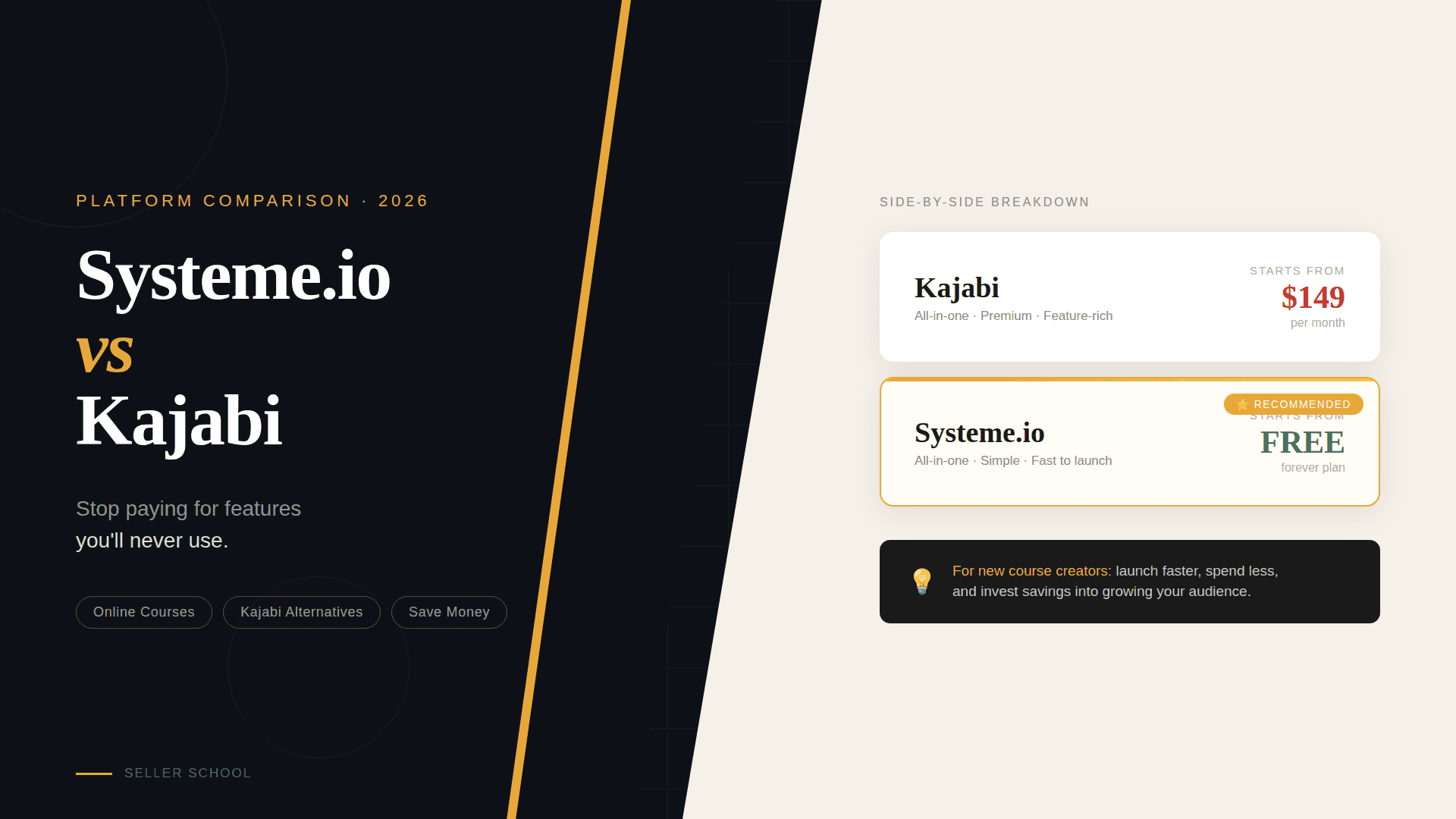
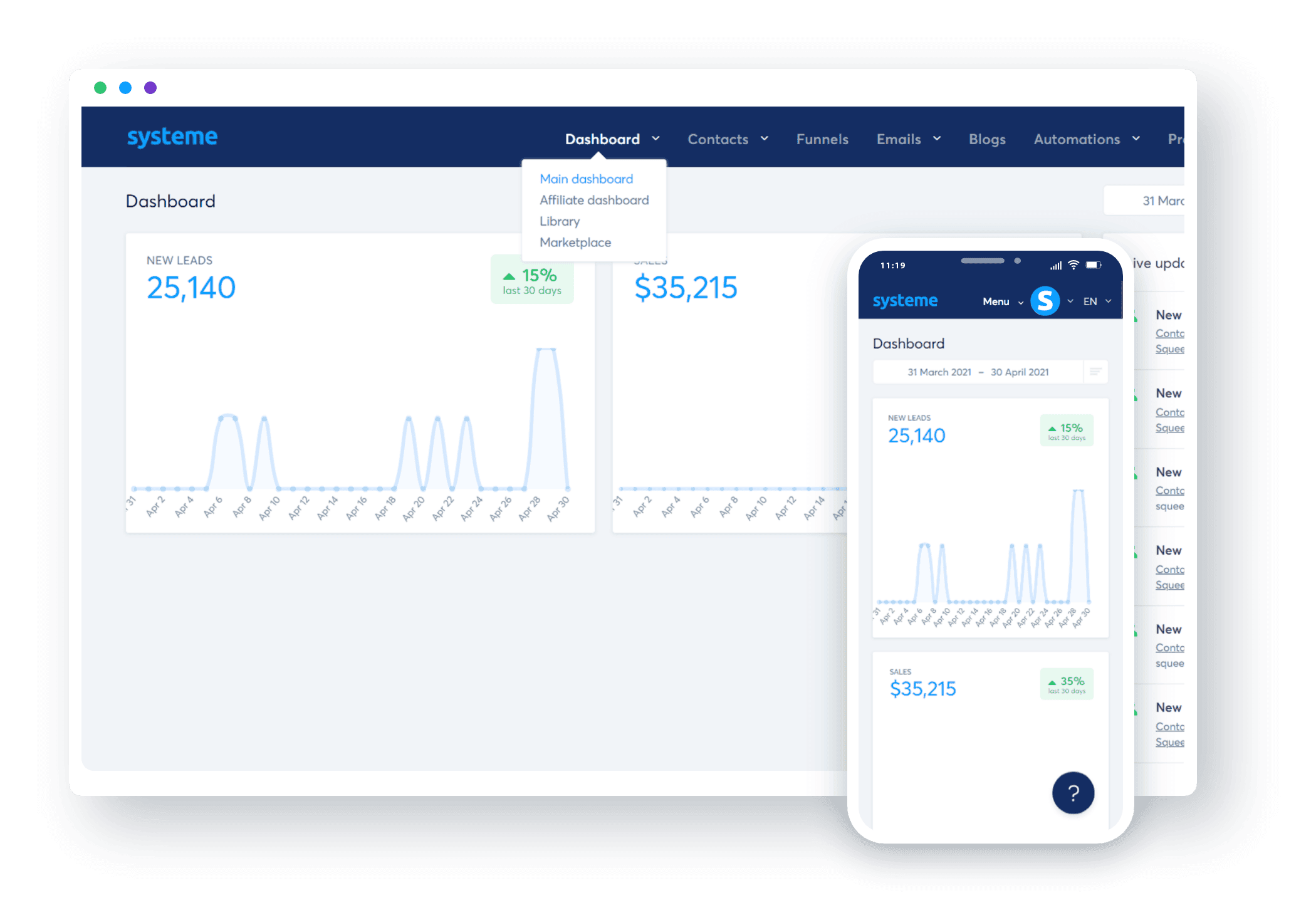
If you want to start applying it, the infrastructure you need is an opt-in page, a lead magnet, and a welcome sequence, so the buying audience your content attracts is captured and nurtured rather than lost. I build all of it inside systeme io, and the free plan covers everything you need to begin, with no monthly fee and no card required. You can create a free account here: iosysteme.com. Then it comes down to the discipline of specificity — week after week, serving the exact person your course is for.
One last encouragement before you start. You will not get the four types perfectly balanced in your first month, and you don't need to. The framework is a compass, not a rigid schedule — its job is to stop you defaulting to the one type you find easiest and neglecting the rest. Most creators over-produce Process content, because teaching feels safe, and under-produce Proof and Personal content, because sharing results and yourself feels exposing. If you simply notice which type you've been avoiding and deliberately make more of it, you'll be ahead of the vast majority of creators who never think about the balance at all. Start where you are, rotate through all four, and let the specificity do its quiet work.
Note on the figures above: the “rule of seven / 5–8 touchpoints” is a widely-cited marketing heuristic whose exact number varies by study and price point, so treat it as a range rather than a law. The Sarah example and the conversion claims are illustrative rather than data.