




If you landed on this page, there's a good chance something about Zenler isn't working for you. Maybe you signed up, got stuck in the interface, raised a support ticket and waited. And waited. Or maybe you're still in the research phase, trying to figure out whether Zenler is actually the right platform to build your course business on before you hand over your credit card details.
Either way, you've found the right place to find out whether Zenler is right for your business..
I've spent years using and paying for online course platforms — not reviewing them from the outside, but actually building on them, selling through them, and dealing with the inevitable moments when something breaks and you need help urgently. I've made expensive mistakes. I've paid for features I never used. I've wasted time rebuilding things on new platforms because the first one I chose turned out to be the wrong fit.
This comparison is written from that hard-won experience, aimed squarely at course creators and coaches who are at the beginning of their journey — or who are already underway but wondering if there's a smarter, simpler way to run things.
The short version: Zenler has some genuine strengths, but it also has real weaknesses that make it a poor choice for many creators who are just starting out. Systeme.io is a compelling alternative — not because it's perfect, but because it gives you everything you actually need, without the friction or the price tag that can slow you down before you've even launched.
First, What Problem Are We Actually Trying to Solve?
Before we get into the comparison, it's worth being clear about what you actually need from a platform. This is the question most creators skip — and it's the single biggest reason people end up on the wrong platform, paying for the wrong things.
When you're building your first course or coaching programme, the job to be done is straightforward: you need somewhere to put your content so students can access it, a way to take payments, a simple mechanism to follow up with your audience, and enough of a sales presence online to convince someone to buy. That's it. Everything else is infrastructure for a business you haven't built yet.
Most course platforms — including both Zenler and competitors like Kajabi — are sold to you on the basis of everything they can eventually do, not what you need on day one. The feature list is the marketing. And the feature list is also the complexity that slows you down, confuses you, and in some cases leads you to support queues where nobody answers quickly enough.
My view, developed over years of this: simplicity and speed get you to your first sales. Complexity and over-engineering get you stuck. Choose tools that get out of your way.
What Is Zenler? The Honest Picture
Zenler (now often referred to as New Zenler after a platform rebuild) is a UK-based all-in-one platform for online courses. It offers course hosting, website building, email marketing, sales funnels, live sessions, communities, quizzes, certificates, and a blog. On paper, it's impressively comprehensive.
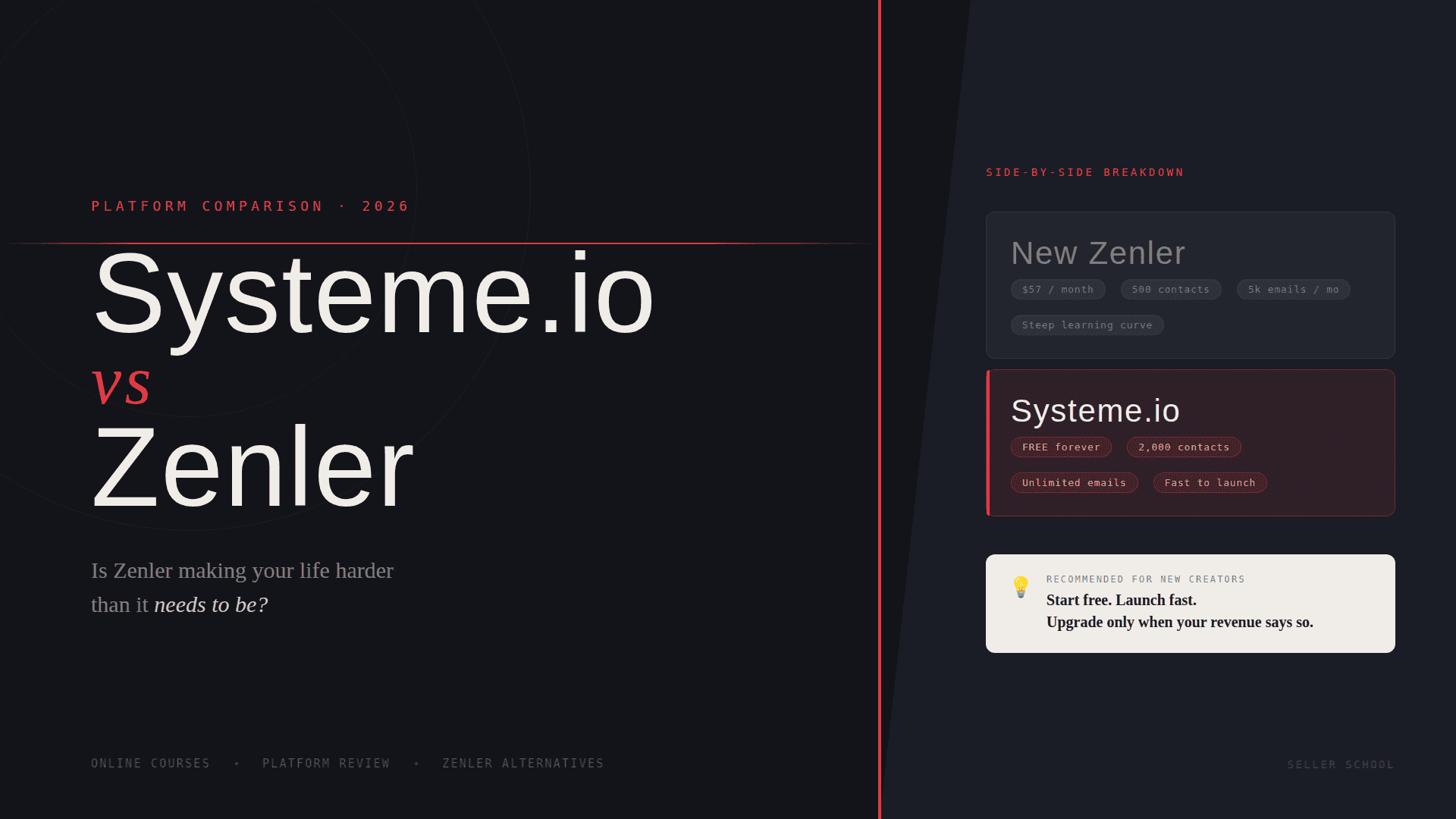
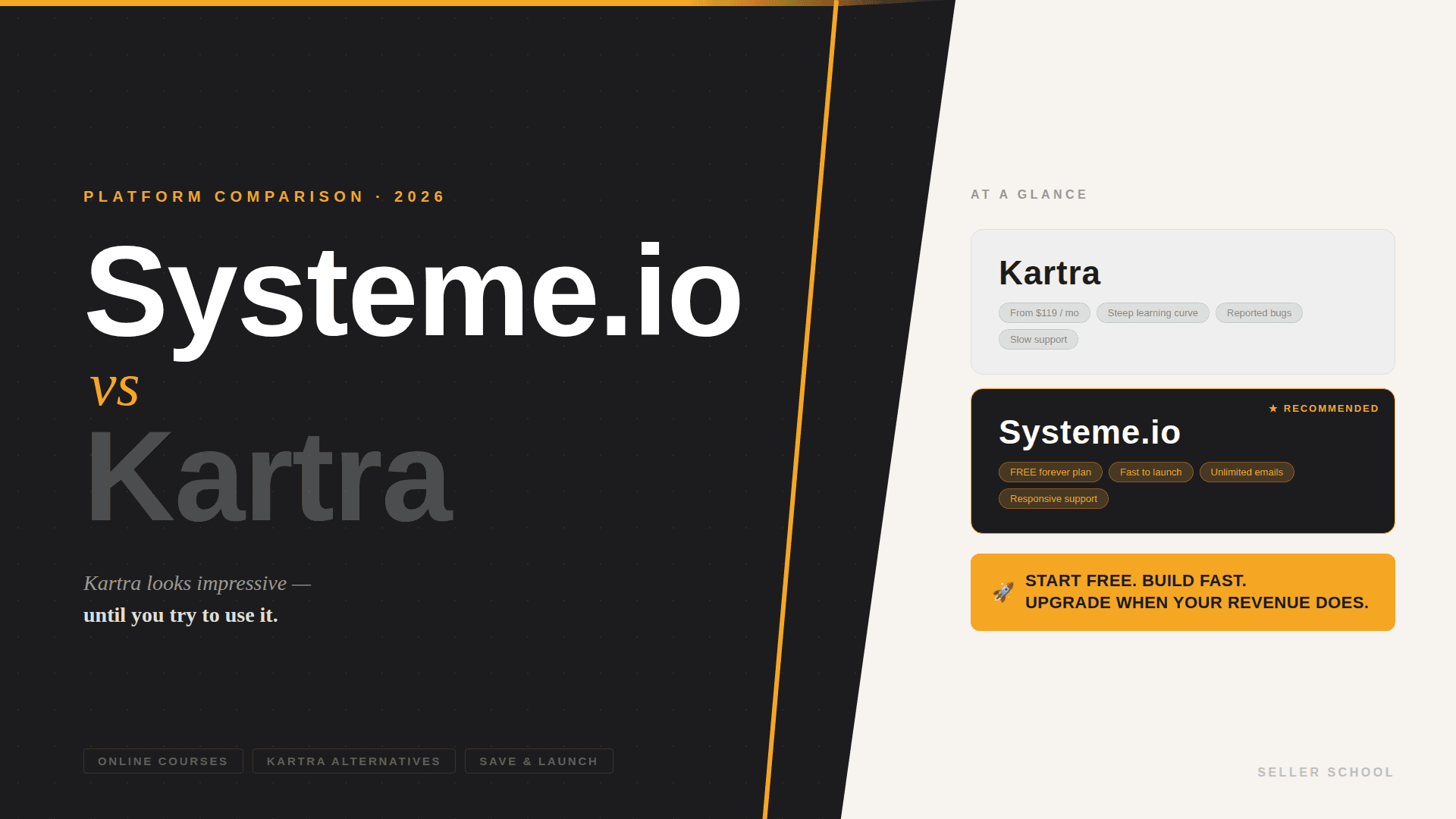
The Starter plan is priced at $57 per month. That gets you 500 contacts, 5,000 emails per month, two marketing funnels, and access to the core course creation tools. To unlock affiliate marketing, advanced automations, or more contacts and emails, you need to move up to the Pro plan.
There are things Zenler does well. The live session integration is useful for coaches who run group calls as part of their offer. The course creation interface — once you get your head around it — has good flexibility. And the community aspect has improved over time.
But here's what the brochure doesn't tell you.
The learning curve is steep. Some of the most commonly cited feedback from Zenler users — including on Trustpilot as recently as early 2026 — describes it as genuinely difficult to navigate, particularly for people who aren't technically minded. One review describes it as "by far the most difficult software" the user had ever tried to use. Another, from a creator who used the platform for a full year, described support as "very unhelpful" and flagged repeated technical failures at critical moments — including when they had a live class to deliver.
To be fair, not everyone has this experience. There are Zenler users who love it and who are willing to invest the time in learning the platform. But for a beginner who wants to move fast and focus on their content rather than their tech stack, these are real risks worth weighing carefully.
What Is Systeme.io? Why It Belongs in the Conversation
Systeme.io is a French-built platform that has grown rapidly by doing one thing extremely well: making business infrastructure genuinely accessible to non-technical creators.
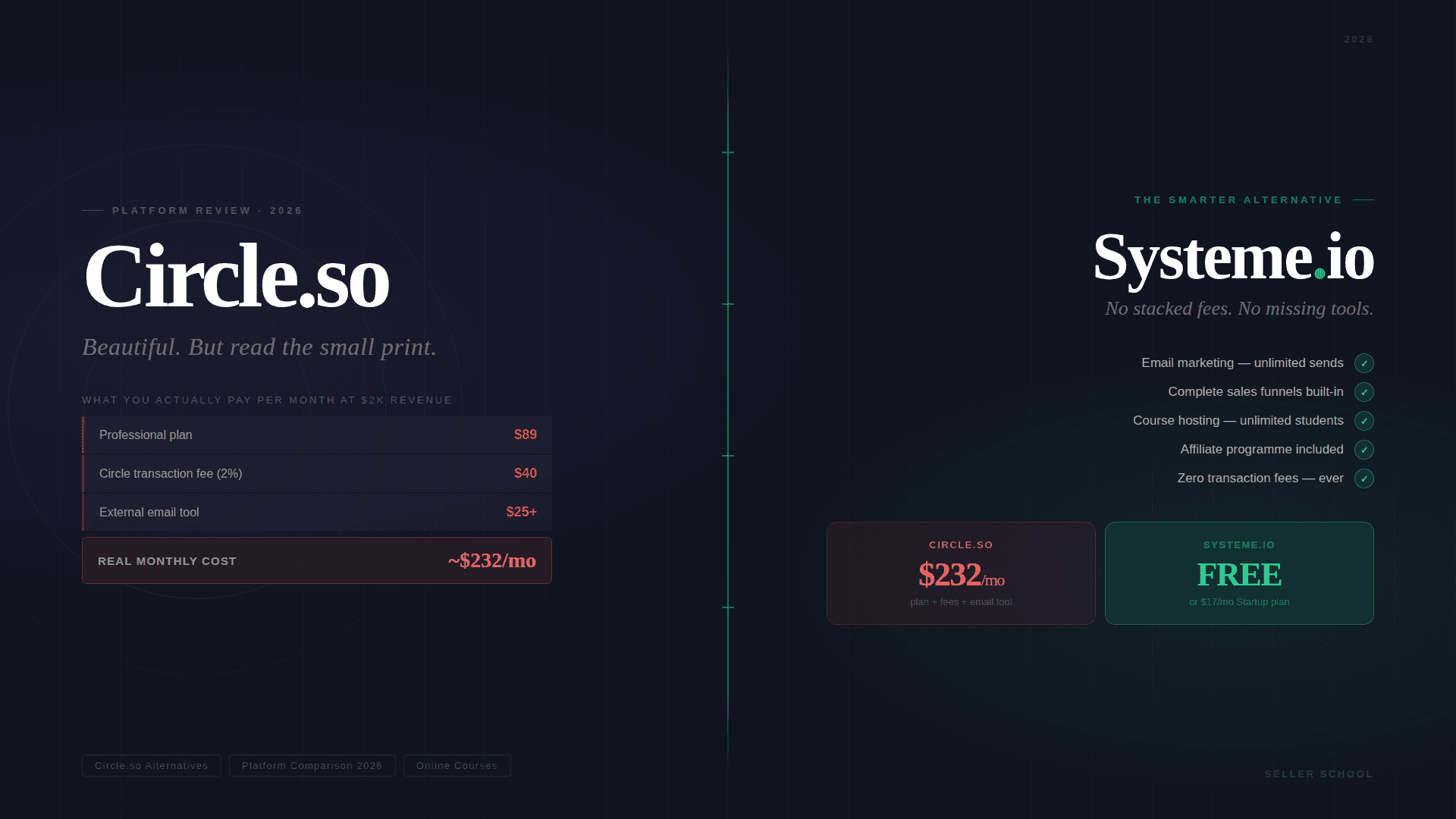
It covers course hosting, sales funnels, email marketing, automation, website building, checkout and payments, affiliate management, and more. And it does all of this starting from a free plan — not a time-limited trial, but a genuinely free account you can use to build and launch a real business.
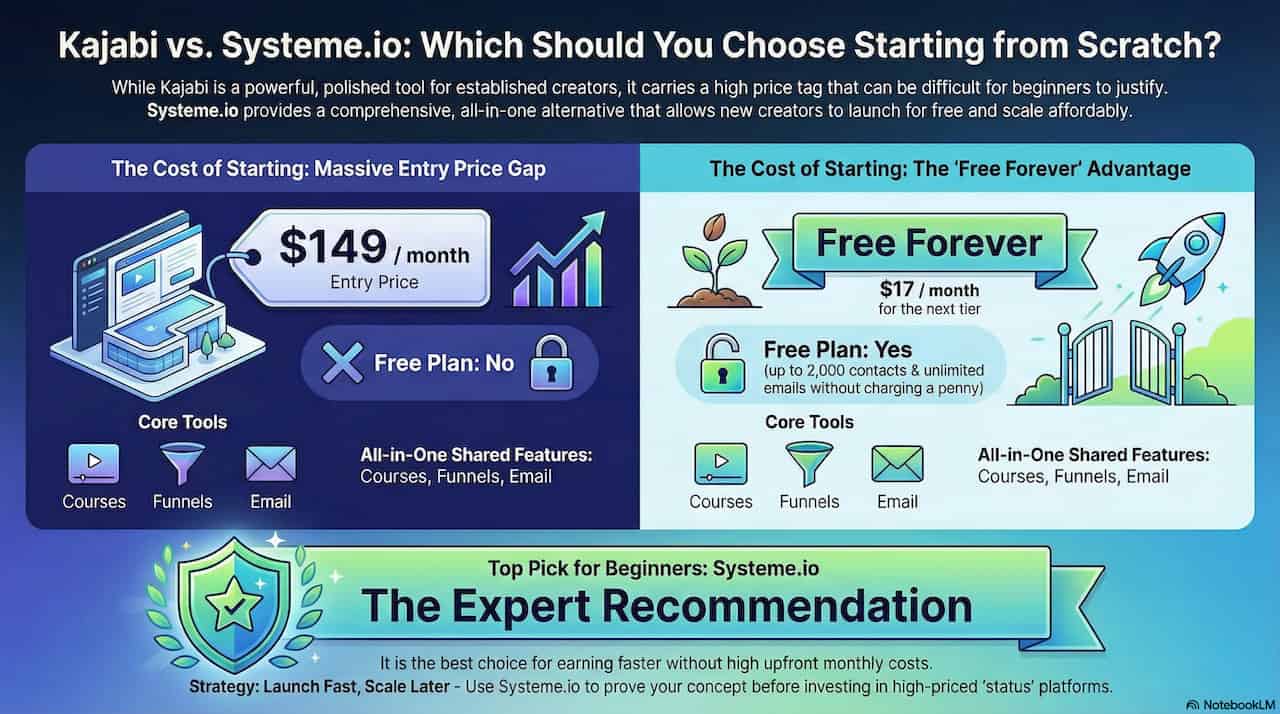
On the free plan, you get three courses, 2,000 contacts, unlimited email sends, three sales funnels, one-click upsells, order bumps, an affiliate programme, and a website builder. Paid plans start at $17per month. Even the top-tier Unlimited plan is $97 per month — still less than the Zenler Pro plan and a fraction of what Kajabi charges.
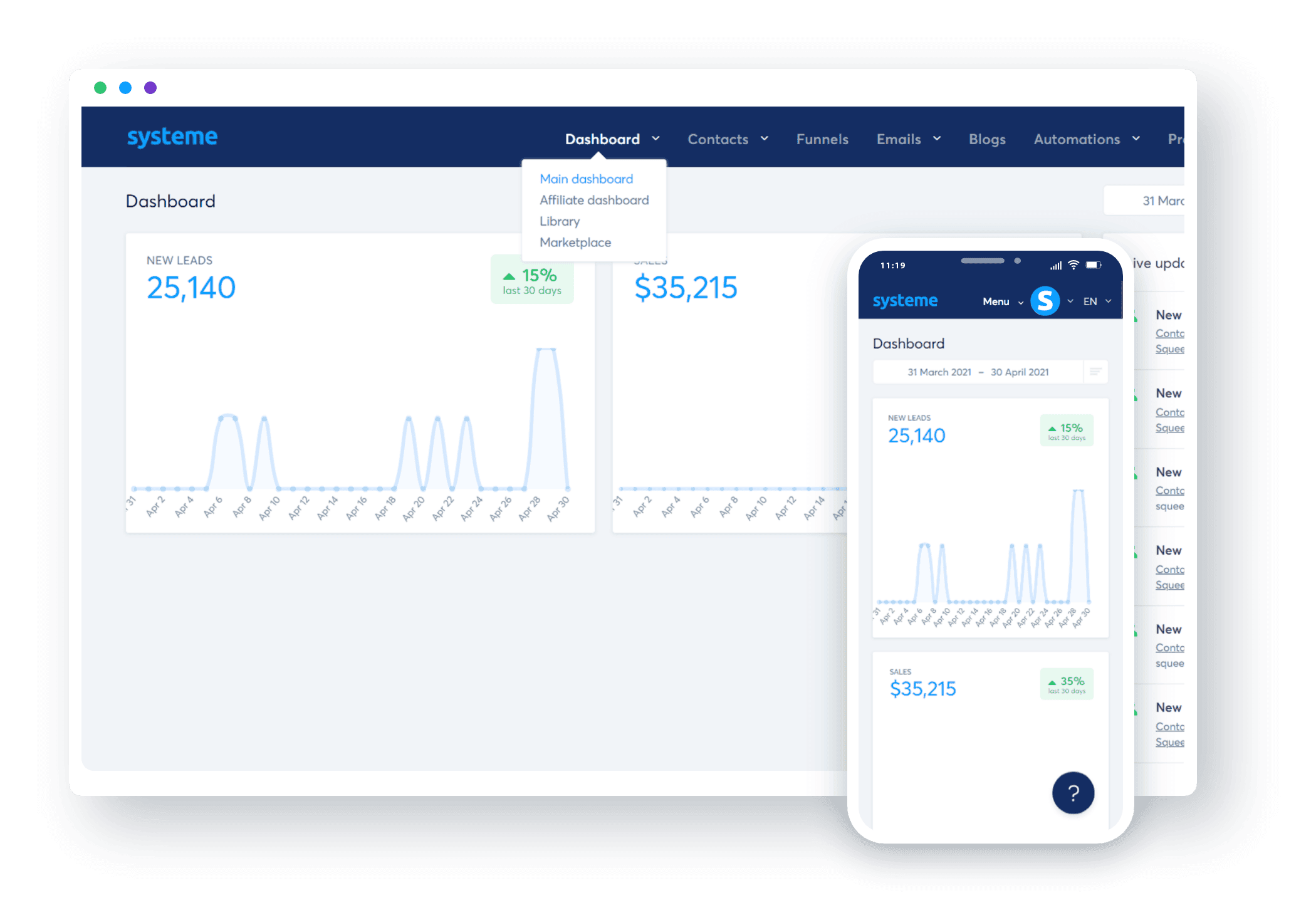
The interface is clean and intuitive. Most creators can get their first course or funnel live within a few hours of creating an account, without needing a tutorial or a support ticket.
Zenler vs Systeme.io: Feature by Feature
Let's look at the areas that actually matter when you're building and launching a course or coaching programme.
Ease of Use
This is probably the most important factor for beginners, and it's where the gap between these two platforms is most pronounced.
Zenler is powerful, but that power comes with complexity. The platform has multiple layers — course creation, marketing, community, and live sessions — and navigating between them isn't always intuitive. Users frequently report needing significant time investment to understand how everything connects. The onboarding is extensive, and Zenler actually runs regular live training sessions to help people get up to speed. That's admirable, but it also tells you something about the learning curve involved.
Systeme.io is significantly more approachable. The navigation is logical, the terminology is plain, and the most important actions — creating a course, building a funnel, setting up an email sequence — are all straightforward to find and execute. This matters enormously when you're trying to run a business, not become a platform expert.
Verdict: Systeme.io wins clearly on ease of use.
Course Hosting and Delivery
Both platforms let you build structured courses with modules, lessons, and varied content types including video, audio, PDF, and text. Both support drip content — releasing lessons over time rather than all at once. Both allow for quizzes and certificates.
Zenler has a slight edge on some of the more advanced course-building features — particularly around live sessions and interactive elements. If you're running a coaching programme that centres on live group calls, Zenler's native live session capability (via Zoom integration) is genuinely useful.
Systeme.io handles the fundamentals very well. For the vast majority of course creators — especially those building self-paced programmes — the course delivery experience is clean, functional, and perfectly adequate.
Verdict: Zenler has more advanced features for live delivery. Systeme.io covers the essentials well for most creators.
Sales Funnels and Landing Pages
Systeme.io was built with funnels at its core. The funnel builder is fast, logical, and designed for non-technical users. You can build an opt-in funnel, a sales funnel, or a webinar funnel in under an hour, even on your first attempt. Templates are provided at every stage.
Zenler also has a funnel builder, but the Starter plan limits you to just two funnels. The builder itself is more cumbersome than Systeme.io's and is one of the areas where the platform's general complexity shows up most.
Critically, Zenler doesn't include upsells or order bumps on its Starter plan. These are basic revenue-boosting features that Systeme.io includes even on its free tier. If you're trying to maximise the value of every sale — which you absolutely should be when you're starting out — this is a meaningful limitation.
Verdict: Systeme.io wins — better builder, more funnels, and revenue features included from the start.
Email Marketing
Zenler's Starter plan caps you at 500 contacts and 5,000 emails per month. That might be enough to get started, but you'll hit the ceiling faster than you expect if you're actively building an audience. When you hit that ceiling, you pay more.
Systeme.io's free plan includes 2,000 contacts and unlimited email sends. That's a significant difference. No artificial send limits means you can email your list as often as your marketing strategy calls for, without watching a counter.
Both platforms include automation — sequences that trigger based on subscriber behaviour or purchase events. Systeme.io's automation builder is clean and easy to use. Zenler's has more options but requires more configuration.
Verdict: Systeme.io wins on value and simplicity. Better limits at a lower price point.
Customer Support
This is a sensitive area, and I want to be balanced about it. Zenler does have a support team, a knowledge base, and a live training programme. Some users are very positive about their support experience.
However, the pattern of complaints is consistent enough to take seriously. Multiple recent reviews specifically flag slow or unhelpful responses to support requests — and this is a particular problem when you're dealing with a technical failure during a live event or at the point of launch. When your platform goes down or your checkout stops working, you cannot afford to wait days for a response.
Systeme.io's support is generally rated as more responsive. They have a live chat function and a knowledge base that covers most common questions. The community around Systeme.io is also large and active, meaning peer support is readily available even if official support is slower.
Verdict: Systeme.io has the edge on support responsiveness. For time-sensitive issues, this matters more than most people realise until they experience it.
Pricing
Zenler's Starter plan is $57 per month. Their Pro plan — which unlocks affiliate marketing, higher contact limits, and advanced features — is $97 per month. There is no free plan, only a trial period.
Systeme.io's free plan is genuinely free, with no expiry. Their paid plans are $17, $47, and $97 per month. Even on the $17 plan, you get significantly more than Zenler's $57 Starter: 5,000 contacts (ten times Zenler's limit), unlimited email sends, ten courses, five funnels, and a full affiliate programme.
On a straight pound-for-pound comparison, Systeme.io delivers substantially more value at every price tier.
Verdict: Systeme.io wins convincingly on pricing.
The Real Problem with Feature-Heavy Platforms
I want to step back from the feature-by-feature comparison for a moment and make a broader point, because I think it's the most useful thing I can share with you.
Platforms like Zenler are built to impress on a features list. The more they can add — live sessions, communities, quizzes, certificates, blogs, affiliate tools, custom apps — the more they can justify their price and the more competitive they look in a comparison table. And it works as a marketing strategy. It's compelling.
But here's what nobody tells you until you've made the mistake yourself: every feature you don't use is a feature that adds complexity to the interface you do use. The more a platform can do, the harder it is to find and use the parts you actually need. And when you're new to all of this, that complexity doesn't just slow you down — it stops you.
I've watched people spend weeks configuring platforms instead of creating courses. I've seen creators paralysed by the options available to them, unable to decide which of twelve ways to structure their funnel is the right one. I've been that person myself.
The features that matter when you're starting out are very few:
- A reliable way to host and deliver your course content
- A sales or landing page to present your offer
- A checkout that takes payment reliably
- An email system to welcome new customers and follow up with prospects
- Ideally, an upsell or order bump to increase average order value at checkout
That's the list. Everything else is a second or third chapter problem — something to add when you've got paying students, proven revenue, and a clear sense of what you need next. Choosing a platform based on features you'll need in year three is a guaranteed way to overcomplicate year one.
Alternatives to Zenler: Where Does Systeme.io Fit?
When people start looking for alternatives to Zenler, they usually come with one of two experiences. Either they've tried Zenler and found it too complex, too buggy, or too poorly supported. Or they've researched it, seen the price tag and the mixed reviews, and decided they want to look at other options before committing.
The field of alternatives is wide: Kajabi, Teachable, Thinkific, Podia, LearnWorlds, ThriveCart, and others. Each has genuine merits and genuine weaknesses.
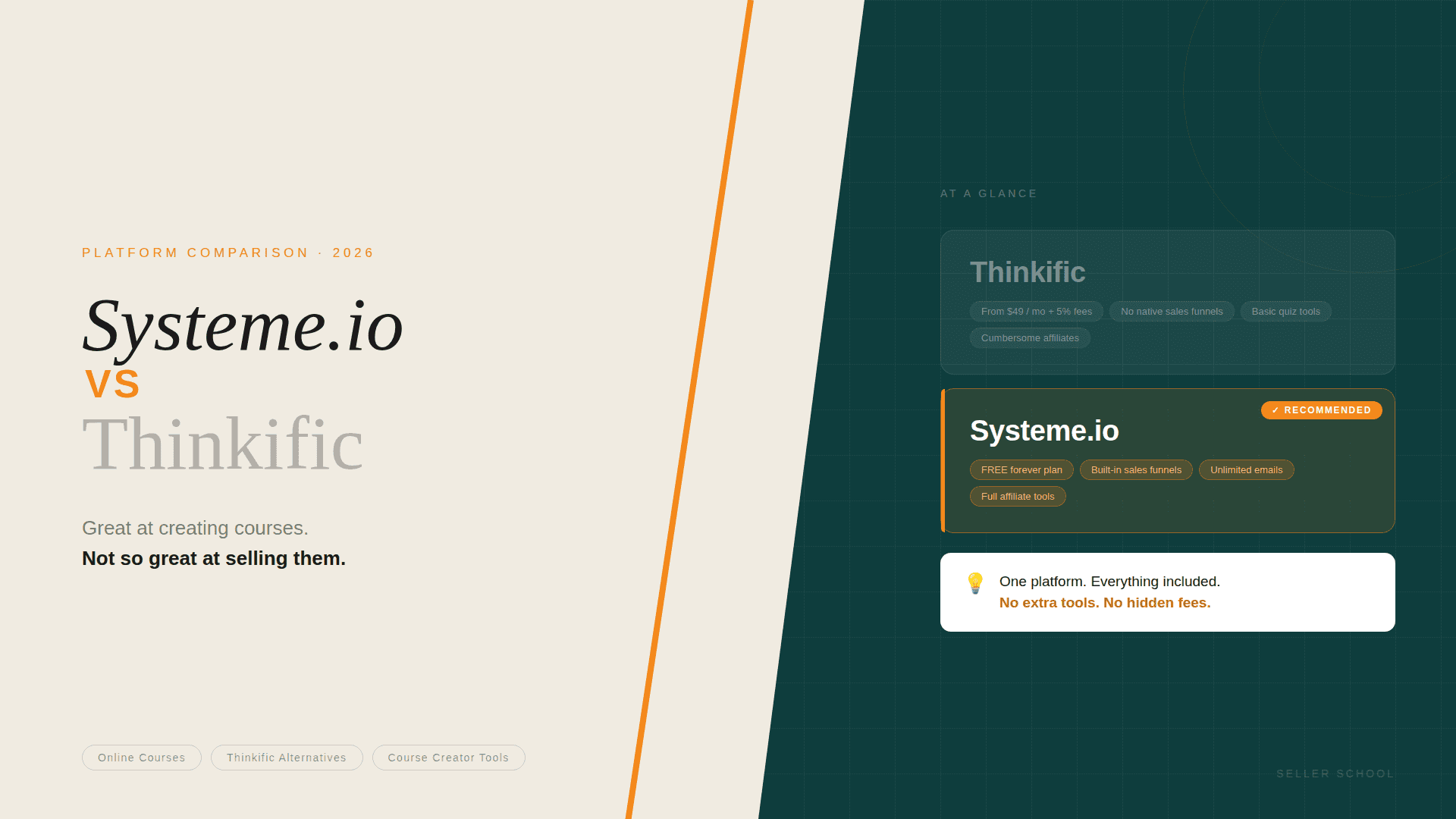
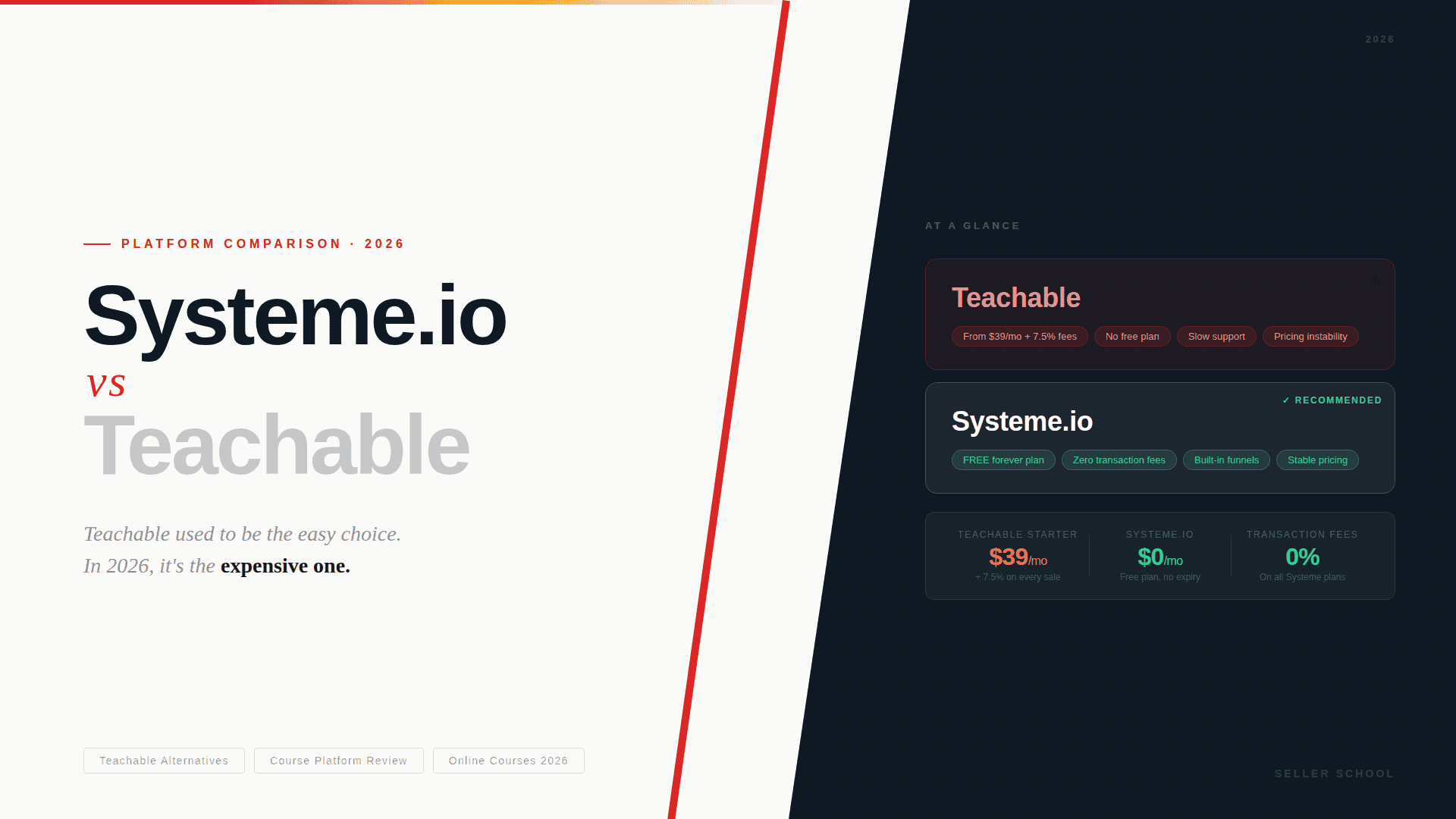
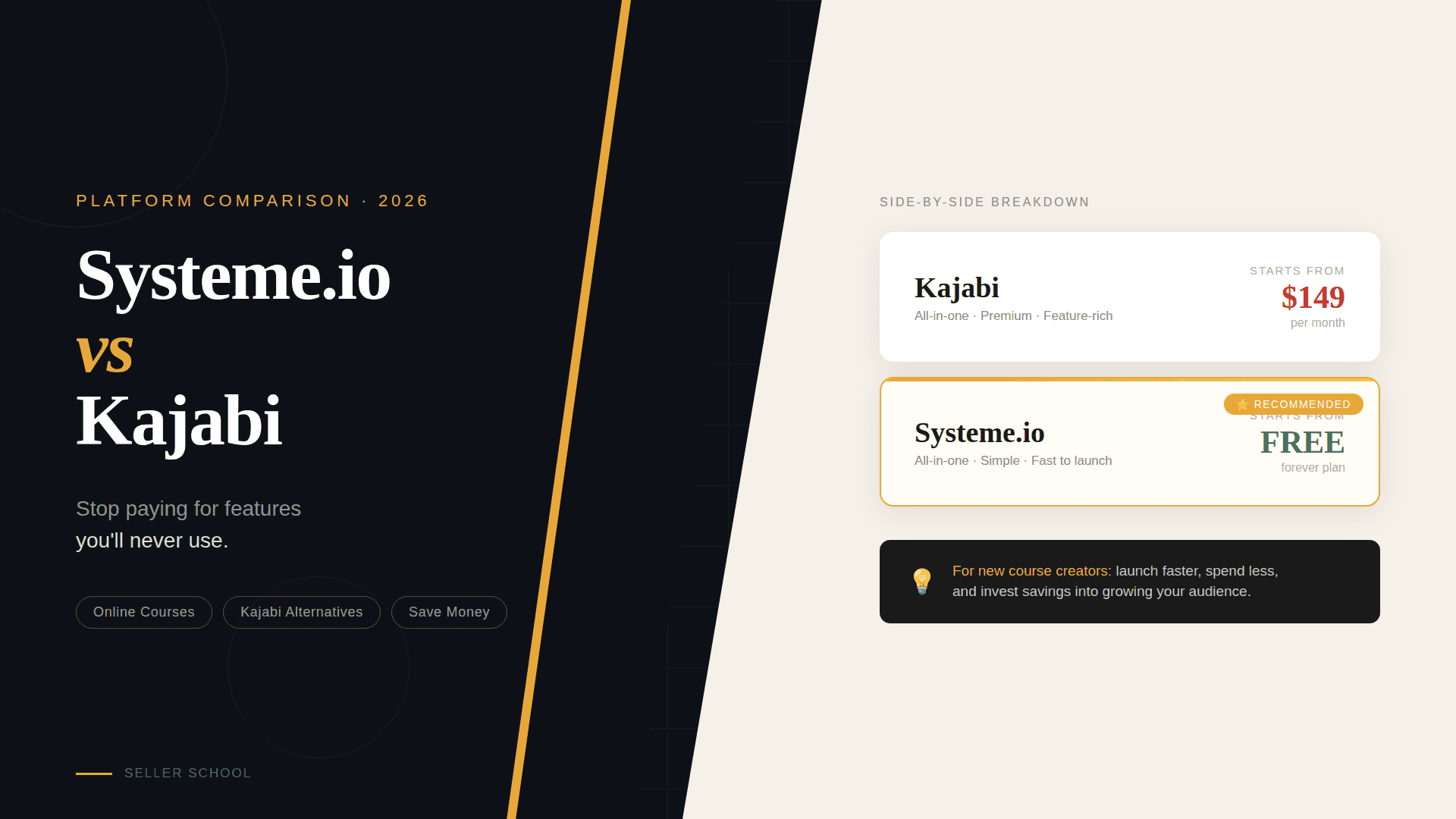
Kajabi is the most feature-complete option but is also the most expensive — starting at $149 per month. Teachable and Thinkific are strong on course delivery but require separate tools for funnels and email marketing. Podia sits in the mid-market but is more expensive than Systeme.io without the same breadth of functionality.
What makes Systeme.io stand out in this field — particularly as an alternative to Zenler — is its combination of genuine breadth and genuine simplicity. It's one of the few platforms that genuinely replaces the need for multiple tools (a course platform, an email marketing tool, a funnel builder, a checkout system) in a single interface, without being overwhelming to use or expensive to run.
That combination is rare. Most platforms that try to do everything become complicated in the process. Systeme.io has largely avoided that trap, which is why it continues to grow quickly among creators who want to move fast and keep costs down.
How to Host an Online Course Without Overcomplicating It
If you're trying to figure out how to host an online course for the first time, let me give you the simplest possible framework for making the decision.
Start with your business model. Are you selling a self-paced course that people access after purchase? A live coaching programme with group calls? A membership with recurring content? The answer shapes what you need from a platform.
Then audit the minimum viable feature set. What do you genuinely need to launch and sell your first cohort or your first batch of course sales? Write that list down. It will be much shorter than any platform's feature page.
Then ask: which platform lets me do those things most easily, most reliably, and at the lowest cost before I've proven my idea works?
For most course creators and coaches at the beginning of their journey, that answer is Systeme.io. It covers the minimum viable feature set comprehensively, at a price point that doesn't require you to generate revenue before you've spent it.
The Mistakes That Cost Creators Time and Money
Based on years in this space, here are the platform-selection mistakes I see most often — and the ones I made myself before I knew better.
1. Choosing complexity over clarity.
The more a platform can do, the more time you'll spend learning it instead of launching. Unless you have a specific, current need for an advanced feature, ignore it when making your decision.
2. Paying for potential rather than present needs.
Paying $57 or $97 a month before you've made your first sale is a bet on your future self that may not pay off. Start with the lowest viable cost and upgrade when your revenue justifies it.
3. Ignoring support quality.
You will have a problem at some point. Your checkout will glitch. Your video won't load. A student will email you at 11pm unable to access their content. When that happens, you need fast, useful support. Find out what a platform's support is like in practice — not on their marketing page — before you sign up.
4. Treating a platform switch as a disaster.
People stay on the wrong platform too long because moving feels painful. In reality, migrating a course from one platform to another is a weekend's work for most creators. Don't let fear of switching trap you on a platform that's costing you money and time.
5. Not testing before committing.
Any platform worth using has a way to try it before you pay. Use that time properly. Actually build something. Don't just click around the dashboard — create a module, build a landing page, set up a checkout. That's the only way to know if a platform will work for you.
So Who Should Choose Which Platform?
Systeme.io is the right choice if:
- You're just starting out and haven't yet generated reliable revenue
- You want to move quickly and find complexity frustrating
- You've had a bad experience with Zenler's support or interface
- You want to keep costs low while you validate your course idea
- You're building primarily self-paced courses rather than live-heavy coaching programmes
Zenler might work for you if:
- You have genuine patience for a steeper learning curve and are willing to invest time in onboarding
- Live sessions and interactive features are central to your product, not just nice-to-haves
- You've tried the platform already and it clicked for you — some creators genuinely love it
- You have a technical background or support resource to help when things go wrong
The Most Important Thing You Can Do Right Now
Stop researching and start building. I mean that kindly — decision paralysis is one of the most common reasons course creators never launch. The platform you choose matters, but it matters far less than whether you actually ship your course and start getting it in front of people.
With that said, if you want a low-risk way to get started, Systeme.io's free plan is about as close to a no-brainer as exists in this space. You can set up a full working account, build your first course, create a sales funnel, and connect your Stripe account — all without entering payment details. That removes the financial risk from the decision entirely. Test it for real, with real content.
You can sign up for a free Systeme.io account directly here: https://iosysteme.com.
And if you'd like a broader comparison of all the main platforms worth considering for course creators and coaches — including a breakdown of what you'll actually use at each stage of building your business — I've put together a free guide that walks through all of it. You can access that here: https://pro.sellerschool.co.uk/course-creators-tools-comparison.
The guide covers Systeme.io, Kajabi, Zenler, Teachable, Thinkific, and others — with honest, practical guidance on what each platform is actually good for, who it suits, and what it costs once you account for everything. It's free, and it's designed to save you the kind of expensive guesswork I did in the early years.
Your course exists to help people. The only platform decision that matters is the one that gets it in front of them.
About the author: This article is based on several years of hands-on experience building, launching, and selling courses across multiple platforms — including Zenler, Systeme.io, Kajabi, Teachable, and others. The aim is always the same: practical, honest guidance that helps course creators make good decisions without learning everything the hard way.