By someone who's paid for both — and made some expensive mistakes along the way
Let me be straight with you before we get into this.
If you're a new course creator or online coach trying to figure out which platform to use, you've probably already fallen into the same trap I did: spending hours comparing features you don't fully understand yet, reading reviews written by people who seem to earn a living from affiliate commissions, and slowly convincing yourself you need more functionality than you actually do.
I've been building and selling online courses for several years now. I've paid for Kajabi. I've used Systeme.io. I've also paid for platforms I barely opened, tools that promised to "do everything," and software that was so complex I needed a separate course just to learn how to use it.
This post is not that kind of comparison. I'm not going to walk you through a 47-point feature checklist. I'm going to tell you what I'd actually do if I was starting today — and more importantly, why.
The Real Mistake Most Beginners Make
Before we compare anything, let's talk about the mistake. Because almost every beginner makes it.
You sit down to pick a platform and you start thinking about what you might need six months or two years from now. You read that Kajabi has a built-in podcast hosting feature, or that you could eventually run a membership site, or that there's an advanced CRM, and you think: "Well, I might need that someday."
So you choose the platform with the most features. You sign up. You pay the monthly fee. And then you spend three weeks fiddling with settings instead of building your course.
Meanwhile, the income you were hoping to generate? Still at zero.
Here's the uncomfortable truth about most course platforms: they are designed to make you feel like you need everything they offer, because that's how they justify a high price tag. The reality is that most course creators — even experienced ones — use a fraction of what these platforms provide.
What you actually need to get your first £1,000 or $1,000 is embarrassingly simple:
- A way to host your course content
- A way to take payment
- A way to communicate with your students
- A landing page or sales page
That's it. Everything else is noise — at least until you've got a proven offer and a growing audience.
Who Are These Platforms For?
Let's quickly set the scene.
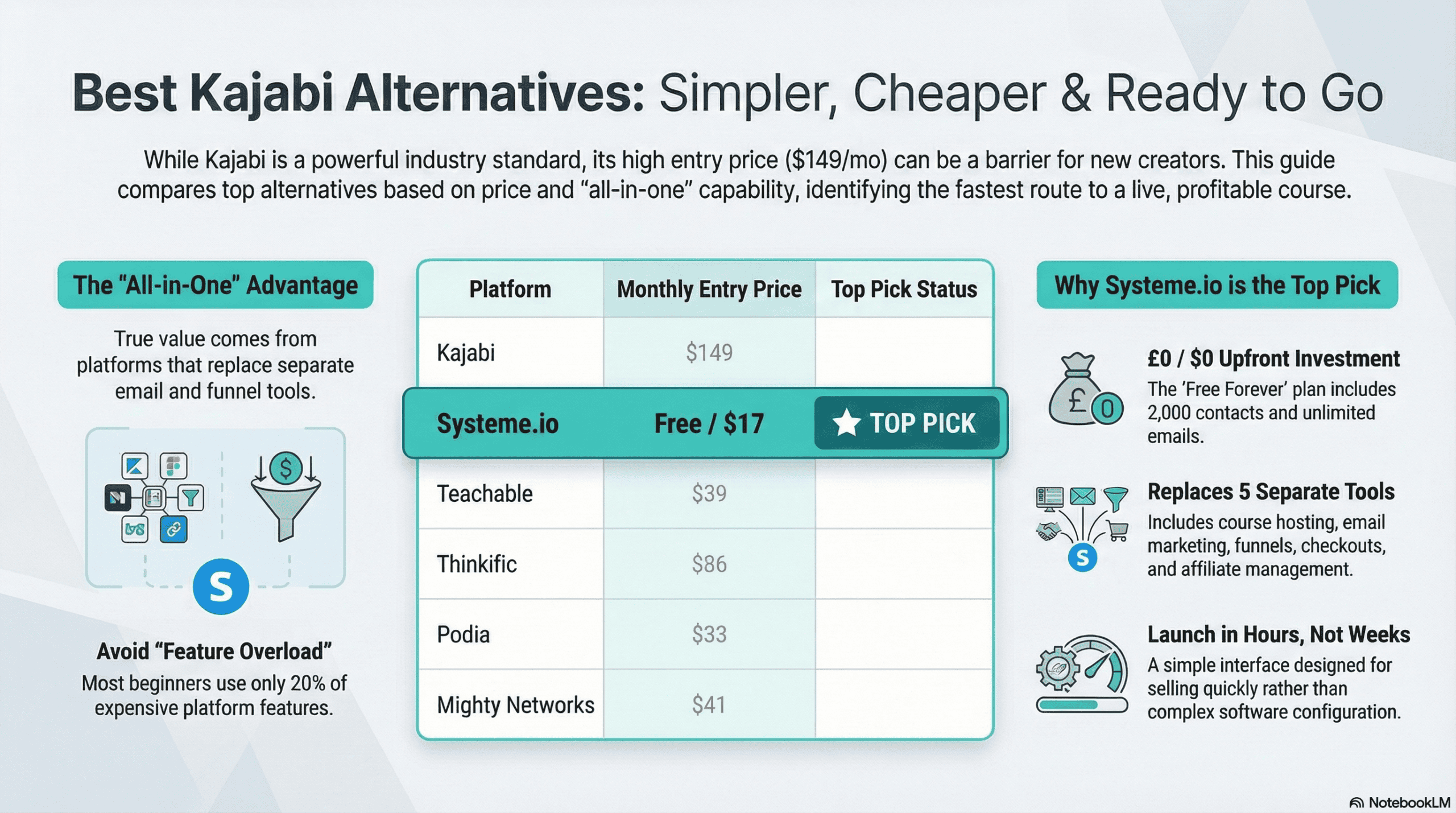
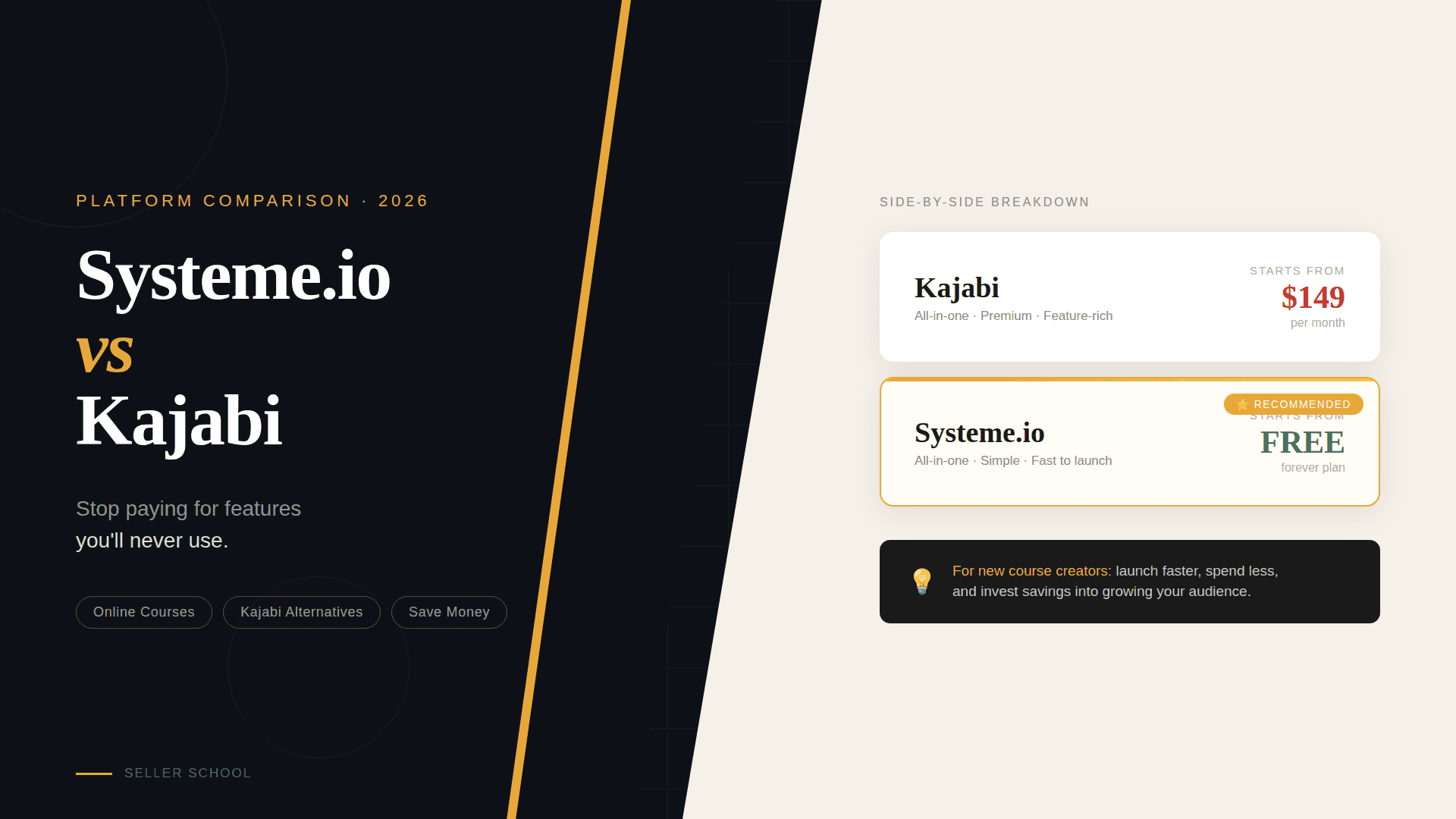
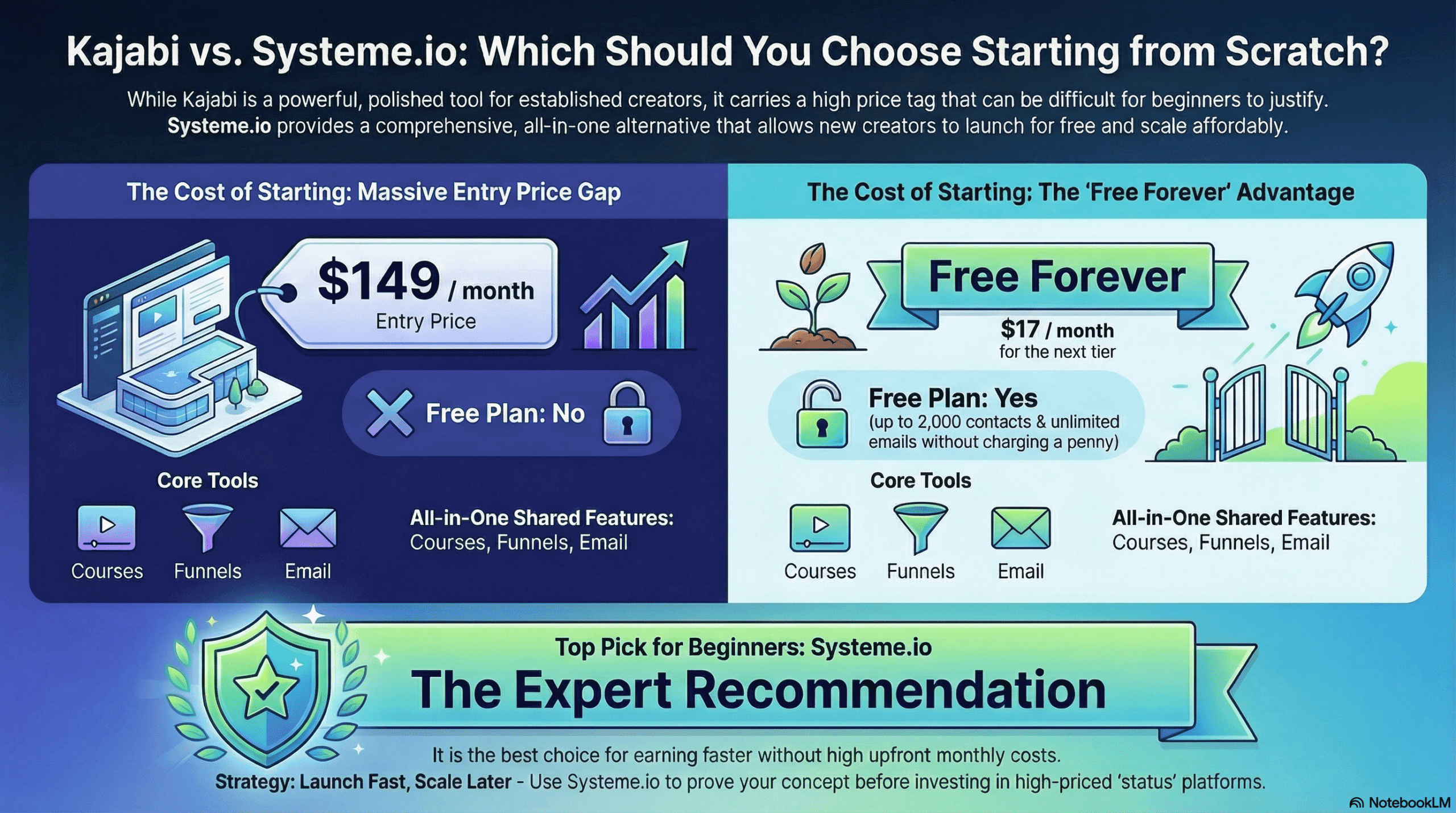
Kajabi is one of the most well-known all-in-one platforms for course creators and coaches. It's polished, it's powerful, and it carries a reputation as the premium option. It also carries a premium price to match — typically starting at around $149 per month on the basic plan, rising sharply from there.
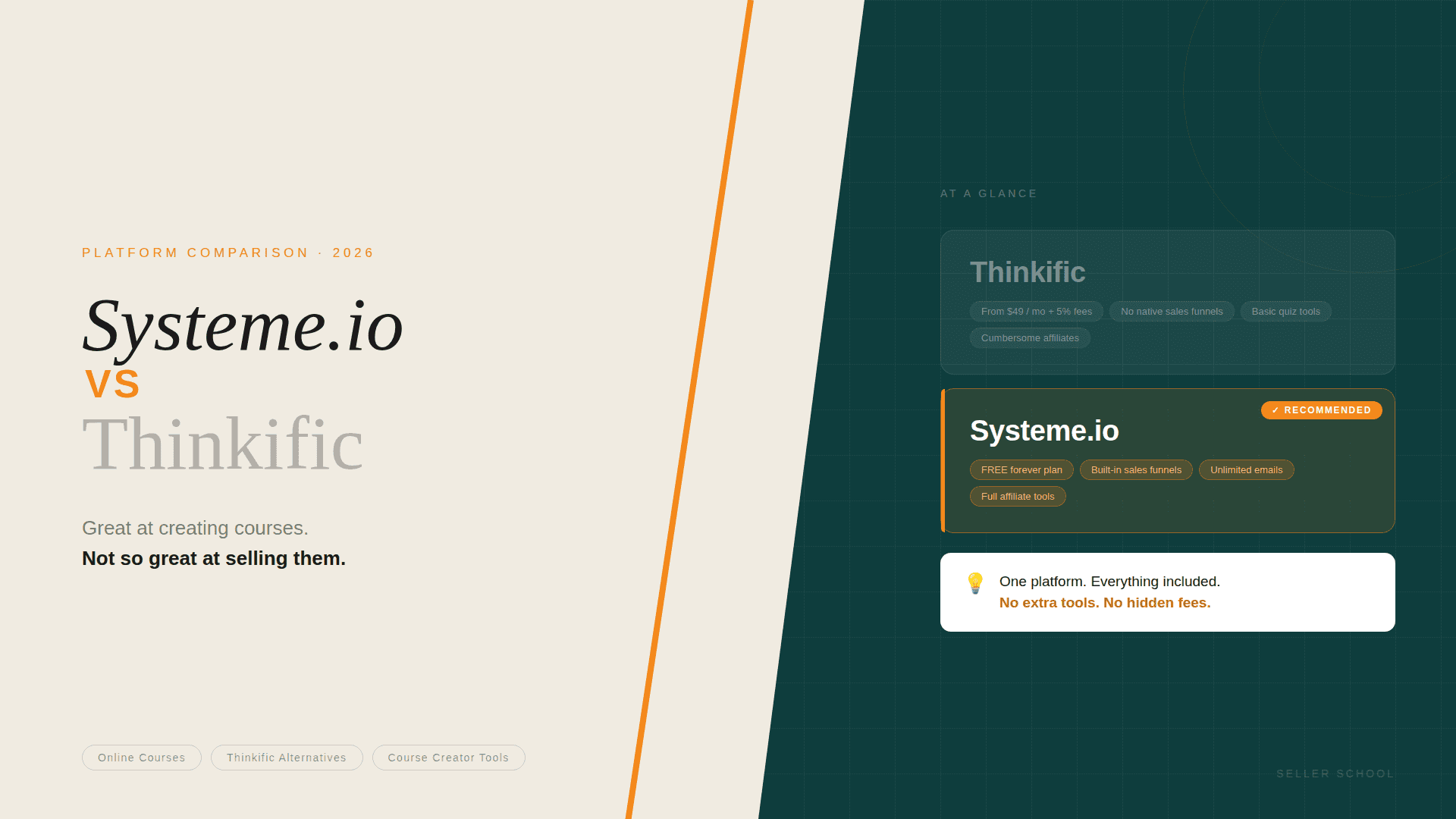
Systeme.io (often written as system.io or systeme) is a newer all-in-one platform that has positioned itself as the budget-friendly alternative. It has a genuinely useful free plan — not a trial, an ongoing free tier — and its paid plans are significantly cheaper than Kajabi's.
Both platforms let you build and sell online courses, run email marketing, create sales funnels, and host a membership area. On paper, they solve the same problem.
The question is: which one is right for where you are right now?
A Closer Look at Kajabi
I want to be fair to Kajabi here, because it genuinely is a good product. The interface is clean, it looks professional out of the box, and if you're running a serious six or seven-figure online business with a team behind you, it probably earns its price.
The course builder is intuitive. The community features are solid. Kajabi Payments (their built-in checkout) has improved a lot. Their coaching product has specific features built around session booking and client management that can be genuinely useful for coaches.
But here's where I want to be honest with you based on my own experience: when I was starting out, Kajabi's price was a constant source of pressure. Every month that bill lands, and if your course isn't generating consistent revenue yet, it stings. That pressure can actually work against you — it makes you feel like you need to be "doing more" on the platform to justify the cost, when really what you need to be doing is talking to potential students and creating great content.
Kajabi's entry-level plan also has some frustrating limitations that push you toward upgrading. The number of products, pipelines, and members you can have is capped, and when you hit those limits — as you will if things go well — you're suddenly looking at a significantly higher monthly bill.
I've spoken to plenty of course creators who have paid for Kajabi for months without publishing a single course, simply because the setup felt overwhelming or they were still perfecting things. That's expensive procrastination.
A Closer Look at Systeme.io
Systeme.io has a completely different energy. It's built around getting things done quickly.
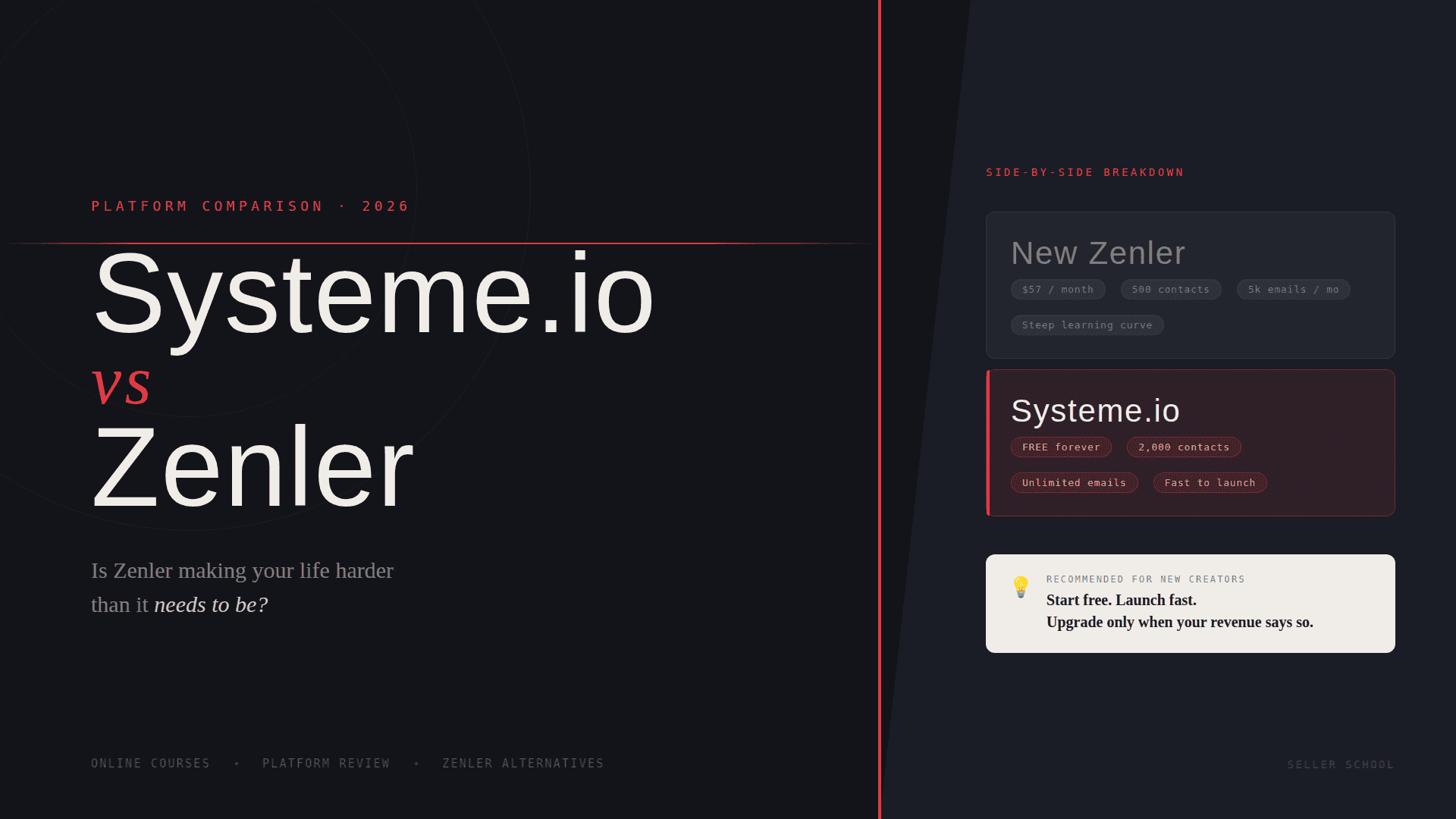
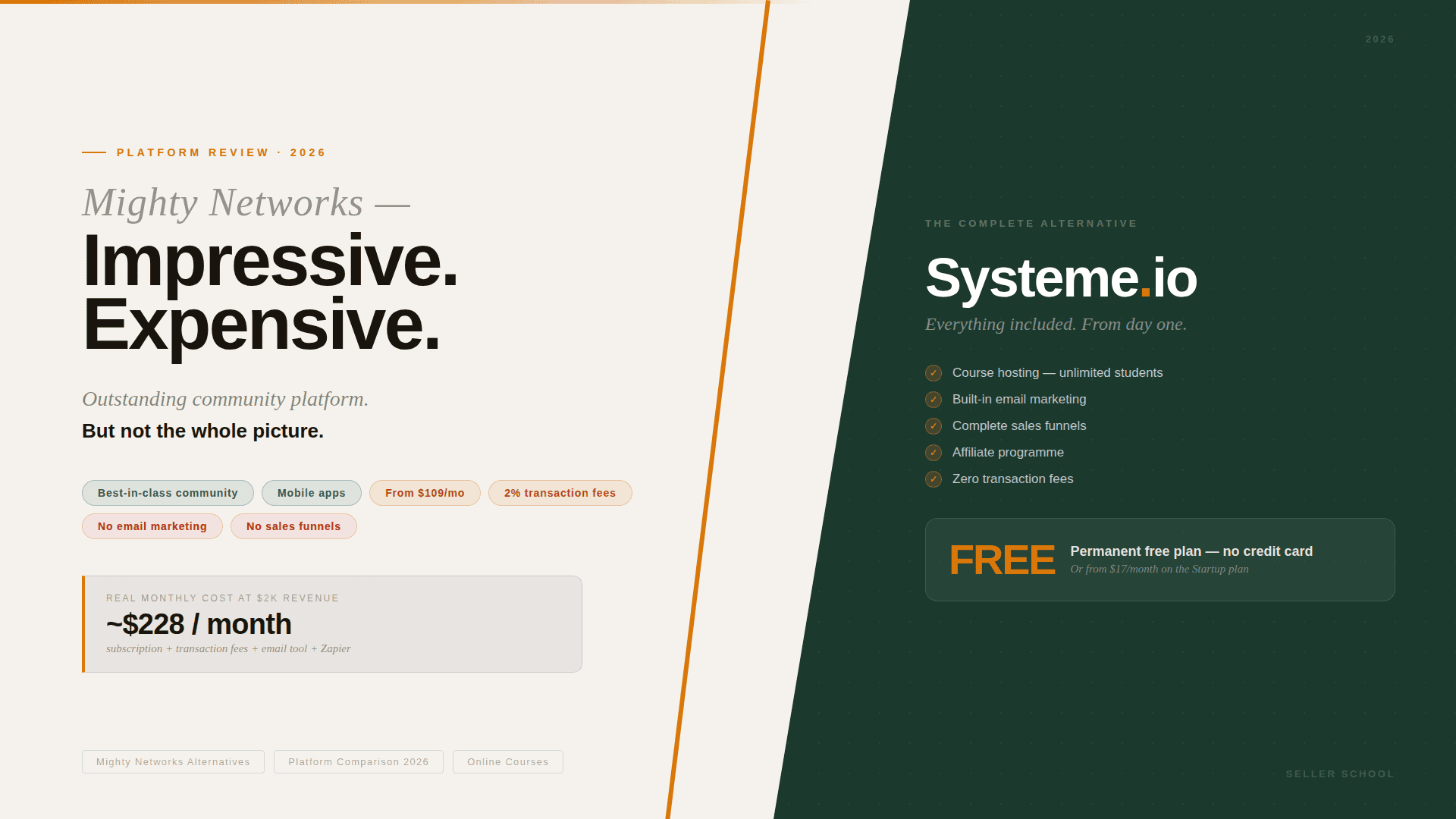
The free plan is genuinely generous (That's difficult to say a few times quickly!). You can host up to three courses, have up to 2,000 contacts on your email list, build sales funnels, and run an affiliate programme — all without paying a penny. Yes, really. For a complete beginner, that's remarkable. You can validate your idea, make your first sales, and start building an audience before you've spent anything.
The interface isn't quite as slick as Kajabi's, and I won't pretend otherwise. But here's the thing: it doesn't need to be. Your students are buying your expertise, not your platform's colour scheme. As long as the experience is clean and functional — which Systeme.io is — it does the job.
What I genuinely respect about Systeme.io is its philosophy. The founders built it around simplicity and speed, and you can feel that in how the product is structured. Everything is connected. Your email list, your funnels, your courses, your checkout — they all talk to each other without requiring three different integrations and a mild panic attack.
Their paid plans are exceptionally affordable. The Startup plan (at time of writing) comes in at around $27 per month, and the Webinar plan at $47. Even the unlimited plan — which genuinely removes almost every restriction — is a fraction of what you'd pay for Kajabi's entry tier.
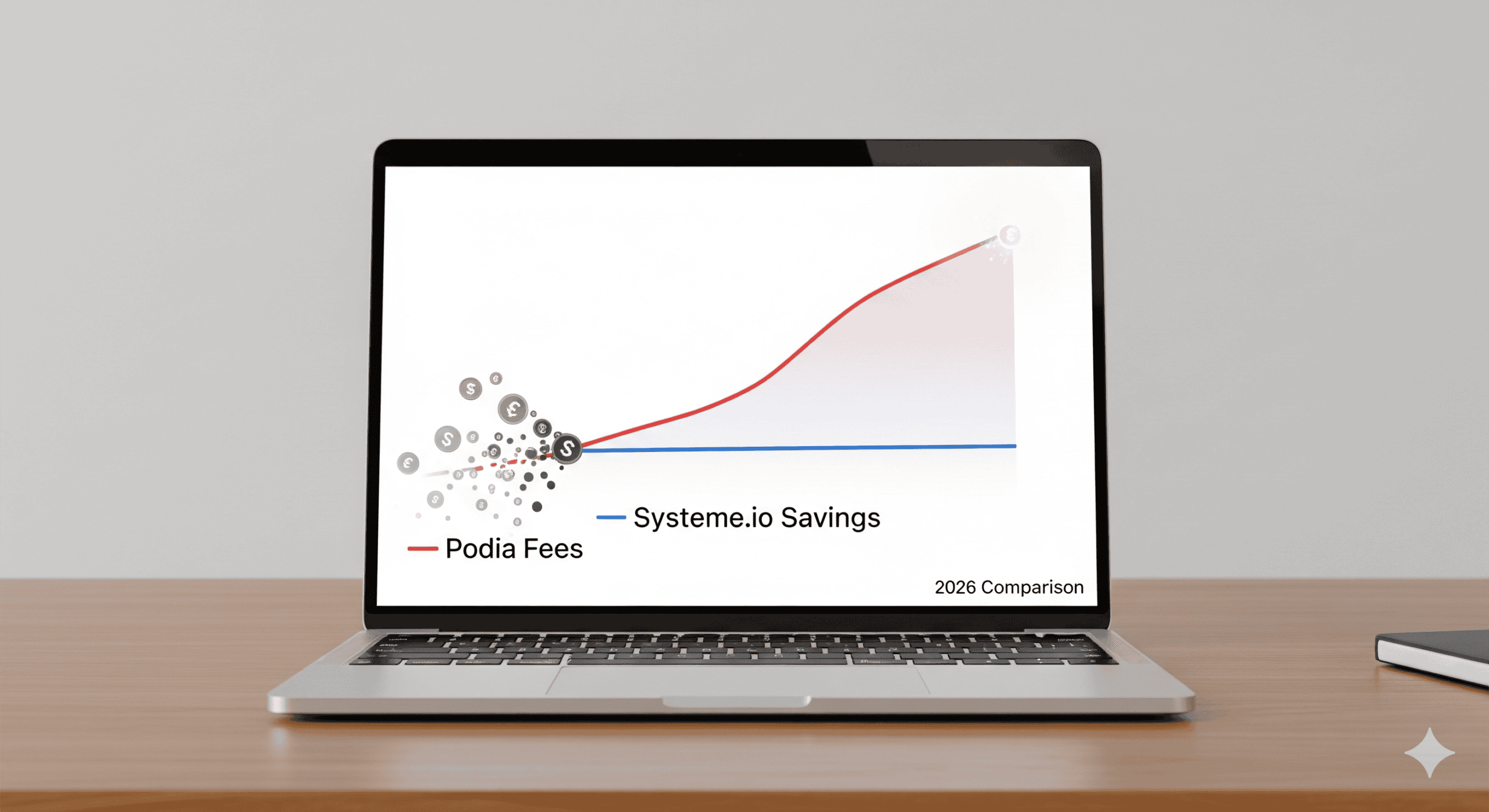
For a beginner trying to get to their first $10,000, that price difference matters enormously. The money you save on platform fees is money you can put into a small ads budget, a copywriter, or simply into your own financial runway while you grow.
The Features That Actually Matter (And Ones That Don't)
Here's a feature-by-feature reality check based on what I've seen beginners actually use versus what they get excited about in a comparison video.
Course hosting: Both platforms handle this well. Kajabi's player is slightly more polished; Systeme.io's is perfectly functional. For your first course, this is not the deciding factor.
Email marketing: Both include email broadcasting and automations. Systeme.io's email tools are surprisingly capable, and the free plan includes email automation — something many platforms charge extra for. You don't need Kajabi's more advanced segmentation tools until you have a substantial list and a reason to use them.
Sales funnels and pages: Systeme.io was built with funnels at its core. It's fast and simple to put a landing page and checkout flow together. Kajabi's pipeline builder is good too, but it has more moving parts and a steeper learning curve.
Checkout and payments: Both integrate with Stripe and PayPal. Both handle one-time payments, payment plans, and subscriptions. This is essentially a draw.
Community features: Kajabi has a built-in community product that has improved significantly. Systeme.io has a more basic community feature. If a tight-knit student community is central to your offer, Kajabi has a slight edge here — but many course creators use a free Facebook Group for this anyway, at least initially.
Coaching tools: Kajabi has specific coaching features including session scheduling. Systeme.io is more course-focused. If you're a coach who sells sessions or packages with booking, Kajabi's native features might save you from needing Calendly or another booking tool. But Systeme.io integrates with external tools easily enough.
Webinars: Systeme.io has a webinar feature built in (on their Webinar plan). Kajabi doesn't have native webinar hosting — you'd need Zoom or similar. This is actually a point in Systeme.io's favour for coaches and course creators who use live sessions as part of their sales or delivery process.
Affiliate programme: Both platforms have this. Systeme.io includes it on the free plan. Kajabi limits it to higher-tier plans.
Blogging and SEO: Kajabi has a built-in blog and some basic SEO tools. Systeme.io has a blog feature too, though it's less developed. If long-form content marketing is a major part of your strategy, neither platform is going to replace a proper WordPress setup — but Kajabi handles this more robustly.
The Criteria That Should Actually Drive Your Decision
After years of using and paying for these tools, here's what I'd actually tell a friend if they asked me how to choose:
1. Can you afford to lose this money while you're figuring things out?
If the answer is "not comfortably," start free or start cheap. A great course on Systeme.io will outsell a mediocre course on Kajabi every single time. The platform is not the bottleneck. Your offer and your marketing are.
2. How quickly do you want to be live?
Speed to market matters enormously when you're starting out. Systeme.io's simpler interface means fewer decisions and faster setup. If you can be selling in two weeks instead of six, that's four more weeks of revenue and four more weeks of learning what your students actually need.
3. How big is your audience right now?
If you already have 5,000 people on your email list and you're launching to a warm audience, Kajabi's slightly more premium feel might convert marginally better. If you have a small or brand-new audience — which is most beginners — this is completely irrelevant. Nobody is saying "I'd love to buy your course but I'm put off by the platform you're hosting it on."
4. Are you trying to validate an idea or scale a proven one?
Validation phase: use the cheapest option that works. That's Systeme.io, and possibly the free plan. Scale phase: reassess when you're generating consistent revenue and you know exactly which features you need.
5. Do you need simplicity or customisation?
Both platforms are relatively straightforward, but Systeme.io has fewer options at every step — which sounds like a downside but is actually a feature when you're starting out. Fewer options means fewer ways to get distracted.
What I Would Do If I Was Starting Today
Honestly? I'd start on Systeme.io's free plan.
I'd build a simple landing page, set up a basic email sequence, create my course, and get it in front of people as quickly as possible. I'd use the free plan until I hit its limits — and hitting those limits would be a good problem to have, because it means I'm growing.
When I was ready to upgrade, I'd go to their Startup plan at $27 per month. That unlocks unlimited email automation, up to 5,000 contacts, and removes the product limits. For a course creator making their first few thousand dollars, that's excellent value.
I would not start on Kajabi. Not because it's a bad product — it isn't — but because the price creates unnecessary pressure when you're still figuring out your market, your messaging, and your offer. That pressure costs you more than money. It costs you clarity.
If you ever reach the point where Kajabi's advanced features are genuinely going to move the needle for you, you'll know it, and you'll be in a much better financial position to justify the cost. But most people reading this are not at that point yet, and there's no shame in that. Everyone starts somewhere.
The Bottom Line
The best platform is the one that gets you live, gets you earning, and gets out of your way.
For most beginners, that's Systeme.io. It's simpler, it's more affordable, and the free plan removes the financial risk entirely while you're finding your feet.
If you're ready to get started, I've put together a free account link below. You don't need a credit card, and you can have your first course set up and ready to sell faster than you might think.
Set up your free Systeme.io account here →
Stop comparing platforms and start building. The only way to figure out what works is to get something out into the world and learn from real students. The tools are less important than the action.
You've got this.
Have questions about setting up your course or choosing the right tools? Join me in our Facebook Group where you can ask me anything.