


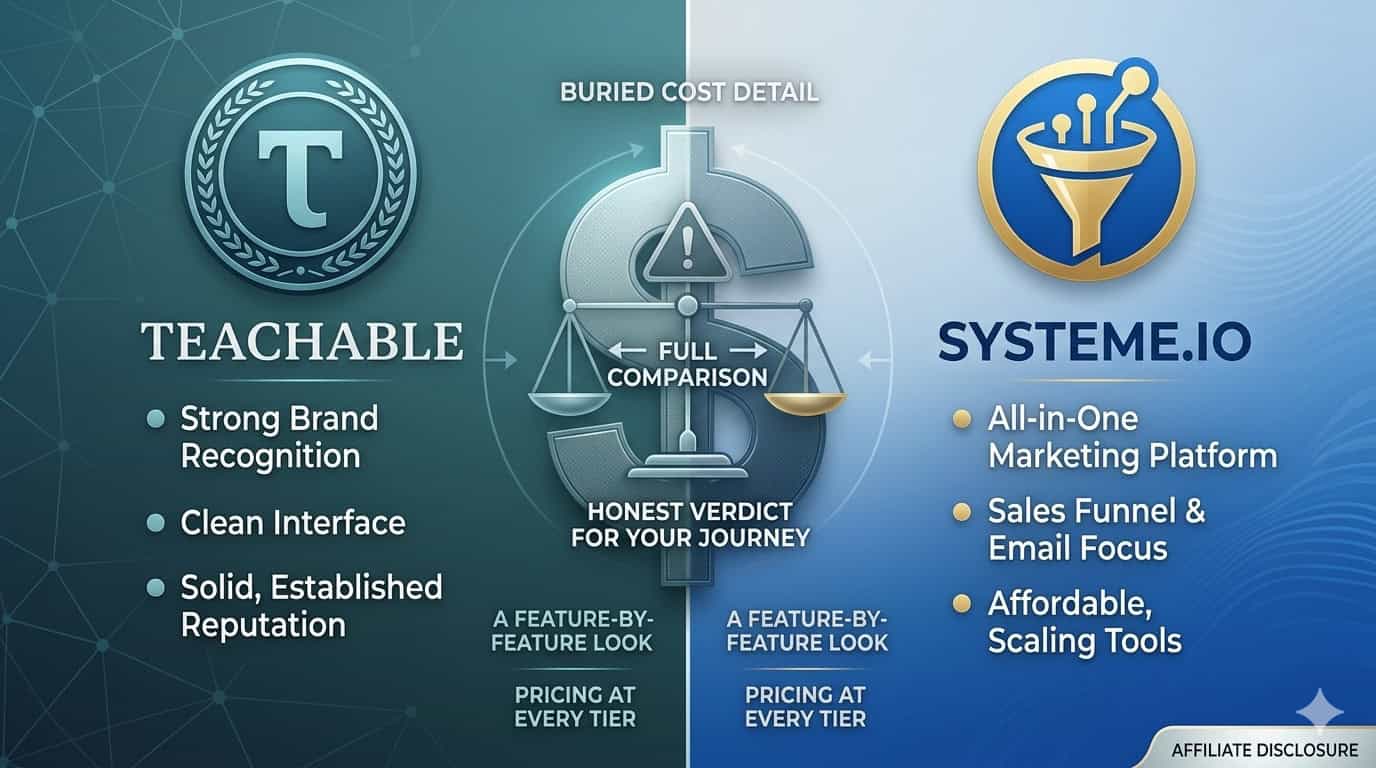
Teachable used to be one of the most recommended starting points for new course creators — and in fairness, it earned that reputation. It was simpler than the alternatives, reasonably priced, and had a support team that people actually praised. If you asked anyone in the online course space three or four years ago where to start, there was a reasonable chance they said Teachable.
In 2026, that recommendation is much harder to make with a straight face.
The platform has been through two significant price increases in the past three years. The free plan has been removed entirely. The May 2025 pricing restructure removed grandfathering for existing users, forced migrations onto more expensive or more restrictive tiers, and sparked widespread anger in the creator community — with some long-term customers suddenly facing annual bills double what they'd been paying. Customer support, once a genuine strength, now regularly draws complaints about AI runarounds, multi-day response times, and tickets ignored for months. And the bugs that have existed in the platform for years remain largely unfixed.
None of this means Teachable is worthless. But it does mean that anyone choosing it in 2026 needs to go in with clear eyes — especially if they're new to the space and haven't yet built consistent revenue to absorb rising platform costs.
I've been building online businesses and using course platforms for years. I've watched Teachable's trajectory up close, and I've tested Systeme.io thoroughly enough to speak about it with confidence. This comparison is written from that experience, aimed at course creators and coaches who want to make a smart decision rather than an expensive one.
Why Platform Choice Matters More Than Most Creators Realise
Before getting into the comparison, I want to make a broader point that applies to every platform decision you'll make.
When you're choosing a course platform, you're not just choosing where your videos will live. You're choosing your billing relationship for potentially years to come. You're choosing the company whose support you'll rely on when something breaks at the worst possible moment. You're choosing a pricing structure that may or may not stay stable. And you're choosing an infrastructure that determines how much of every sale you actually keep.
Most creators don't think about these things when they sign up. They think about the course builder. They think about how the student dashboard looks. And those things matter — but they're almost never what causes regret. What causes regret is the subscription that keeps rising, the support ticket that doesn't get answered, the platform change that forces a migration you didn't plan for.
My view, developed over years in this space: the best platform for a new creator is the one that gives you what you need to launch and sell, without locking you into costs you can't yet justify. Choose for where you are right now, not for the version of your business you're hoping to have in two years.
What Teachable Actually Offers — and What It Now Costs
Teachable has been around since 2014 and has genuinely helped a large number of creators build and sell courses. The course creation experience is straightforward: the curriculum builder supports video, audio, PDF, quizzes, and drip scheduling, all in a reasonably logical drag-and-drop interface. The student experience is clean and functional. If you simply need somewhere to put your course content and have students access it, Teachable can do that job.
But the full picture of what Teachable offers today — and what it costs — is worth spelling out clearly, because the headline price is only one part of the story.
Pricing in 2026
Following the May 2025 restructure, Teachable's plans (monthly billing) are:
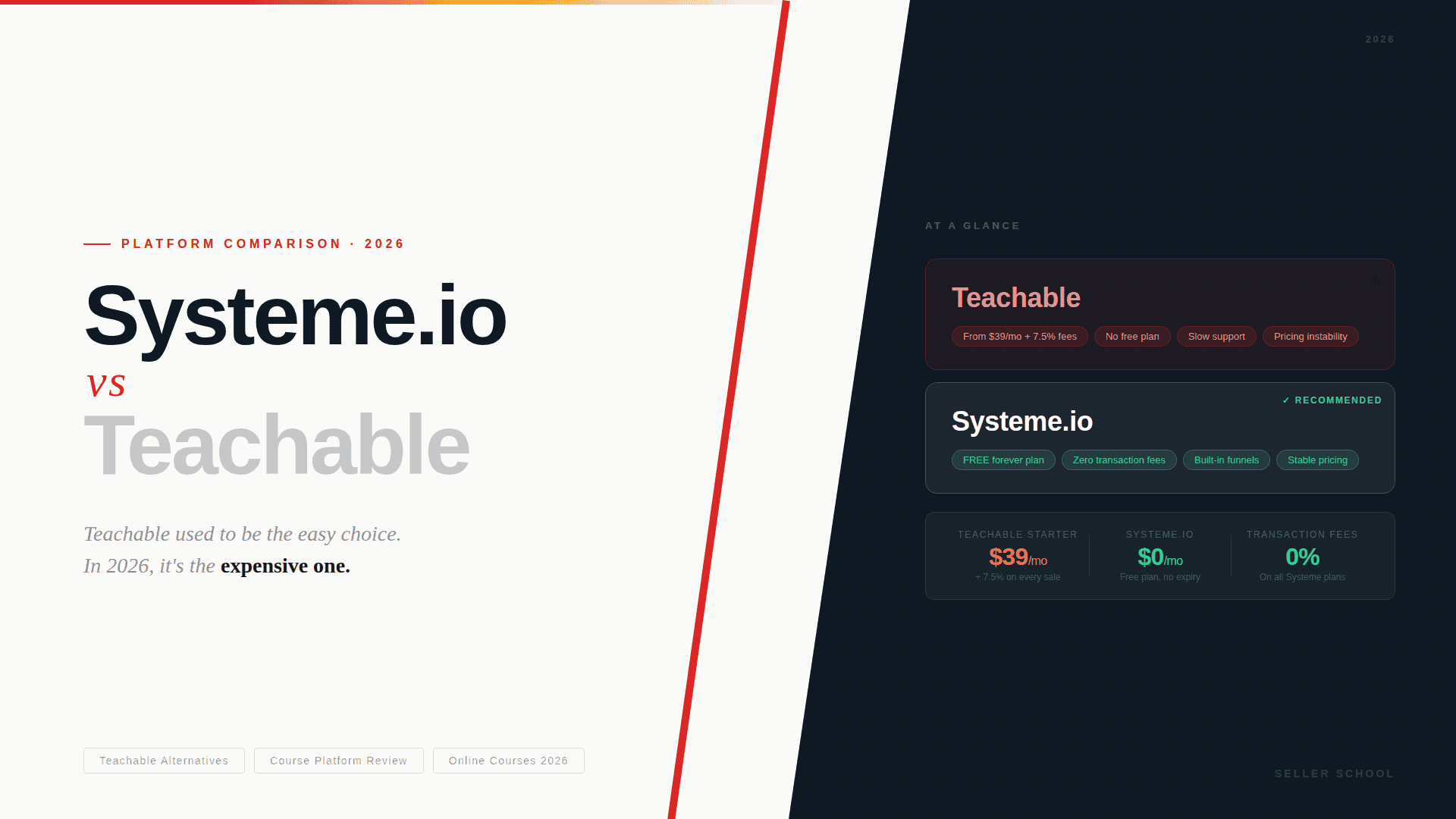
- Starter — $39/month: Just one published product, and a 7.5% transaction fee on every sale. If you earn $1,000 in a month, Teachable takes $75 before payment processor fees. This plan also keeps Teachable's branding on your school.
- Builder — $89/month: Five published products, zero transaction fees, affiliate programme access, and basic email marketing. This is where most creators end up once they're selling actively.
- Growth — $189/month: 25 published products, white-label branding, advanced analytics, and AI tools.
- Advanced — $399/month: 100+ products, full API access, webhooks, and priority support.
The free plan that previously existed has been removed. New users get a 7-day free trial only.
There's also the BackOffice add-on — Teachable's optional payout and affiliate management service — which adds a further approximately 2% fee per transaction on top of standard payment processing costs.
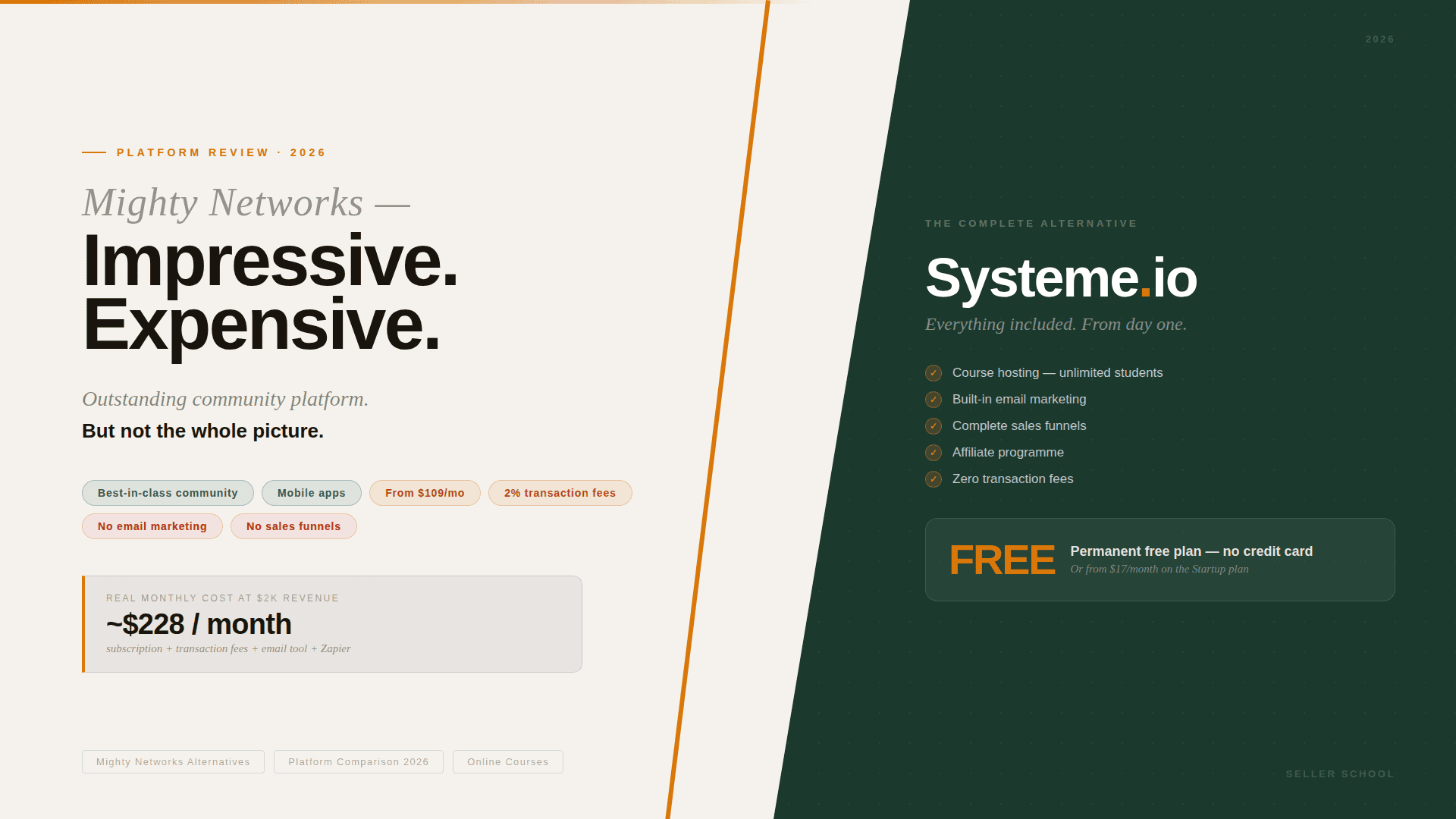
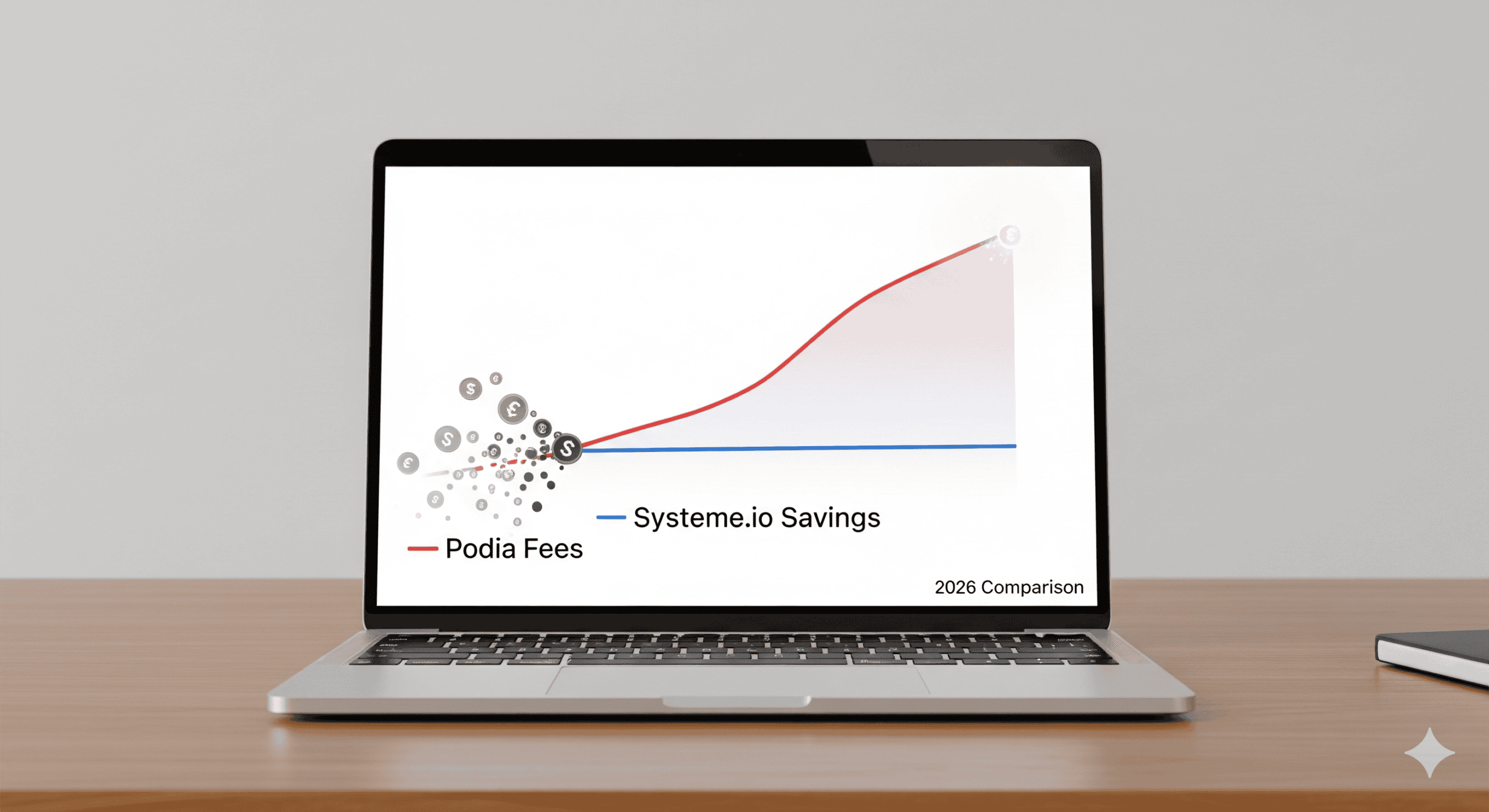
The real sting comes when you run the maths on the Starter plan. A creator earning $2,000 a month in course sales on the $39 plan pays $39 platform fee plus $150 in transaction fees (7.5%) plus standard Stripe fees. That's roughly $220 per month in combined platform and transaction costs — before spending a penny on marketing. The Builder plan at $89 per month with zero transaction fees is far better value for any creator with consistent sales, but it's a meaningful step up in overhead before you've proven your concept.
What the Reviews Say
The pattern of complaints across Trustpilot, G2, Capterra, and the Better Business Bureau in 2025 and 2026 is consistent and worth taking seriously:
- Long-standing customers were forced off grandfathered plans in mid-2025 with limited notice — some facing immediate loss of course access and student unenrollments as a result of the forced migration.
- Support quality has declined markedly. G2 reviews describe six-year customers with open tickets ignored for four months. Trustpilot reviews describe AI runarounds and three-day waits for basic responses. One BBB complaint documents a creator whose plan was effectively cancelled without authorisation when they simply asked about migration options — resulting in their paying students being unenrolled.
- Platform bugs reported by multiple users include slow admin panel load times (30 seconds or more between screens), broken module skipping, certificate errors, and sales page buttons failing to function correctly despite correct setup. Several of these bugs are described as having existed for years without resolution.
- During a live $10,000 launch campaign with over 600 attendees, one G2 reviewer reported that payments completely stopped working — hundreds of people clicked 'Pay' and zero transactions went through.
- The removal of the free plan and the 2025 pricing restructure drew widespread criticism, with users describing it as a breach of trust towards long-term customers and a significant price hike dressed up in neutral language.
To be clear: there are also positive Teachable reviews, and the platform continues to work well for many creators who are using it at scale, have a dedicated technical resource, and can absorb unpredictable support response times. But for a beginner who is just getting started and is relying on their platform to be stable, affordable, and supportive — the risk profile is real.
What Is Systeme.io? The Case for Starting Differently
Systeme.io is a French-built all-in-one platform that has grown rapidly on a straightforward proposition: everything you need to build and run a course business, starting completely free.
The permanent free plan — not a trial — gives you three courses, 2,000 contacts, unlimited email sends, three complete sales funnels with upsells and order bumps, a full affiliate management programme, a website builder, and basic automation. No transaction fees on any plan. No Teachable branding on your student-facing pages.
Paid plans are $17 per month (Startup), $47 per month (Webinar), and $97 per month (Unlimited). At every tier, Systeme.io is dramatically cheaper than Teachable — and covers significantly more of a new creator's business infrastructure in a single subscription.
The platform was designed with non-technical beginners in mind. Navigation is logical, the terminology is plain, and most of the core tasks — building a course, creating a funnel, setting up a checkout and email sequence — can be completed without any prior experience or need for tutorial support. Most creators can get their first course live within a day or two of creating their account.
Systeme.io vs Teachable: The Comparison That Matters
Course Hosting and Delivery
This is Teachable's strongest area. The course builder is clean, the student experience is polished, and the drag-and-drop curriculum editor is genuinely easy to use for beginners. Video upload, drip scheduling, quizzes, certificates, and progress tracking are all well-implemented — though the quiz builder is widely considered basic, and some of the older course builder workflows have been criticised as clunky and linear.
Systeme.io's course builder is functional and well-organised. You can build structured modules with video, text, PDF, audio, and drip scheduling without technical knowledge. The student experience is clean and professional. It won't win awards over Teachable's polish, but for the self-paced courses that represent the vast majority of what new creators build, it does everything needed without friction.
Verdict: Teachable has a slight edge on the course creation and delivery experience specifically. Systeme.io is entirely adequate for the majority of beginners.
Marketing, Funnels, and Sales
This is where the comparison becomes sharply one-sided. Teachable has no native sales funnel builder. It can create sales pages, but you cannot build a complete opt-in-to-sale sequence within the platform. There are no order bumps or one-click upsells in the checkout flow. Email marketing on the Builder plan and above is basic — functional for student communication, but not designed for audience building and conversion.
Systeme.io was built with funnels at its centre. From the free plan, you can create a complete opt-in page, sales page, checkout with order bump, one-click upsell, and thank-you page. You can build automated email sequences that trigger based on opt-ins, purchases, or tags. You can run an affiliate programme. All of these features are included without needing a third-party integration or an upgraded plan.
For a new creator who doesn't yet have an established audience and needs to actively market their course — which describes almost every beginner — this gap matters enormously. Teachable assumes you already have traffic and an audience. Systeme.io gives you the tools to build them.
Verdict: Systeme.io wins decisively. Teachable's marketing infrastructure is minimal and requires third-party tools to fill the gaps.
Pricing and Transaction Fees
Teachable's Starter plan at $39/month with a 7.5% transaction fee is genuinely difficult to justify for a new creator. If you earn $500 in your first month — a realistic early milestone — you pay $39 plus $37.50 in transaction fees, plus Stripe's standard processing fee on top. Nearly $80 in platform costs before you've covered your own time.
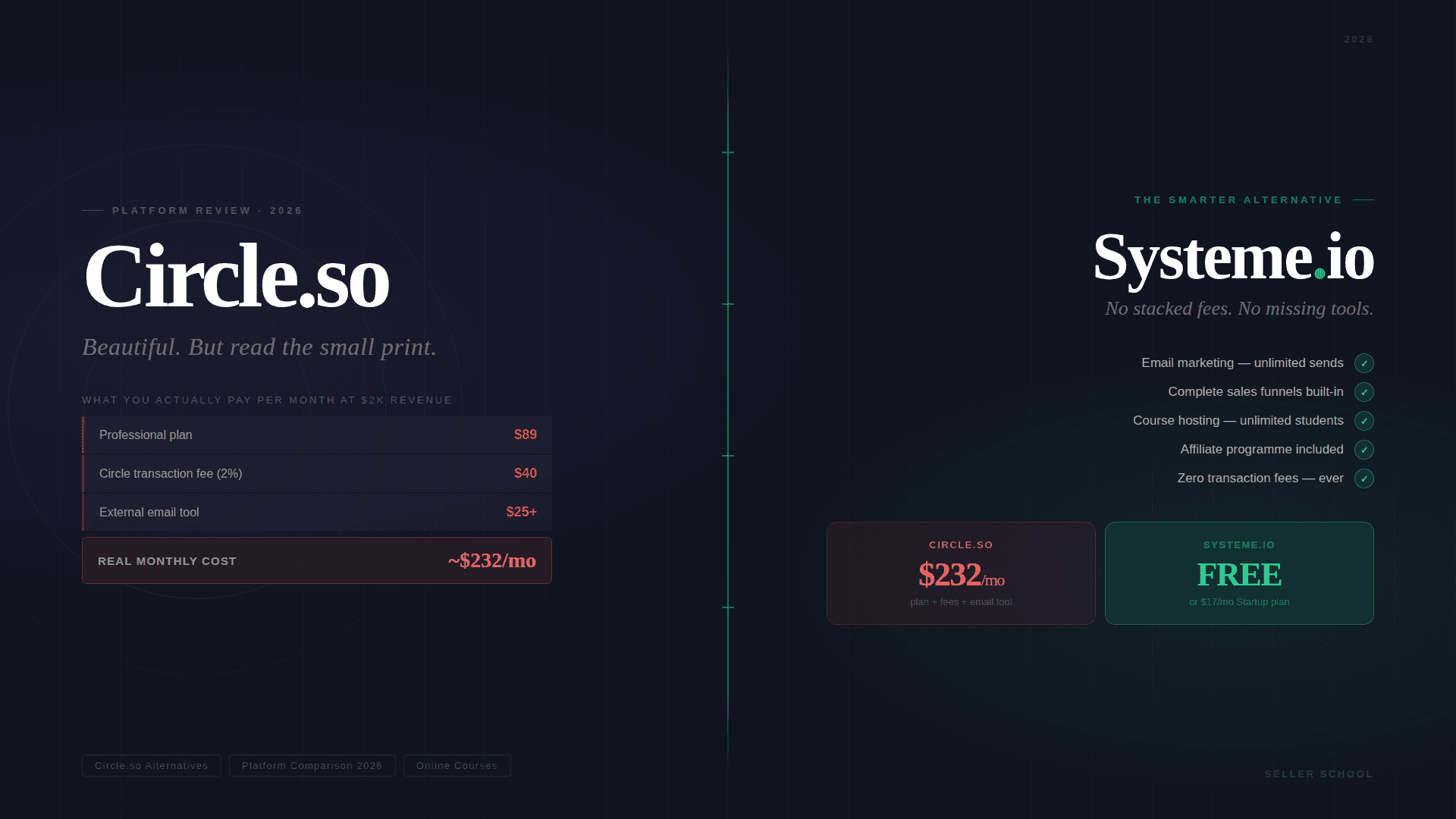
Systeme.io charges no transaction fees on any plan. The free plan has zero monthly cost. Even the $17 Startup plan gives you ten courses, 5,000 contacts, ten sales funnels, and full affiliate tools — all with no transaction fees beyond standard payment processor rates.
The financial case for Systeme.io, particularly for creators who haven't yet established consistent revenue, is overwhelming.
Verdict: Systeme.io wins comprehensively on pricing and the absence of transaction fees.
Reliability and Support
Teachable's support has declined significantly based on the pattern of recent reviews. The AI-first response system means creators often receive automated replies that don't address their actual problem, followed by long waits before reaching a human. For creators with complex or urgent issues — a live launch failing, a student unable to access purchased content, billing irregularities — this is a serious risk.
The platform bugs flagged across multiple review sources in 2025 and 2026 are also a concern. Slow admin panel performance, broken module-skipping functionality, and certificate errors affect the student experience directly. The fact that several of these have reportedly existed for years without resolution suggests they are not being prioritised.
Systeme.io's support is generally rated more positively — live chat is available, the knowledge base is comprehensive, and the community around the platform (active Facebook groups and forums) means peer support is readily accessible. It is not perfect, but the pattern of reviews is materially better than Teachable's current trajectory.
Verdict: Systeme.io has a clear advantage on support reliability and platform stability based on current evidence.
Stability and Predictability
This is a factor that rarely appears in feature comparisons but matters greatly in practice: can you trust that the platform you choose today will still be offering the same plan, at the same price, with the same features, in twelve months?
Teachable's history on this front is not reassuring. Two price increases in three years. The removal of the free plan. The forced migration of existing users in mid-2025 with limited notice. Long-term customers reporting that plans they'd relied on for years were unilaterally changed.
Systeme.io has been substantially more stable in its pricing and feature structure. This matters especially if you're building a business on a platform — the last thing you need is a surprise email telling you your annual subscription is doubling.
Verdict: Systeme.io has a better track record on pricing stability.
The Mistakes That Cost New Creators the Most
A few patterns come up again and again when I look at how course creators choose platforms — and several of them apply directly to Teachable's current situation.
1. Choosing a name you recognise over a platform that fits where you are now.
Teachable has brand recognition. It comes up in blog posts, YouTube videos, and creator communities. That familiarity creates a false sense of safety. A platform being well-known doesn't mean it's the right fit for your stage of business or your budget.
2. Ignoring transaction fees when calculating real cost.
A 7.5% transaction fee is easy to overlook when you're just starting out and not yet earning. But it compounds quickly. On $1,000 in monthly revenue, that's $75 every month going to the platform on top of the subscription fee — before you've paid a penny in marketing, tools, or your own time.
3. Not accounting for platform risk.
Every creator who was grandfathered into an older Teachable plan assumed that plan would continue. It didn't. The lesson is simple: when choosing a platform, factor in the company's history of treating its existing customers fairly — not just the current price.
4. Waiting until you have problems to evaluate your options.
The time to research alternatives is before you've built six months of course content on a platform you're not sure about, not after. If you're reading this before you've committed, you're in the best possible position to make a genuinely informed decision.
5. Confusing a polished student experience with business infrastructure.
Teachable delivers a reasonably polished course delivery experience. But a polished course player doesn't generate sales — marketing does. If your platform can't help you build funnels, grow an email list, run affiliates, and convert visitors into buyers, you're missing the most important part of the business.
Alternatives to Teachable: Where Systeme.io Fits in the Market
When creators search for alternatives to Teachable, they typically want one of two things: a platform with similar or better course delivery, or a more complete business tool that handles marketing as well as hosting. Sometimes both.
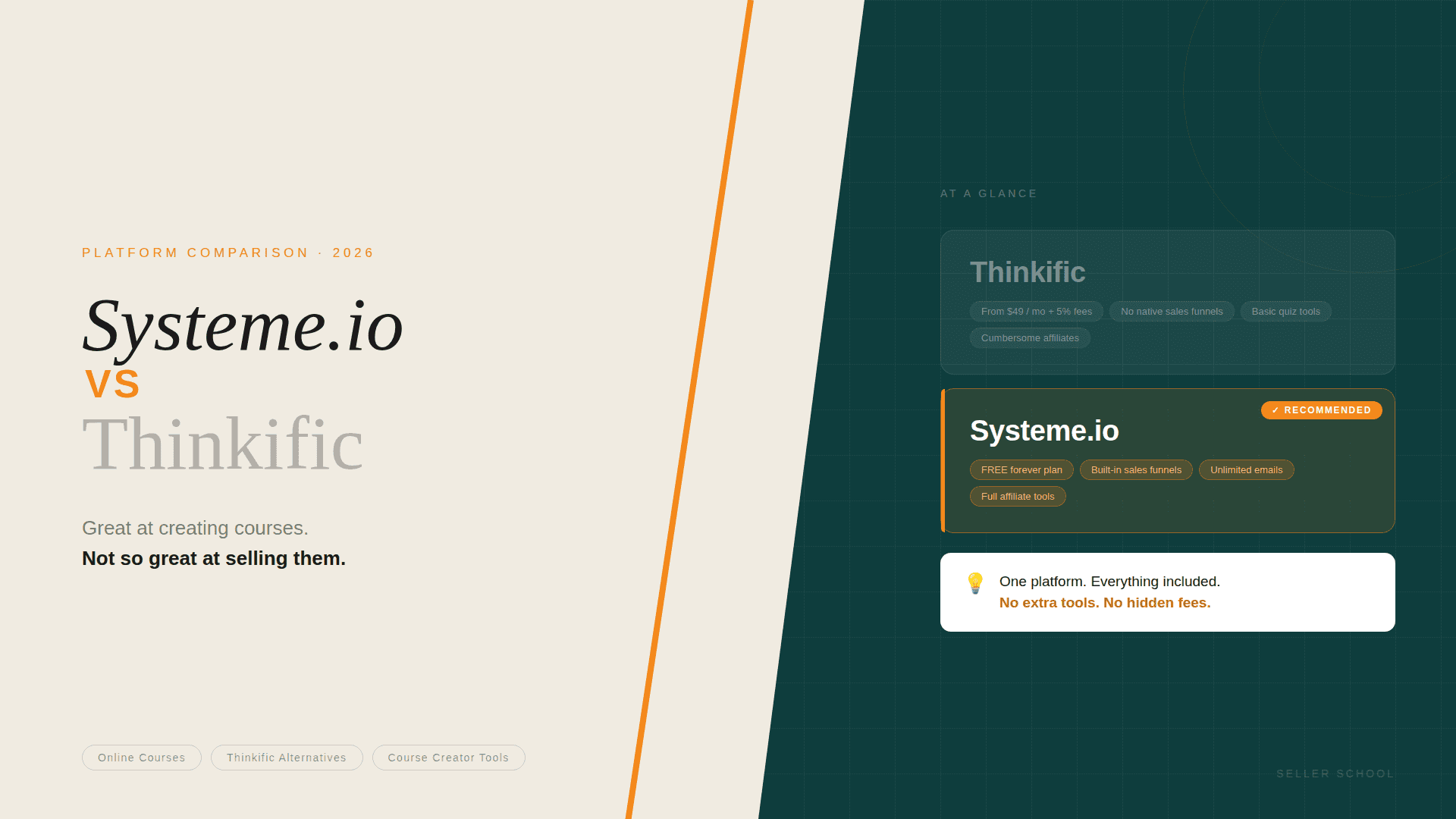
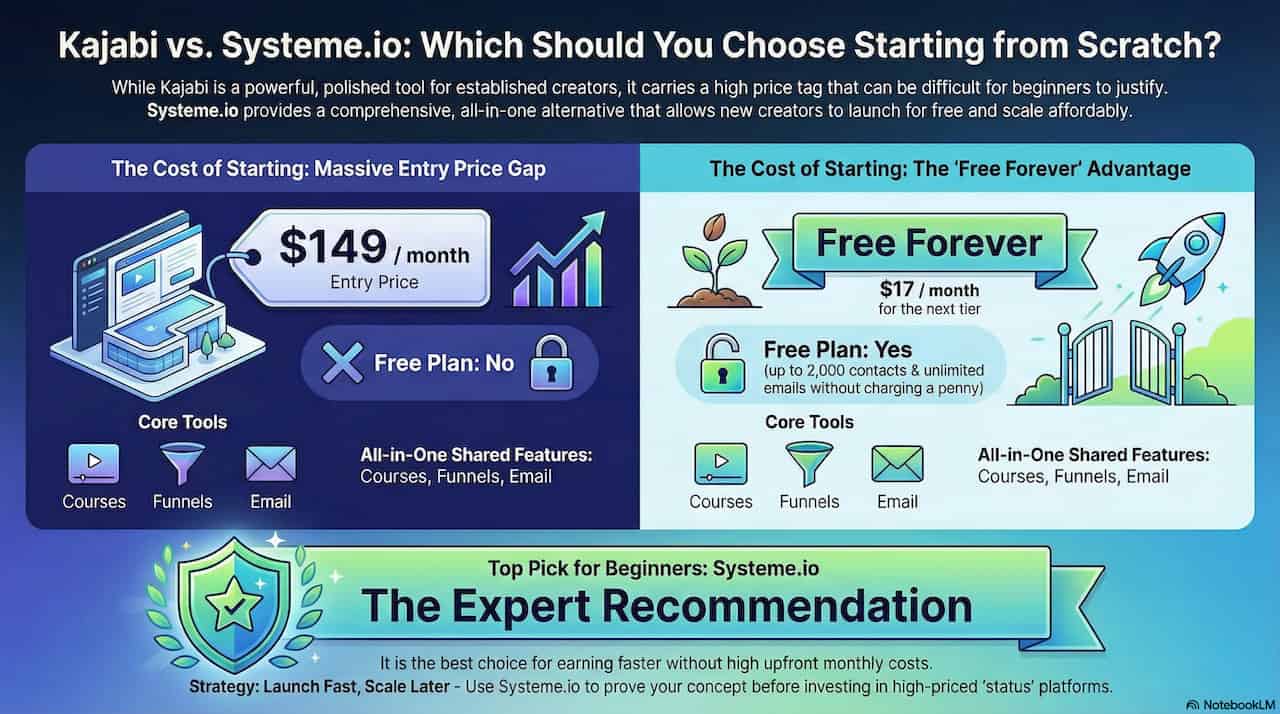
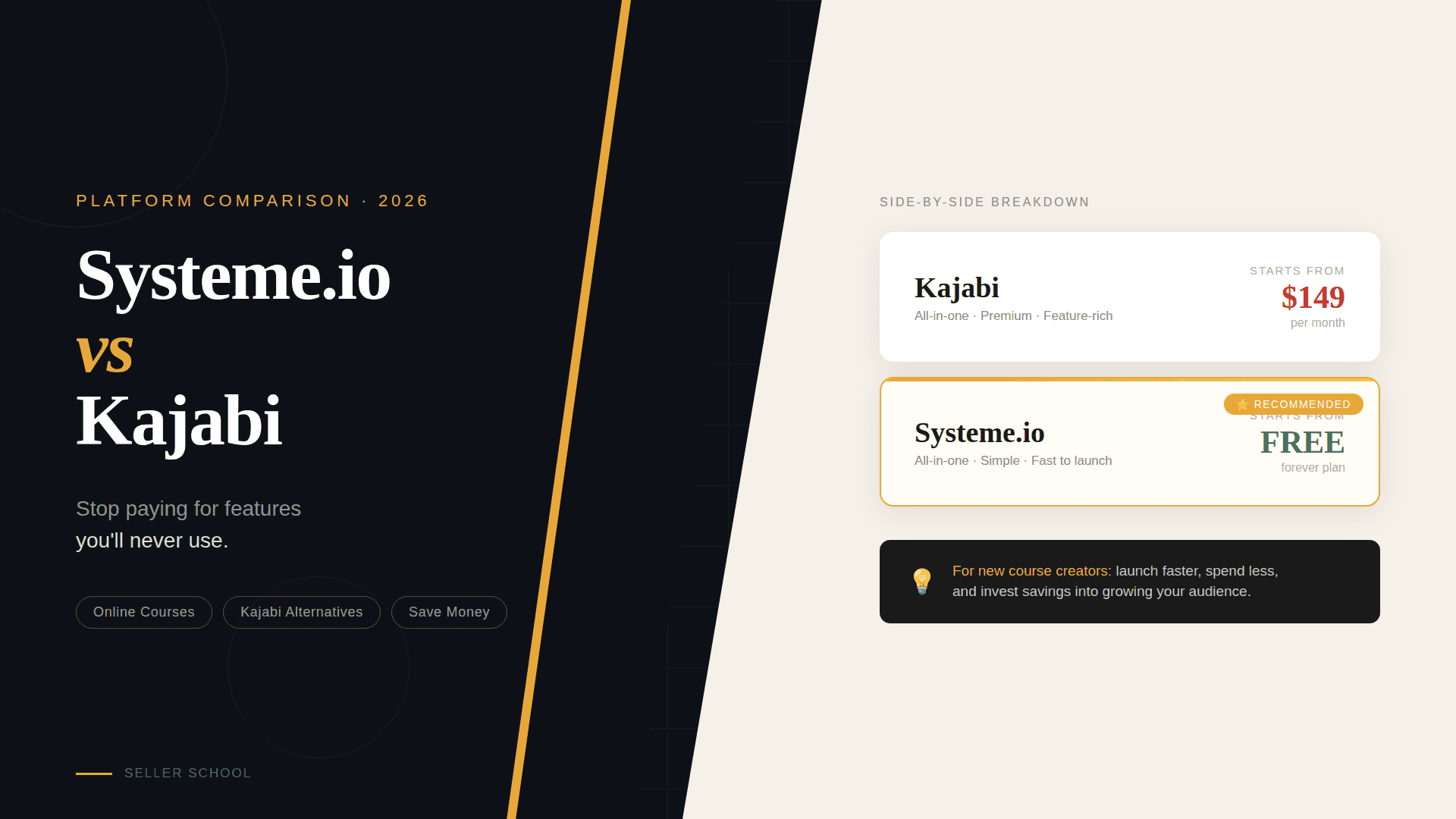
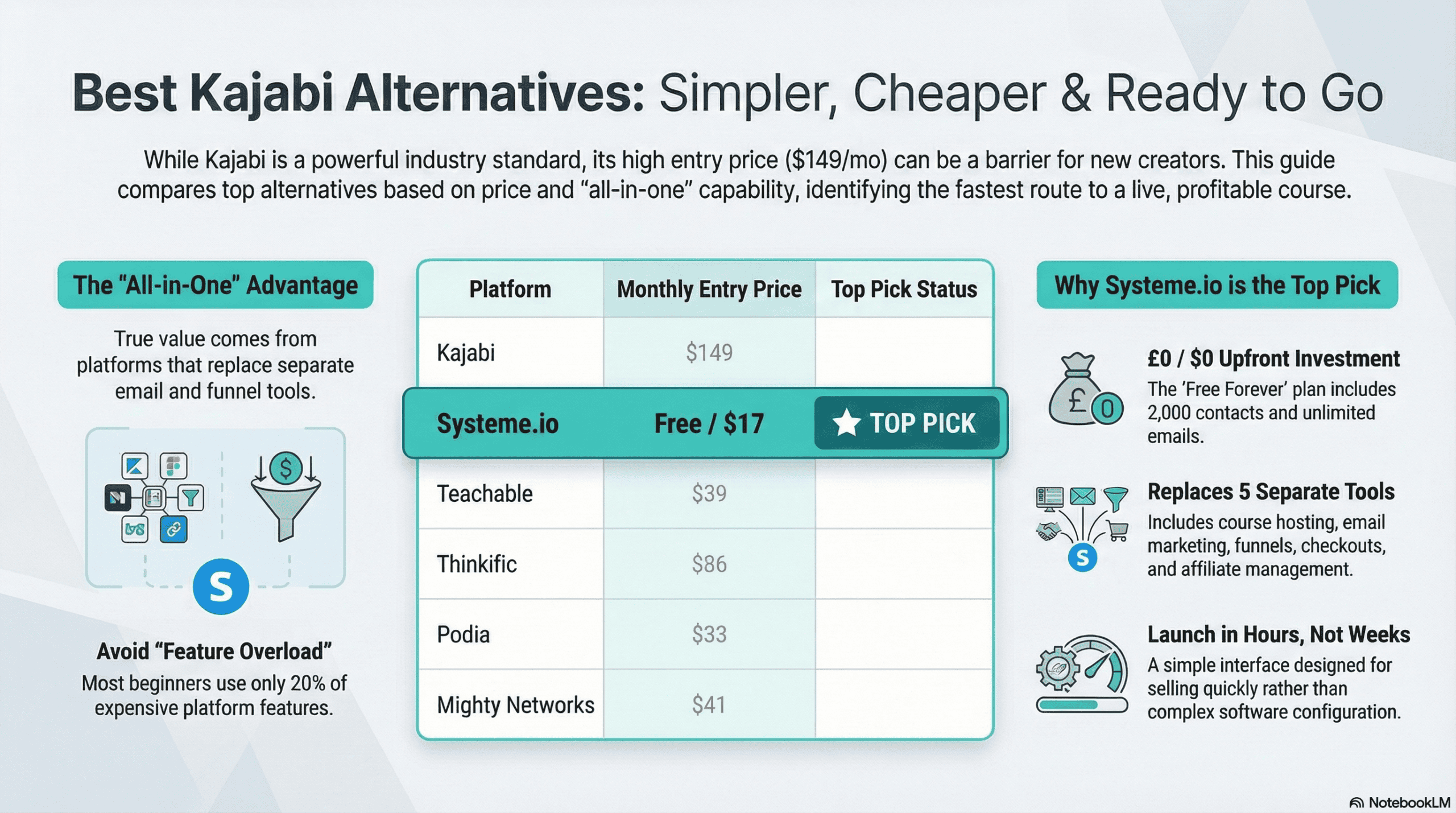
The alternatives to Teachable worth considering include Kajabi (comprehensive but expensive, starting at $149/month), Thinkific (better course delivery than Teachable, still limited on marketing tools), and Systeme.io (the most complete all-in-one option at the lowest cost, particularly for beginners).
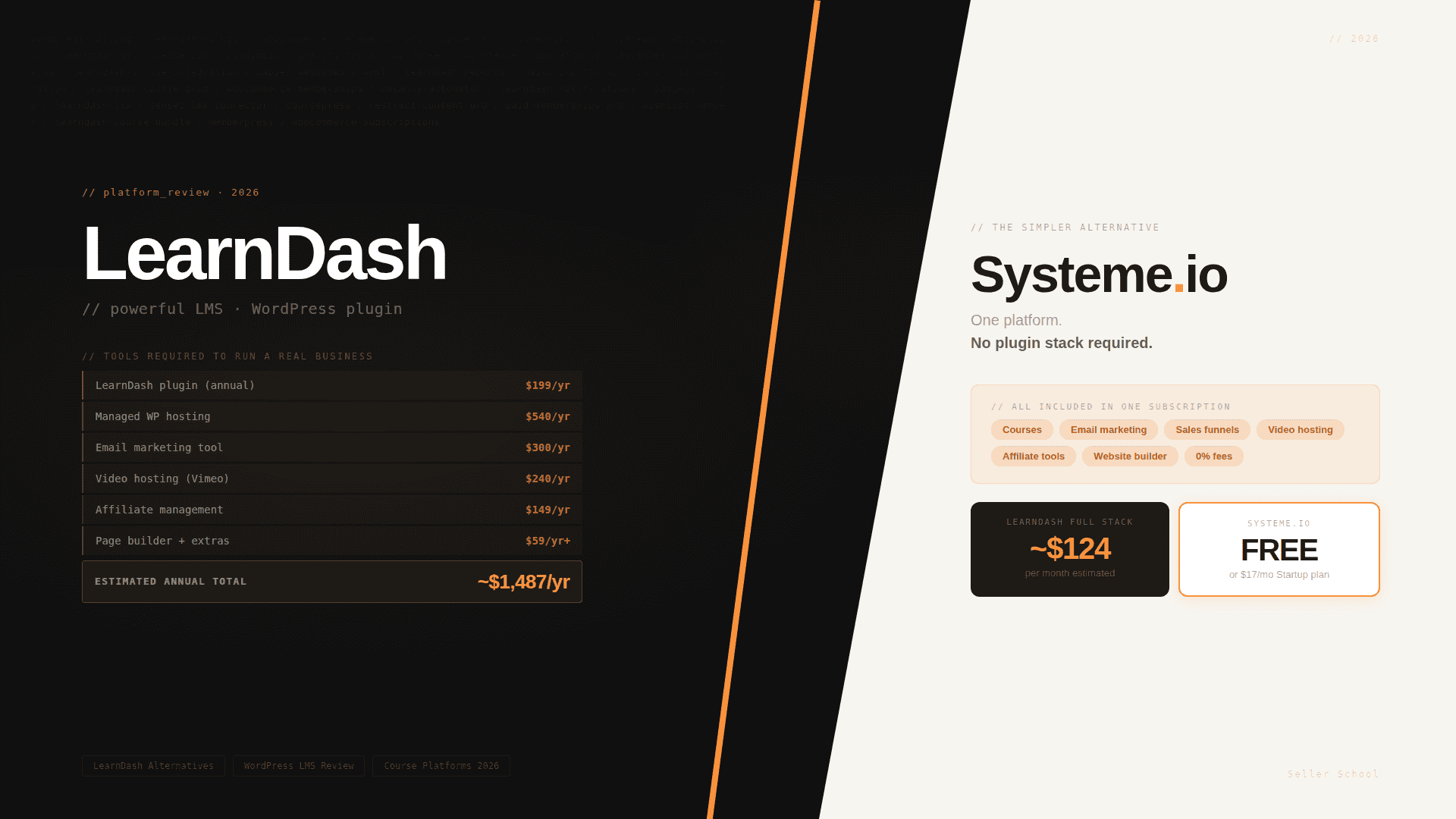
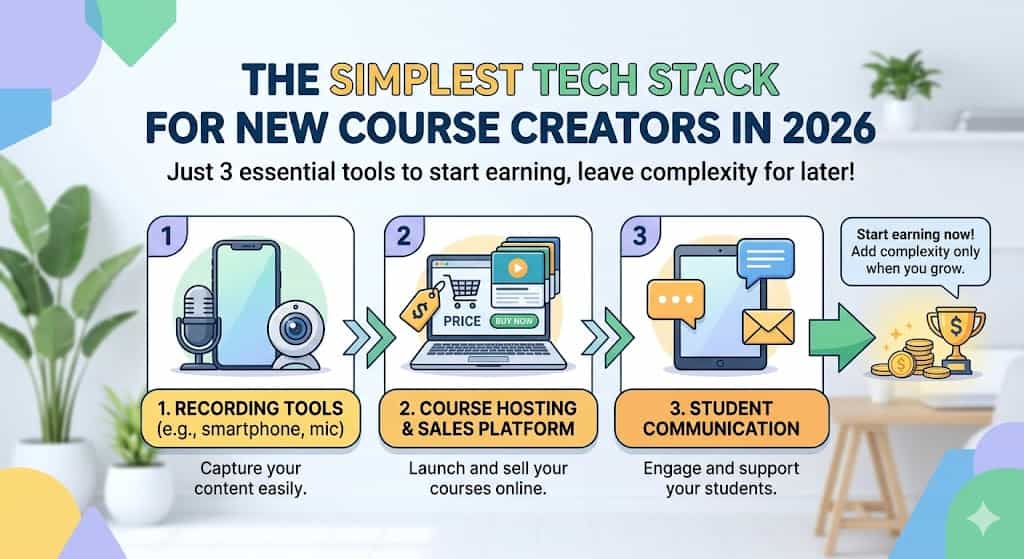
Systeme.io occupies a unique position in this field: it's the only platform that genuinely replaces the combination of a course hosting tool, email marketing platform, funnel builder, and affiliate system — all in one place, starting free. In a landscape where the typical new creator spends time and money cobbling together three or four tools, that integration has real practical value.
The online course platforms comparison question that matters most for beginners is not which platform has the best course builder. It's which platform gives you everything you need to launch and sell — without requiring you to generate significant revenue before you can afford the infrastructure to earn it. On that question, Systeme.io is the clearest answer in the market right now.
Who Should Choose Which Platform?
Systeme.io makes more sense if:
- You're launching your first or second course and your revenue isn't yet consistent
- You need marketing tools, funnels, and email built into your course platform
- You want to avoid transaction fees and minimise overhead while your business finds its feet
- You've looked at Teachable's pricing and the 2025 changes have given you pause
- You want to get up and running quickly without building a tech stack from multiple tools
Teachable might still work if:
- You already have an established audience and a separate marketing stack in place
- You're generating consistent monthly revenue that makes the Builder plan ($89/month) financially straightforward
- The course delivery experience is genuinely your priority and you have technical support available
- You understand the current support limitations and have a low-urgency use case
The One Thing Worth Doing Right Now
If you've been sitting in research mode — comparing platforms, trying to work out which one to trust — here's the most useful thing I can tell you: the best way to evaluate a platform is to actually use it.
Systeme.io's free plan is not a trial. It doesn't expire. You can create a full account, build your first course, set up a sales funnel, connect your payment processor, and see whether the platform fits how you work — all without committing to a subscription or entering payment details.
Sign up for your free Systeme.io account here: https://iosysteme.com. No payment details required. No expiry date.
And if you'd like a broader, independent comparison of all the main platforms worth considering — covering Teachable, Systeme.io, Kajabi, Thinkific, Kartra, Zenler, and others — I've put together a free guide designed specifically for course creators and coaches. It covers what each platform is genuinely suited for, the real total cost at each stage of your business, and how to make the right call without spending weeks in research. The guide is available below this article.
Your course exists to help people. The platform it runs on should make that easier, not harder — and it shouldn't make you anxious about what the next pricing email is going to say.
About the author: This article draws on several years of hands-on experience building and selling courses across multiple platforms, including Teachable, Systeme.io, Kajabi, Zenler, Kartra, and others. The aim is always practical, honest guidance — based on real use, not feature lists or affiliate incentives.