


A post you put on Instagram today has done most of its work within about 48 hours. A YouTube video you publish today can still be sending you students — and email subscribers, and affiliate signups — two years from now. That single difference is why YouTube belongs at the centre of a course creator's strategy, and it's also why so many creators quietly waste it. Most people who build a channel end up with something that gets views but never turns a viewer into a buyer: the channel grows, the business doesn't.
There's one link that decides which of those two outcomes you get. Get it right and every video quietly builds a buying audience; leave it out — which most people do — and you're building an audience that watches and then wanders off. By the end of this article you'll know exactly what that link is, where it goes, and the full path from a stranger searching YouTube to someone buying your course. I'll also show you a deliberate experiment I'm running on my own channel right now, because everything below is what I actually do, not a theory I read somewhere. This channel is the live example of the strategy it describes — and that's not a coincidence, it's the point.
Why YouTube specifically
So the fair question is: why YouTube, rather than Instagram, TikTok, a podcast, or a blog? There are three reasons, and each one matters for a course business in particular.
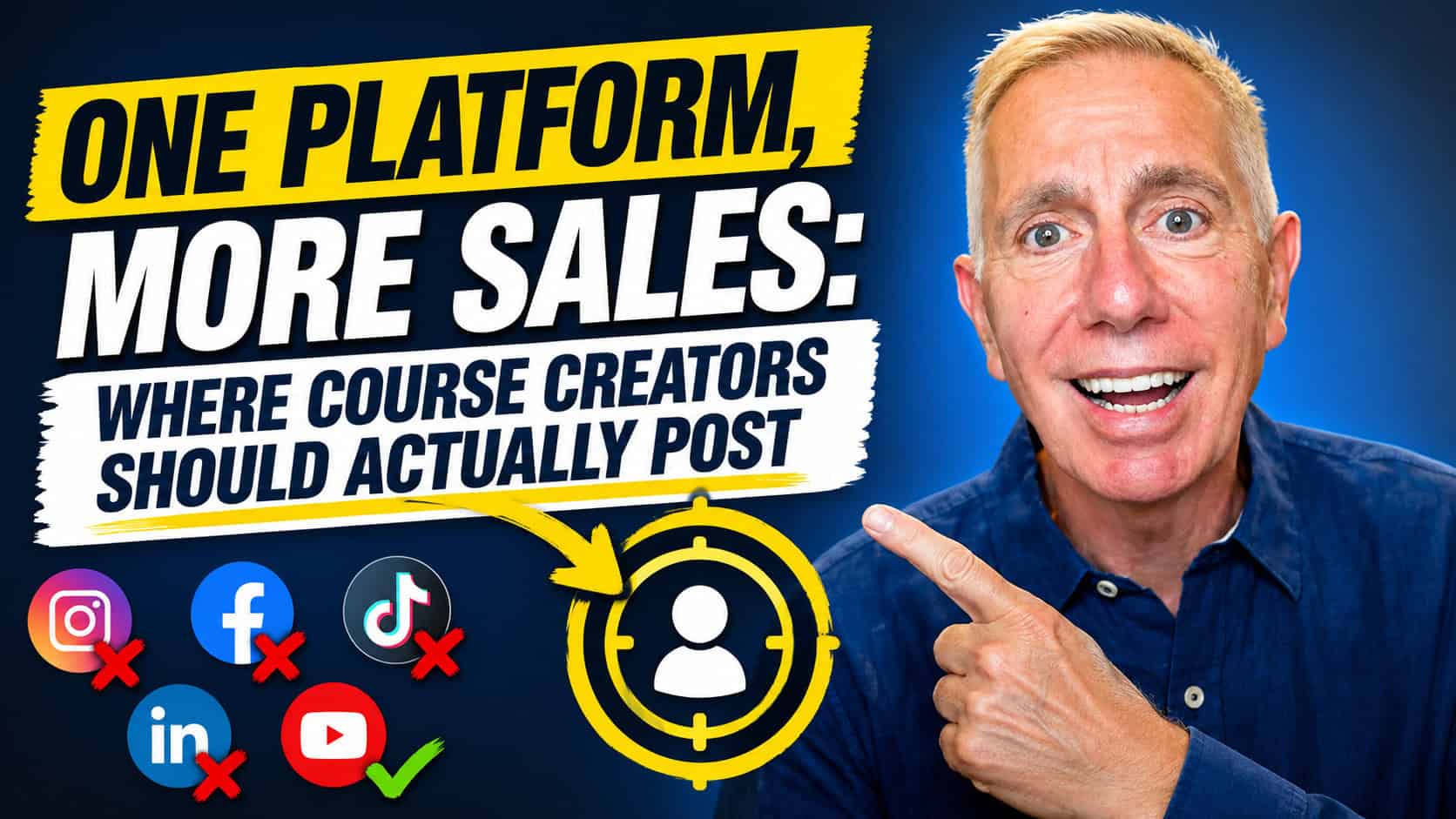
The first is that YouTube compounds, and almost nothing else you can do for free does. On most social platforms content decays fast: the feed is a conveyor belt, so your post rides past everyone once and then it's gone. YouTube isn't a feed — it's a library with a search engine attached. A video optimised for a specific search keeps being found and watched months, even years, after you published it, and analyses of evergreen channels keep landing on the same shape: a video's returns often go on climbing into months 12 to 24. That means every video you publish is a permanent asset. You do the work once, and it keeps working while you sleep, while you film the next one, while you're on holiday. For a creator trying to build an audience, that kind of compounding reach at zero cost is rare.
The second reason is search intent. YouTube is often described as the world's second-largest search engine, and while people argue about the precise ranking, the underlying fact isn't in dispute: it handles billions of searches a month across more than two and a half billion users. What matters for you is the type of attention that produces. Unlike a feed that pushes content at people based on past behaviour, YouTube also pulls content toward people based on what they are actively searching for right now. Someone who types “how to build an email list as a course creator” is not idly scrolling — they are looking for a solution to a specific problem, which makes them precisely the person who might buy a course on that topic. If your video is well-optimised for that search, it appears in front of them at the exact moment they want what you offer. That is advertising, except it is free and keeps running indefinitely.
The third reason is trust, which video builds faster than any other medium available to a course creator. When someone watches five or six of your videos, they have spent the best part of an hour with you — hearing how you think, seeing how you explain things, forming a view on whether you are worth learning from. That is a relationship, in the sense that decides whether someone buys. A blog post can do a little of this and a podcast a bit more, but video does it fastest and most completely, because the viewer experiences you — your personality, your delivery, your credibility — rather than simply reading your words. Compounding, intent, and trust are the case for the platform. But none of them turns into a single sale on its own — and that brings us to the one link I promised you.
The pipeline that actually pays
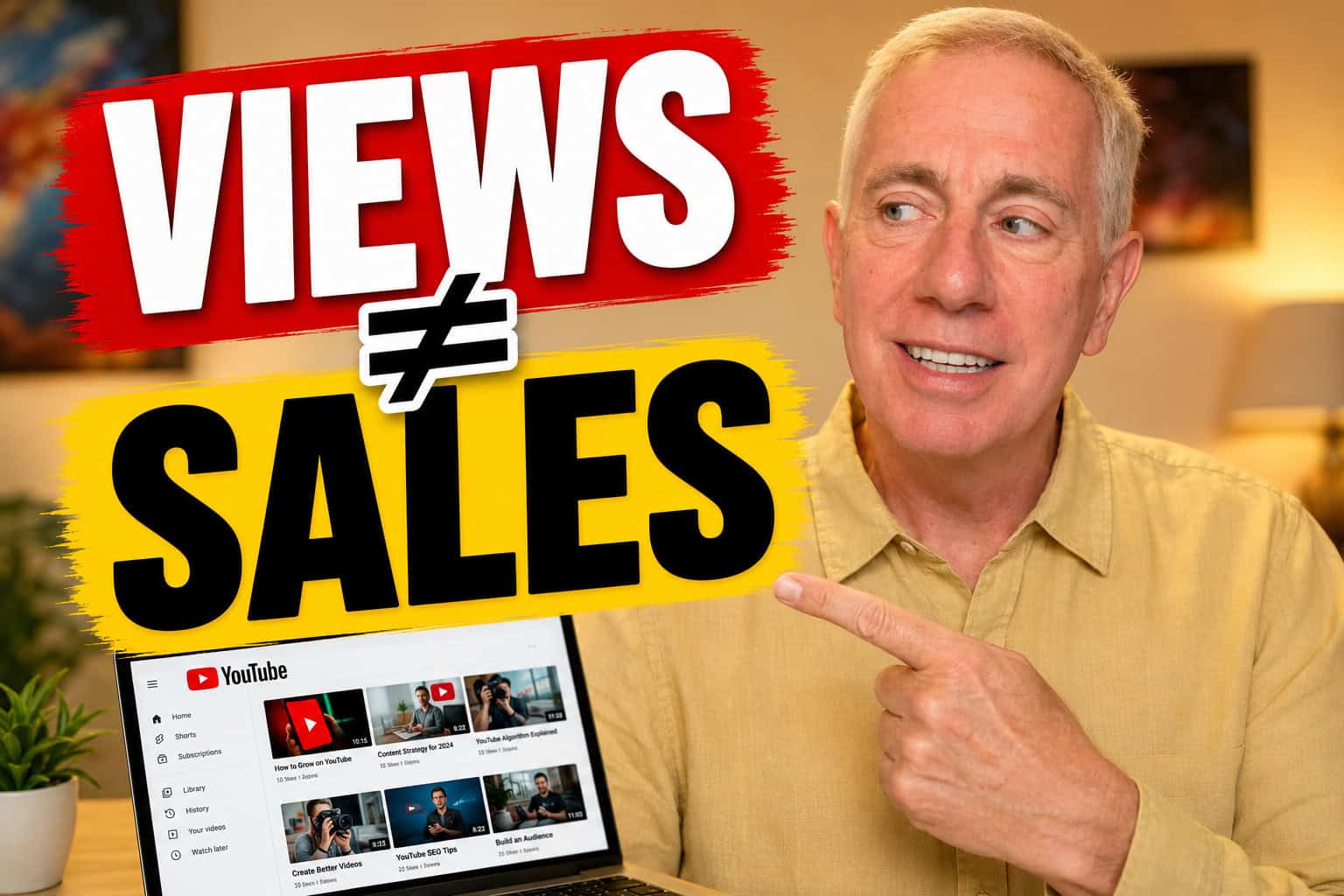
Here is the mistake that keeps course creators poor on YouTube: they treat views as the goal. Views are not the goal. Views are the top of a pipeline, and if there is no pipeline underneath them, the attention leaks straight back out and you are left with a growing channel and an empty bank account. So it is worth making the whole pipeline visible, because once you have seen it you will never make a video without it again.
It works like this. Someone searches YouTube for a specific problem. Your video appears, and they watch most of it because it is genuinely useful. By the end, they trust you enough to want more. Now comes the moment everything turns on. Underneath your video is a description, and in that description is a link — and the single most important link in that box is the one to your email opt-in page. That is the one link. They click it, land on your opt-in page, and hand over their email address in exchange for your lead magnet. In that instant they have gone from a stranger who watched a video to a subscriber you can reach any time you like, for free, for as long as they stay on your list.
From there, they receive the lead magnet and move through your welcome sequence — a handful of emails over the following days, each building trust. At the end, you introduce your course naturally, and some of them buy. That is the pipeline: video, to email list, to sale. Two things make it powerful. First, it is the reason the email step exists at all: Litmus' 2025 State of Email research put the average return on email marketing at around thirty-six dollars for every dollar spent, comfortably ahead of any other channel. That return comes not from the software but from the warm relationship the list lets you build — YouTube earns the attention, and email is where it converts. Second, once built, the whole thing runs on its own: the video works without you, the opt-in page is live without you, the welcome sequence fires without you. You do the work once, and the system runs continuously.
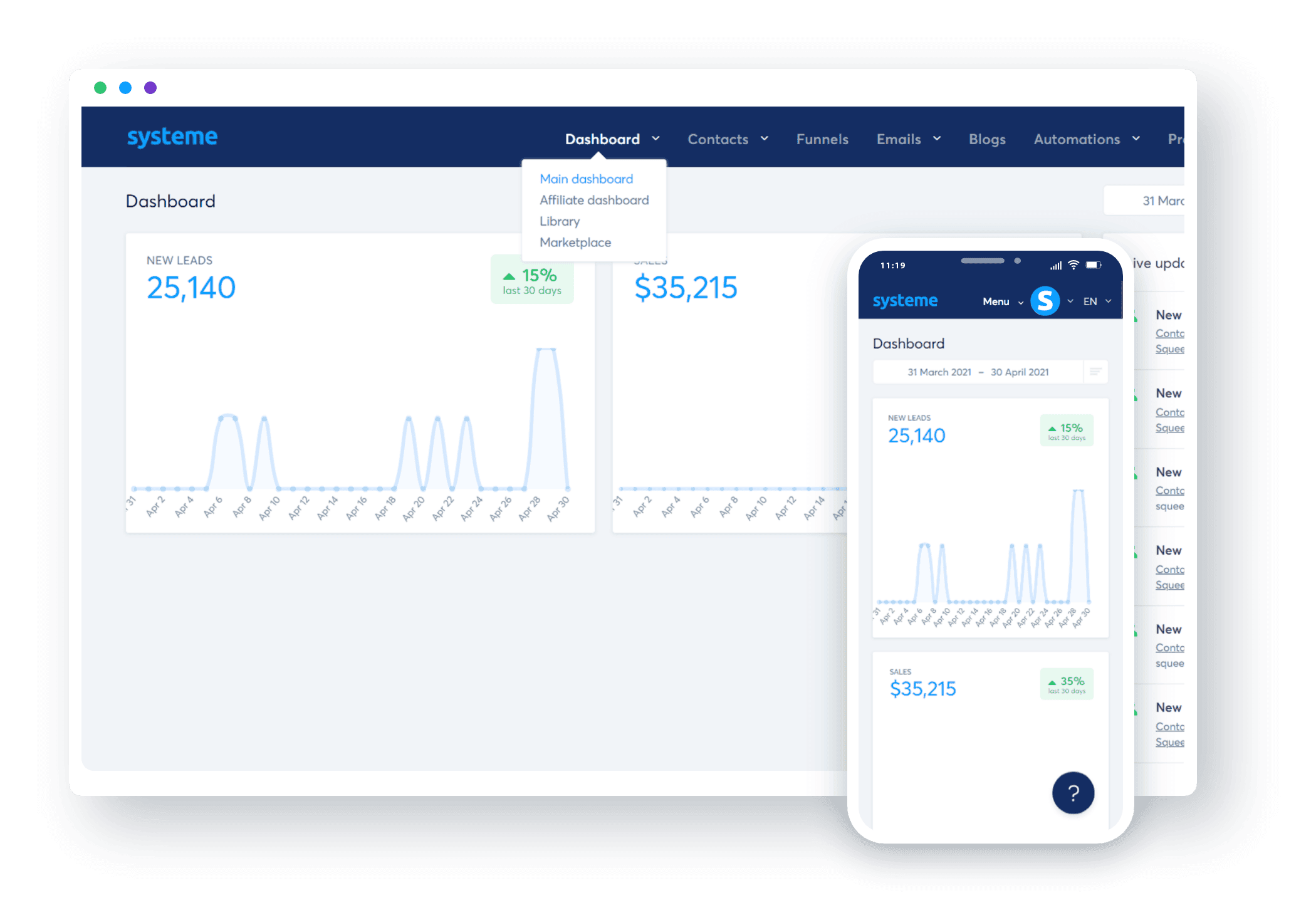
On my own channel, that pipeline is live right now. Every video links to a free systeme io account in the description — the platform running the opt-in page and the email sequence that turns viewers into students. I'm not describing a theory I read about; I'm describing the exact machine a new subscriber steps into the moment they click. Which is why the how that follows only matters once you've built the pipeline underneath it.
What to create
The most common question about YouTube is what to actually make videos about, and the most common mistake in answering it is to start from what you want to talk about rather than what your ideal student is already searching for. Sometimes those overlap, and when they do you get videos that are both enjoyable to make and genuinely discoverable. When they don't, you get videos that feel meaningful to you and find nobody.
The starting point is keyword research, which sounds technical but at its simplest is just this: what words are your ideal students typing into YouTube when they are looking for a solution to the problem your course solves? You can see a rough version of the answer in seconds. Go to YouTube, start typing the core topic of your course into the search bar, and look at what it fills in. Those autocomplete suggestions are not guesses — they are real searches real people are making right now. Each one is a potential video and a group of people actively hunting for the answer. If your video is the best answer, YouTube surfaces it to them.
But not every search is worth the same to you, and this is where course creators go wrong. You are not chasing views; you are chasing the right views, from people likely to buy a course on your topic. So filter for buying intent. “Best platform for online courses” is someone making a decision — far higher intent than “what is an online course.” “How to sell an online course without an audience” is someone building a course business right now. A search like “systeme io review” is someone close to signing up for a platform, which is extremely high commercial intent. Run every topic through one question: is the person searching this likely to be my ideal student, and receptive to what I offer? If yes, that is your video.
There is one more distinction worth building into your content plan — and it's the experiment I mentioned at the start. Some videos are designed to be found through search: they target a specific keyword, answer a specific question, and generate steady, targeted traffic for years, even if they never spike in views. Others are designed to be shared: they make a strong argument or challenge a common assumption, and get sent to a friend. They can spike quickly but attract a broader, less targeted crowd. Both have value — search-first videos build your baseline of qualified traffic, and shareable videos build your reach. On my own channel, across this series, I'm alternating between them on purpose: last week's video was shareable, this one is search-first, and by the end of the series I'll have real data on which format drives more subscribers and more signups — data that will shape what I make next. That's the experiment, and you can run exactly the same one on your own channel.
How to make your videos findable
A good video is necessary but not sufficient. You also have to hand YouTube the information it needs to put that video in front of the right person, and three elements do most of that work: the title, the thumbnail, and the description.
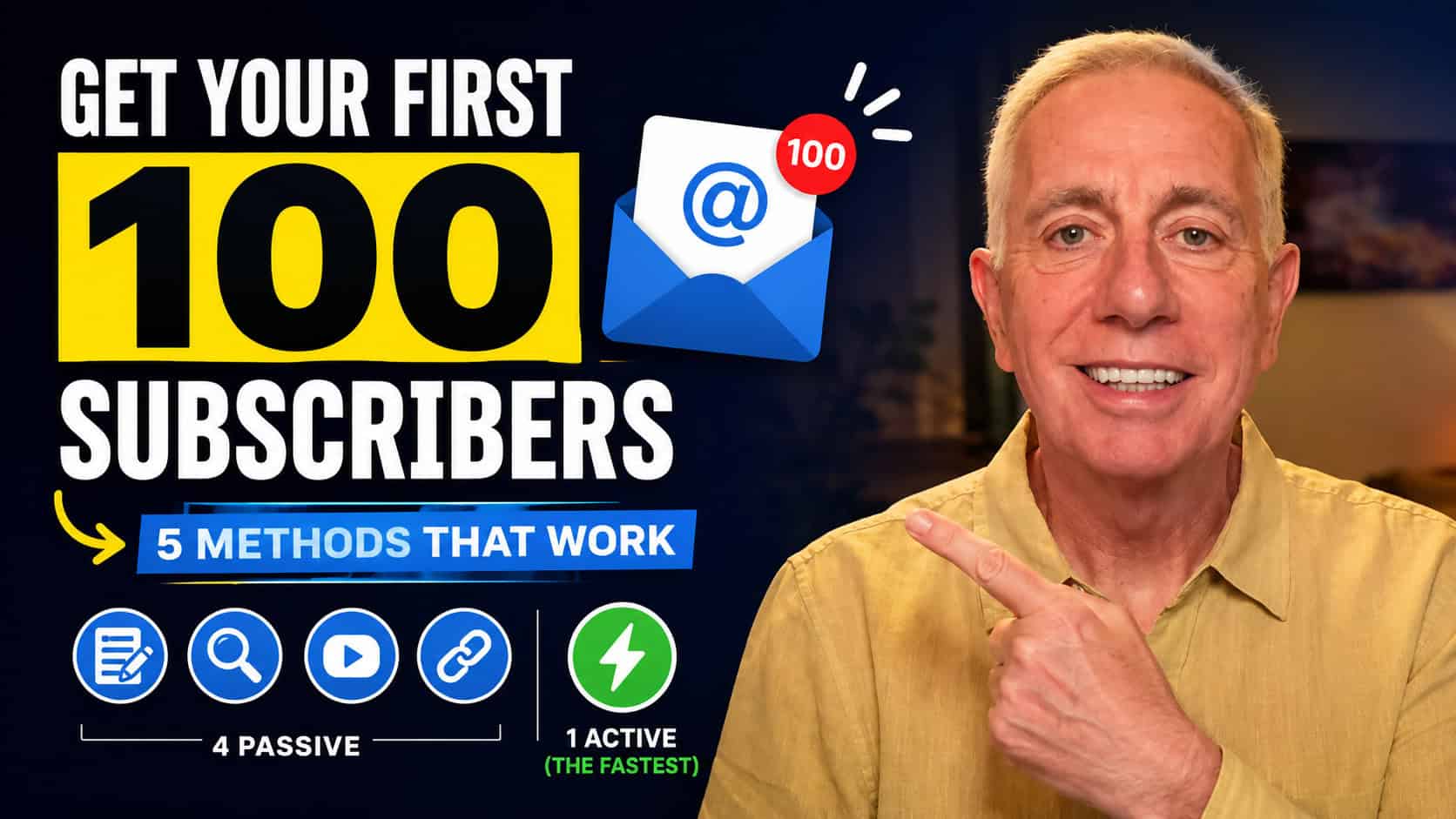
Your title does two jobs at once: it tells YouTube what the video is about, so the algorithm knows when to surface it, and it tells a human why to click. For a search-first video, lead with the keyword — “How to Build an Email List From Zero as a Course Creator” puts the search term where YouTube weights it most. For a shareable video, lead with the hook — “Why Your Course Isn't Selling (It's Not What You Think)” targets an emotion rather than a keyword. Either way, be specific, because specific beats vague every time: “How to Get Your First 100 Email Subscribers Without Paid Ads” outperforms “Email Marketing for Course Creators,” because specificity is what makes someone feel the video is for them.
Your thumbnail and title are read together, in a split second, and that decides the click. As a starting default, put your face in the thumbnail: the data leans this way, with tools like VidIQ reporting that expressive faces can lift click-through rates by roughly twenty to thirty percent. Be honest about it, though — a large recent dataset found faces made little difference in some niches, so treat it as a default to test rather than a rule. Keep any text short, four to six words, and readable at the size of a postage stamp. Let the expression carry meaning — surprise, concern, quiet confidence all signal something before a word is read — and build in contrast by pulling up the top five thumbnails for your target keyword and designing yours to look deliberately different from all of them.
Your description is where YouTube reads the full context of your video, and where your most important links live. The first two or three lines show before someone clicks “show more,” so they should hook the viewer and include your primary keyword. Then the one link — the free systeme io account that runs your opt-in and email — should appear early, with a clear reason to click, followed by a keyword-rich summary written for humans rather than robots, then timestamps, which lift watch time by letting people jump to the part they want, then your secondary links: blog post, related videos, kit list. Written well, that description does real SEO work not only for YouTube but for Google, which indexes YouTube descriptions and surfaces videos directly in web search — so one good description can earn traffic from two search engines at once.
The mistakes that quietly kill channels
Knowing what not to do is often more useful than one more tactic, so here are the mistakes I see most. The first is posting without a strategy — uploading whatever feels interesting that week, with no thought to search intent or audience-building, which produces a channel that never compounds. Every video should do a job: capture search traffic, or build a shareable body of work, ideally both. The second is ignoring the description, which leaves serious SEO value on the table, because YouTube cannot fully understand your video from the footage alone and leans heavily on the title, description and tags. The third is having no call to action; a video that ends without telling the viewer what to do next is a wasted opportunity and a broken pipeline. Every video needs one clear, specific next step — not “follow for more,” but click this link, watch this one, download this.
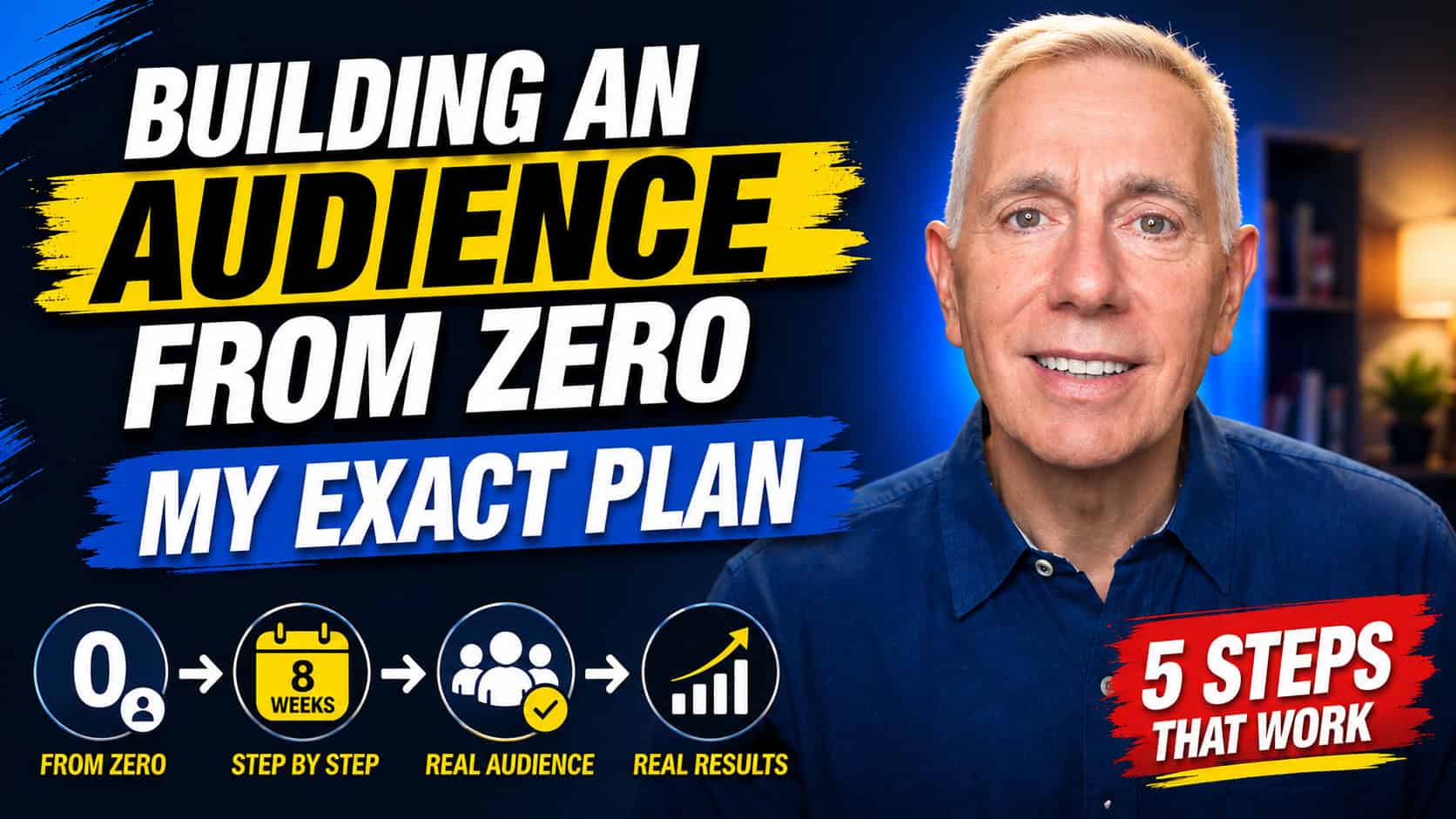
The fourth mistake is chasing views over subscribers. A viral video that brings fifty thousand people with no interest in your topic is worth less than a targeted one that brings five hundred who are actively looking for what you sell, so optimise for the right audience rather than the biggest. And the fifth, which quietly ends more channels than any other, is giving up too early. Channels compound slowly and then quickly; most see only modest growth for three to six months, then accelerate as the algorithm works out who to show them to. The creators who quit at month three never find out what month twelve looks like — often exactly where it starts to pay, which, as we saw earlier, is where the returns really begin to climb. Consistency over a sustained period is the only real non-negotiable; everything else you can refine as you go.
The infrastructure behind all of this
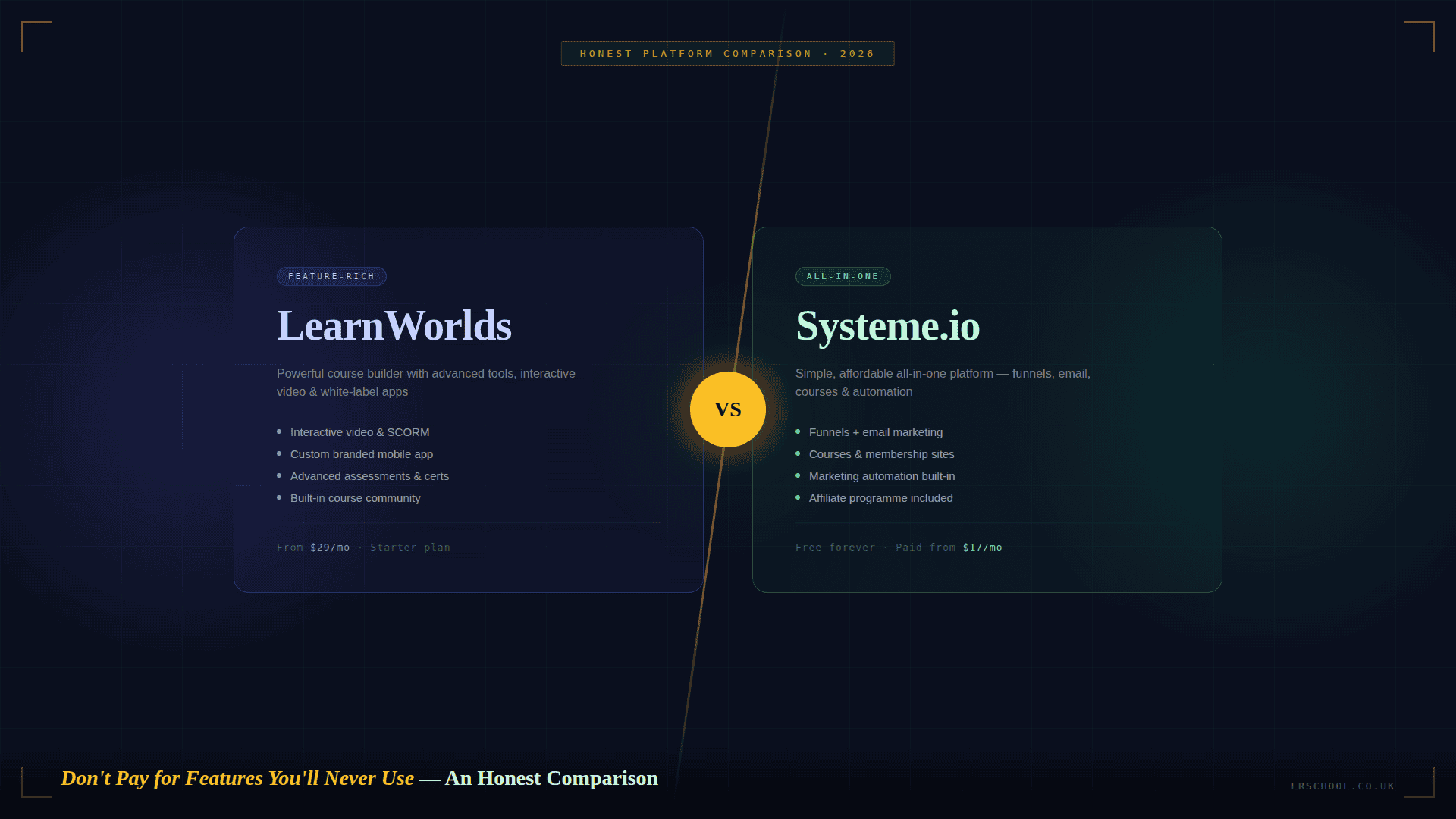
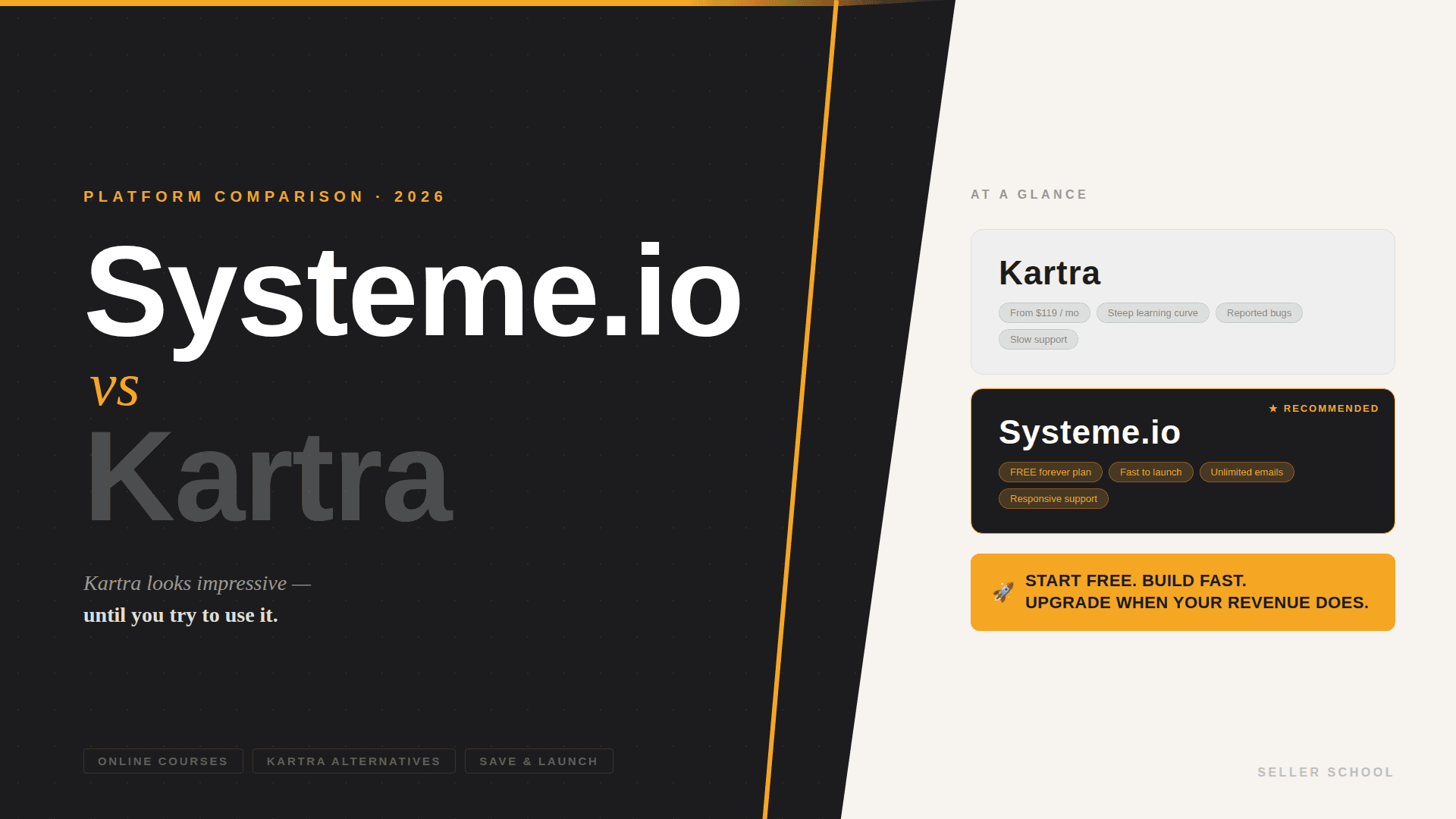
None of this needs to be complicated or expensive. Everything I've described — the email list, the lead magnet, the welcome sequence, the opt-in page the whole pipeline depends on — can be built inside systeme io, with the entire thing in one login. The free plan gives you what you need to start: an opt-in funnel, email marketing for a couple of thousand contacts, and automated sequences that nurture subscribers while you sleep. No monthly fee to begin, and no card required.
If you want to start with the platform itself, you can create a free systeme io account here: iosysteme.com. Everything in this article runs on the free plan, so there is no reason to wait before building the pipeline your channel's growth depends on. The software is not the hard part, though — the hard part is consistency, showing up with something useful week after week until every video you own is quietly feeding the same machine.
The honest summary
YouTube is the rare free channel that compounds: every video is a permanent asset that keeps finding the right people long after you've published it. But views alone build nothing. The value comes from the pipeline underneath them — the one link that turns a viewer into a subscriber, and the email relationship that turns a subscriber into a student. Make videos your ideal student is actually searching for, make them findable with a specific title, a tested thumbnail and a well-structured description, put a clear next step in every one, and keep going long enough for the compounding to start. Do the work once, connect it to a system that runs on its own, and give it time. That is the unglamorous version of using YouTube to grow a course business — and the accurate one.
Note on the figures above: the roughly thirty-six dollars returned per dollar spent on email (Litmus, 2025 State of Email) and the roughly twenty to thirty percent thumbnail click-through lift from faces (VidIQ) are widely reported industry benchmarks, not guarantees for any individual channel. The thumbnail-face effect in particular varies by niche, so treat it as a default to test rather than a rule, and treat all of these figures as the shape of the landscape rather than a forecast of your results.