



Let me guess. You've spent an embarrassing number of hours going down the rabbit hole of online course platforms. You've watched the YouTube reviews, read the comparison articles, and now you're somehow more confused than when you started. Kajabi keeps coming up, everyone seems to love it, but the price tag is making you wince. And then there's Systeme.io, which sounds almost too good to be true.
I've been there. In fact, I've spent years there — testing, paying for, and sometimes deeply regretting my choices of online course platform. I've thrown money at tools I barely used, sat through onboarding sequences for features I never needed, and built courses on platforms that made things harder than they needed to be.
So this isn't a review written by someone who signed up for a free trial and watched a few demo videos. This is a comparison written from real experience, with a very specific person in mind: someone who wants to get their course or coaching programme live, start generating income, and not spend more money than they have to along the way.
If you're aiming for your first £10,000 (or $10,000) from your knowledge, this article is for you.
The Trap Most Course Creators Fall Into
Here's the mistake I see constantly: people choose their platform before they've asked themselves what they actually need right now.
They look at a feature list and think, "I'll probably need that eventually," and before they know it, they're paying £149 a month for a platform they're using at about 20% capacity. The course isn't launched. The students aren't there. But the invoice certainly is.
The platforms know this. Feature bloat is a marketing strategy. The more impressive the feature list looks, the more justified the price seems. But for a creator just starting out, most of those features are noise. What you need is signal: a clean, functional way to host your content, collect payments, and deliver results to your students.
Simplicity and speed get you to revenue. Complexity gets you stuck.
A Quick Overview: What Are These Two Platforms?
Kajabi
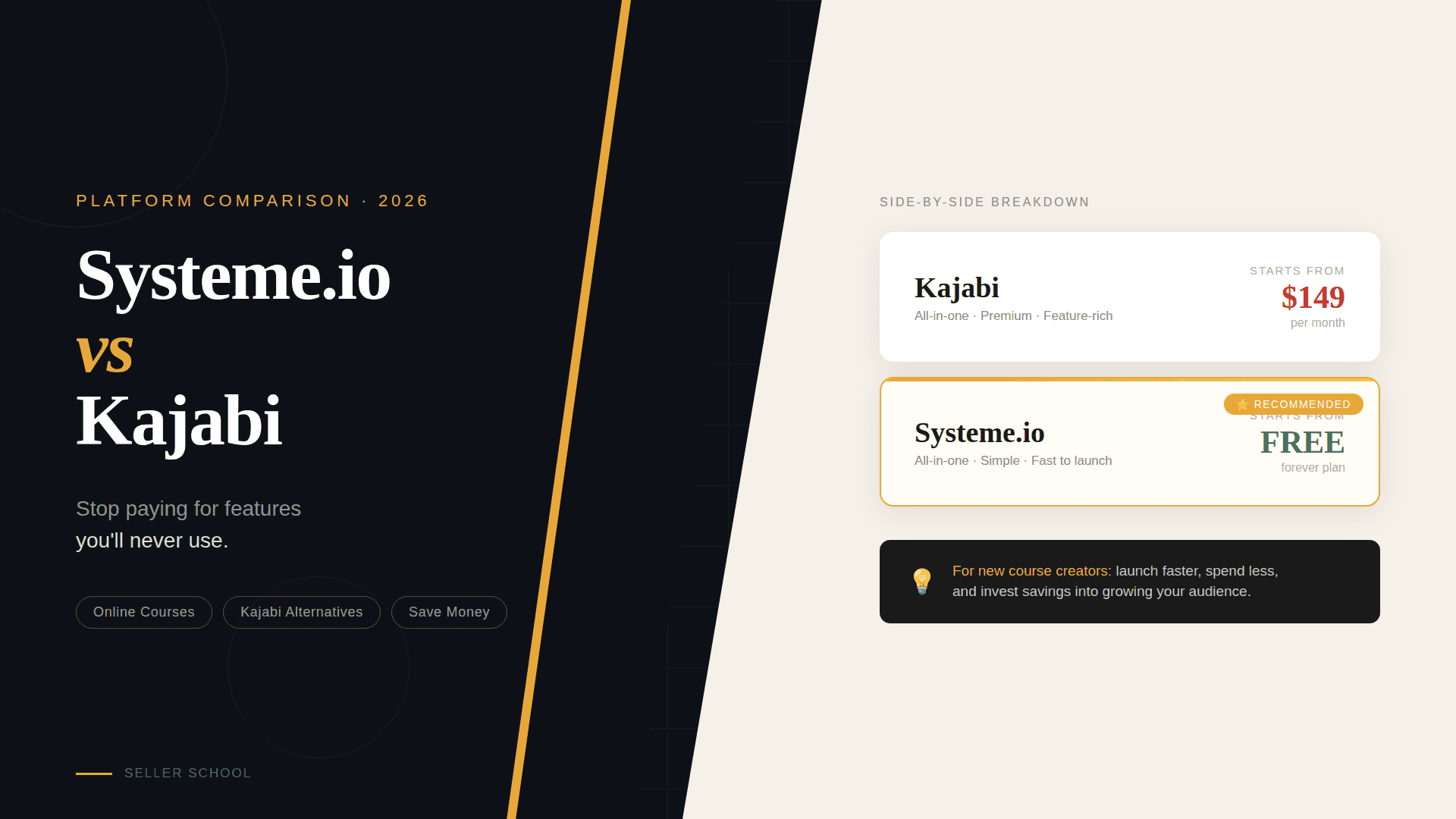
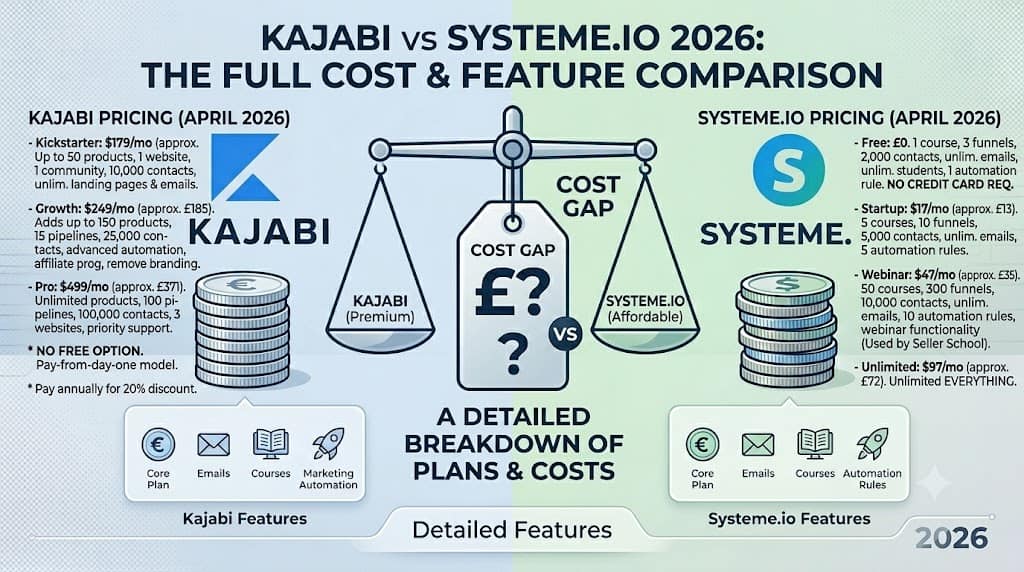
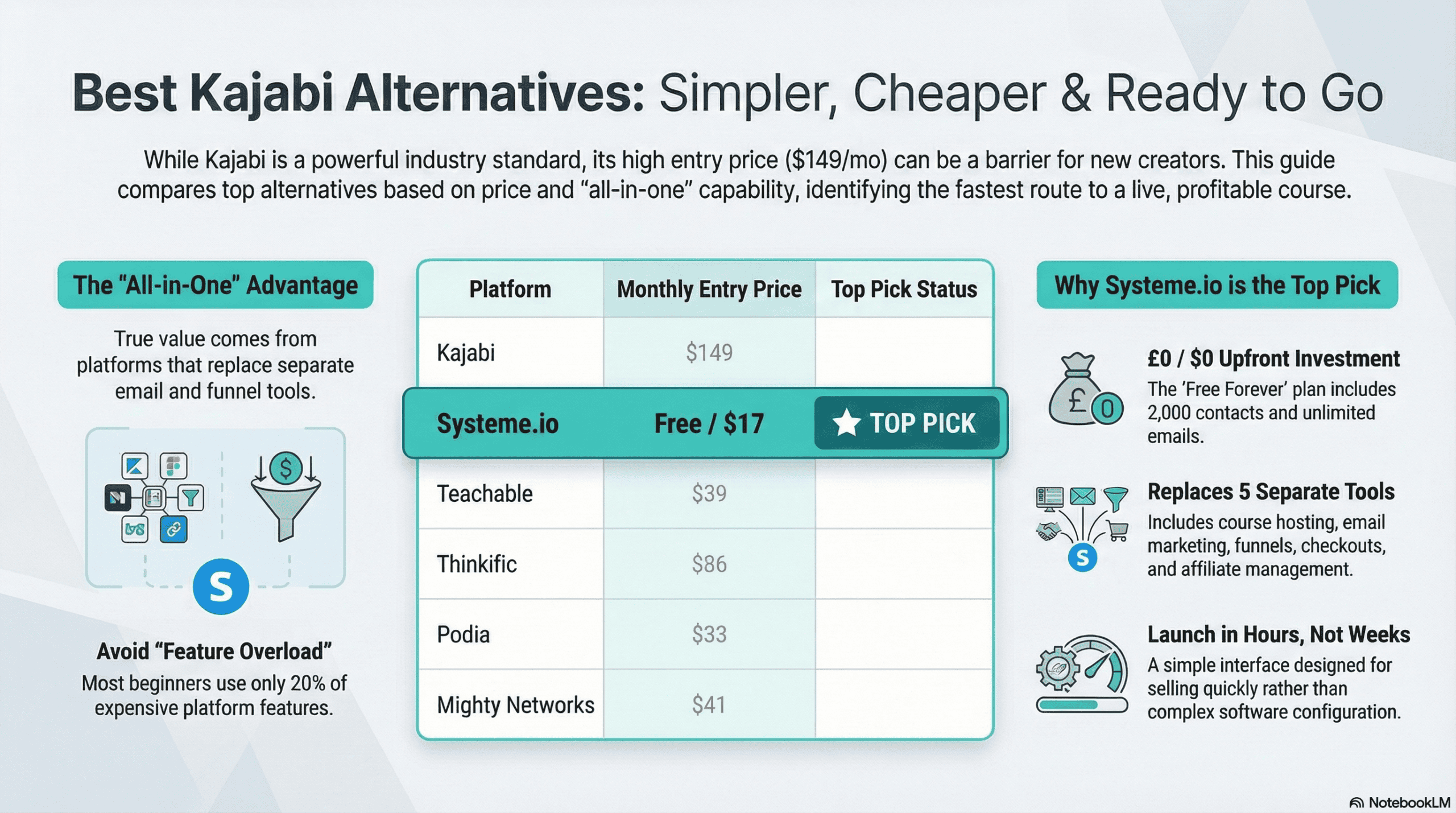
Kajabi has been around since 2010 and is widely considered the premium option in the online course world. It's an all-in-one platform covering course hosting, email marketing, pipelines (their term for sales funnels), website building, podcasting, communities, and more. It looks polished. It works well. And it is genuinely expensive — plans start at around $149 per month, with the more capable tiers running to $399 per month or higher.
Kajabi is expensive by design. It's positioning itself as the professional's choice, and to be fair, it earns that positioning in many respects. But for a creator who hasn't yet generated consistent revenue, it's a big bet to make.
Systeme.io
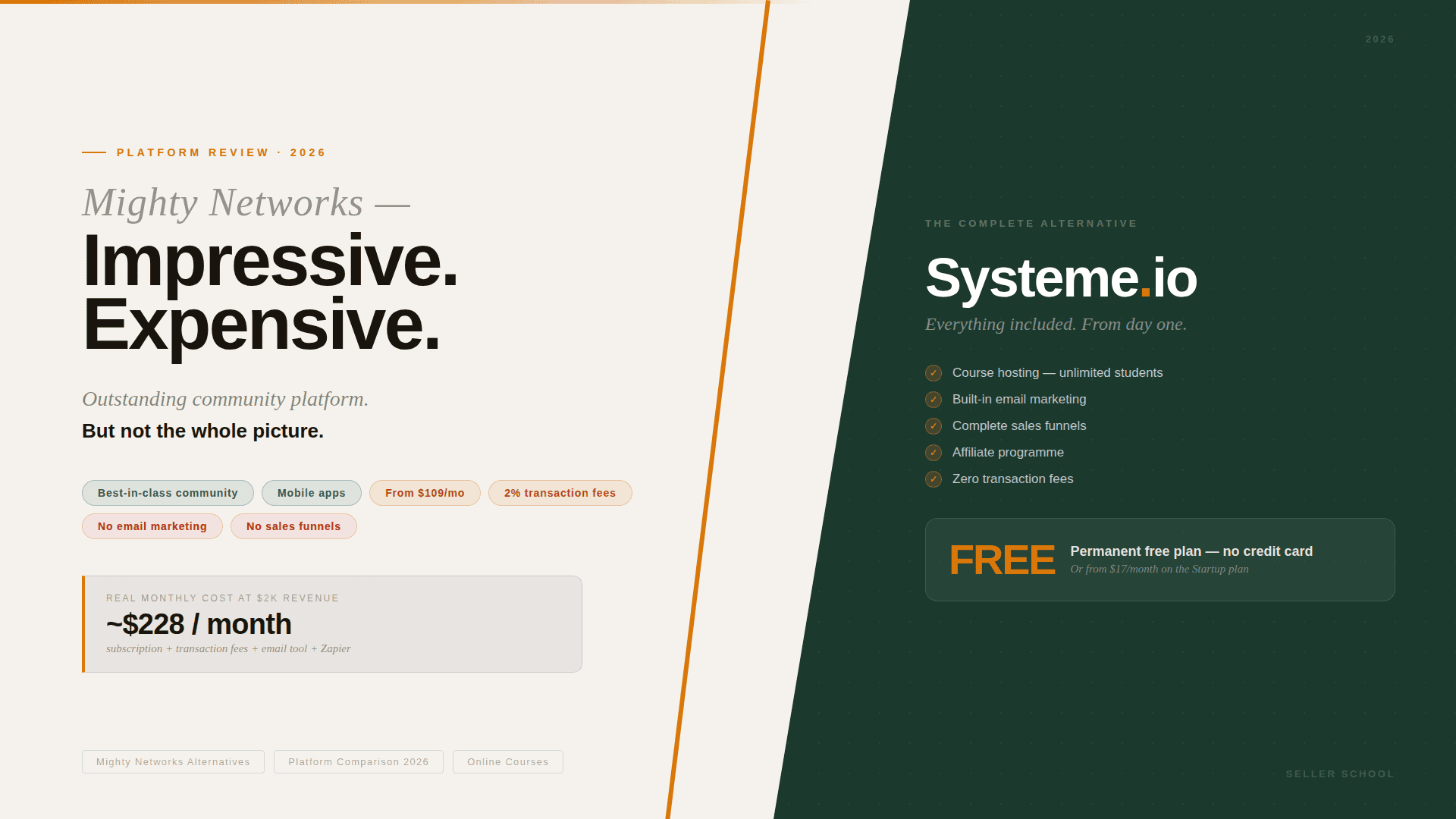
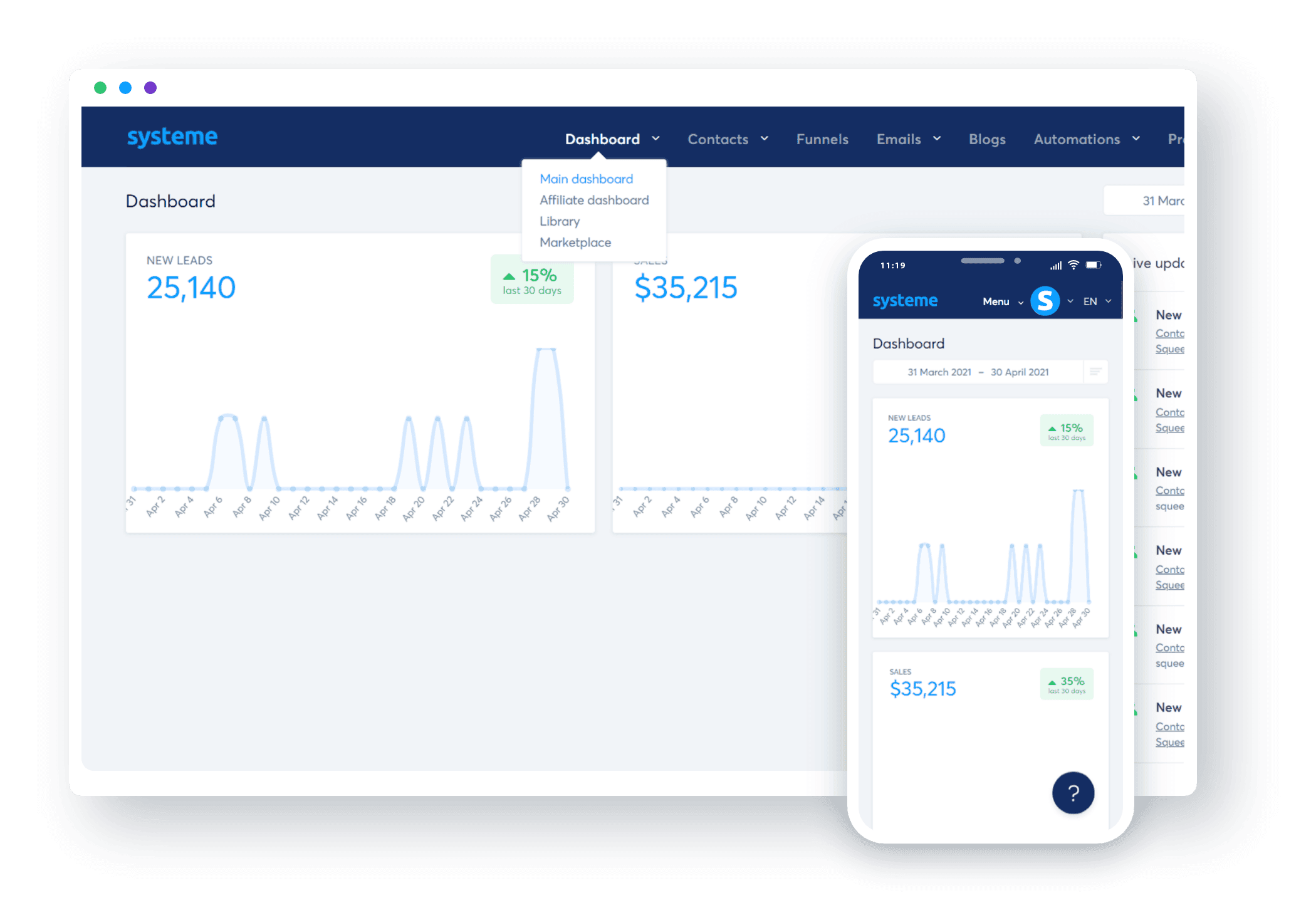
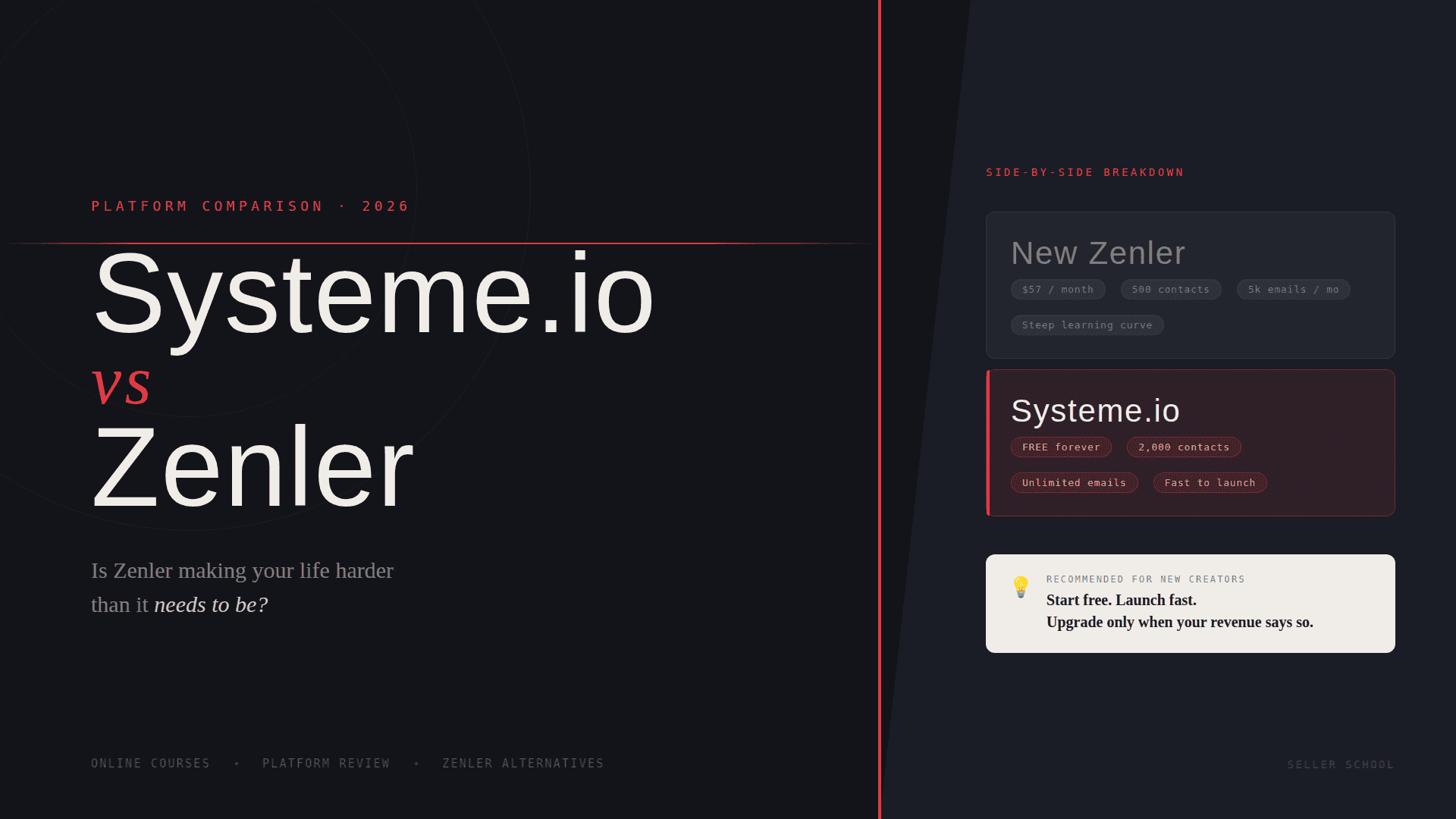
Systeme.io is a French-built platform that launched in 2018 and has grown quickly on the back of one compelling proposition: everything Kajabi does, at a fraction of the price. Their free plan is genuinely free — not a trial, not a teaser — and it lets you host up to three courses, manage up to 2,000 contacts, build funnels, and send emails. Paid plans start at $17 per month (or $14 when paid annually).
The interface isn't as sleek as Kajabi's. The community features aren't as developed. But for someone who needs a working business infrastructure without a four-figure annual investment, it's a remarkably capable tool.
Feature-by-Feature: What Actually Matters
Rather than running through every feature both platforms offer (most of which you won't use), let's focus on the things that actually matter when you're building and launching a course or coaching programme.
Course Hosting and Delivery
Both platforms let you upload video content, organise it into modules and lessons, add PDFs and resources, and drip-feed content over time. Kajabi's student experience is slightly more polished — the course portal feels modern and professional. Systeme.io gets the job done, and the student experience is clean and functional, even if it's not quite as refined.
For most students, the quality of the content matters far more than the sophistication of the platform it's delivered on. Don't let the aesthetics of the delivery portal distract you from what your students are actually there for.
Verdict: Kajabi edges it on polish. Systeme.io is more than good enough for most creators.
Sales Funnels and Landing Pages
This is where Systeme.io genuinely shines. Their funnel builder is intuitive and fast. You can build an opt-in page, a sales page, an order form, and a thank-you page without needing any technical knowledge. Templates are provided, and while they're not the most beautiful things ever designed, they convert, which is what really matters.
Kajabi's pipelines are more sophisticated — you get more design control and more automation options — but they also take longer to learn and set up. If you've never built a funnel before, Kajabi's pipeline builder can feel overwhelming.
Verdict: Systeme.io wins for simplicity and speed. Kajabi wins for advanced customisation.
Email Marketing
Both platforms include email marketing as standard — no need for a separate Mailchimp account or ActiveCampaign subscription. You can build automations, send broadcasts, and tag contacts based on behaviour.
Kajabi's email tools are more powerful, particularly on the automation side, but the layouts and builder are dated. If you're planning complex sequences with lots of conditional logic, Kajabi handles it more elegantly. Systeme.io's email functionality covers the essentials well and is more than adequate for most creators who are getting started.
Verdict: Kajabi wins on depth. Systeme.io covers the 80% most creators ever actually need.
Payments and Checkout
Systeme.io integrates with Stripe and PayPal and handles one-off payments, payment plans, and subscriptions without fuss. Kajabi also integrates with Stripe and allows for similar payment structures. Neither platform charges transaction fees beyond what your payment processor takes.
The checkout experience on Kajabi is more customisable and arguably more professional. Systeme.io's checkout pages are functional and clear. For a new creator, both will do the job.
Verdict: Roughly equal for most use cases. Kajabi slightly ahead on checkout design, but I always hated the Kajabi checkout’s limitations, so used ThriveCart instead when I was a Kajabi customer.
Community Features
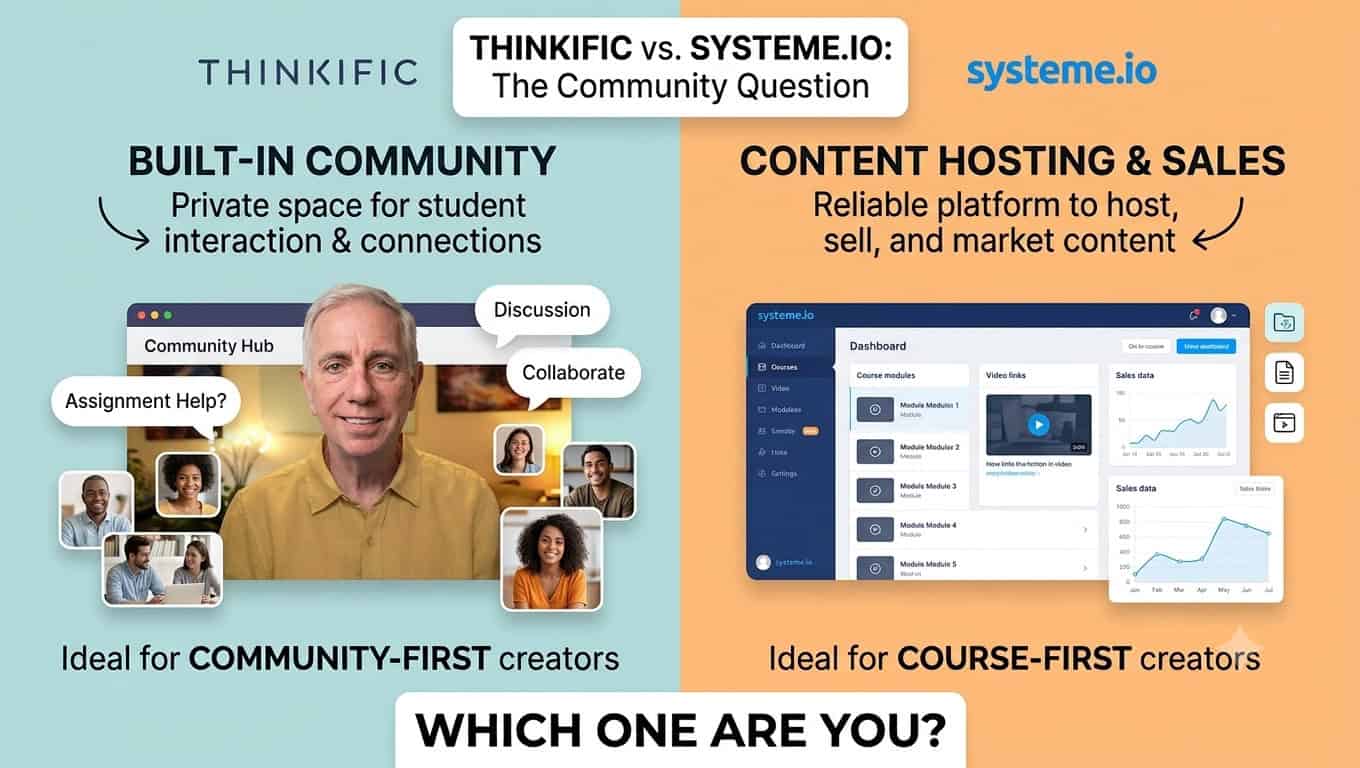
This is one area where Kajabi has a clear advantage. Their community product has improved significantly since acquiring Vibely and is a real competitor to standalone platforms like Circle or Mighty Networks. If you're building a coaching programme where community engagement is central to your offer, Kajabi's community features are worth taking seriously.
Systeme.io doesn't have a dedicated community feature in the same sense. You'd need to rely on a Facebook group or a third-party community platform alongside it.
Verdict: Kajabi wins clearly if community is a core part of your offer.
Websites and Blogging
Both platforms let you build a website without needing WordPress. Kajabi's website builder is more flexible and the templates are better designed. Systeme.io's website functionality is simpler but workable.
If SEO and content marketing are part of your strategy, Kajabi offers a more capable blogging tool. For most new creators, this is a nice-to-have rather than a need-to-have.
Verdict: Kajabi wins on design and SEO capability.
The Honest Price Comparison
Let's talk about the numbers, because this is often the deciding factor.
Kajabi's Basic plan is $149 per month (billed monthly) or $119 per month billed annually. That's $1,428 a year at minimum. Their Growth plan — which unlocks features like removing the Kajabi branding, advanced automations, and affiliate programmes — is $199 per month monthly or $159 annually. And that's before you've made a single sale.
Systeme.io's free plan genuinely lets you start a business. You can host three courses, build unlimited funnels, send email campaigns, and manage up to 2,000 contacts — for nothing. Their Startup plan at $17 per month increases those limits substantially. The Webinar plan at $47 per month is still less than a third of Kajabi's entry price.
Here's a thought experiment: if you launched your course on Systeme.io and spent the money you saved on Kajabi on Facebook ads instead, how many more students might you reach? The platform isn't the product — your course is. The money you save on infrastructure is money you can put into getting in front of the people who need what you're teaching.
What Platforms Push vs. What You Actually Need
After years of using these platforms and talking to other course creators, I've noticed a pattern: most platforms market to your ambitions rather than your current reality.
They show you the vision: automated funnels running while you sleep, an email list in the tens of thousands, a thriving community, a podcast, a membership site, an affiliate programme. It looks incredible. And someday, some of that may be your reality.
But right now, what you actually need is:
- Somewhere to host your course content so students can access it
- A sales or landing page that explains your offer
- A checkout process that collects payment
- A basic email sequence to welcome new students and follow up with potential customers
- A way to keep in touch with your audience as you grow
Boom! That’s it. Both platforms can do all of that. The question is how much you want to pay for it.
The features you're unlikely to use in your first year include: advanced automation logic with complex conditional branches, podcast hosting, native community features, a full website with SEO blog, affiliate programme management, and multiple pipelines with split-testing. These are real features that real businesses use — but they're not where you need to start.
Who Is Each Platform Actually For?
Systeme.io is the right choice if:
- You're just starting out and haven't yet generated consistent revenue from your course or coaching
- You want to test your offer before committing to significant monthly overhead
- You're working to a tight budget and every pound or dollar matters
- You value simplicity over sophistication and want to move quickly
- You're willing to supplement with a Facebook group or third-party community tool
Kajabi makes more sense if:
- You're already generating revenue and can genuinely afford $149+ per month
- Community is a core part of your product — not just a nice-to-have
- You want one polished platform for everything, including your website and blog
- You're managing a team and need more sophisticated automation and reporting
- You value brand aesthetics and want a premium-feeling student experience from day one
Alternatives to Kajabi: Why Systeme.io Stands Out in a Crowded Market
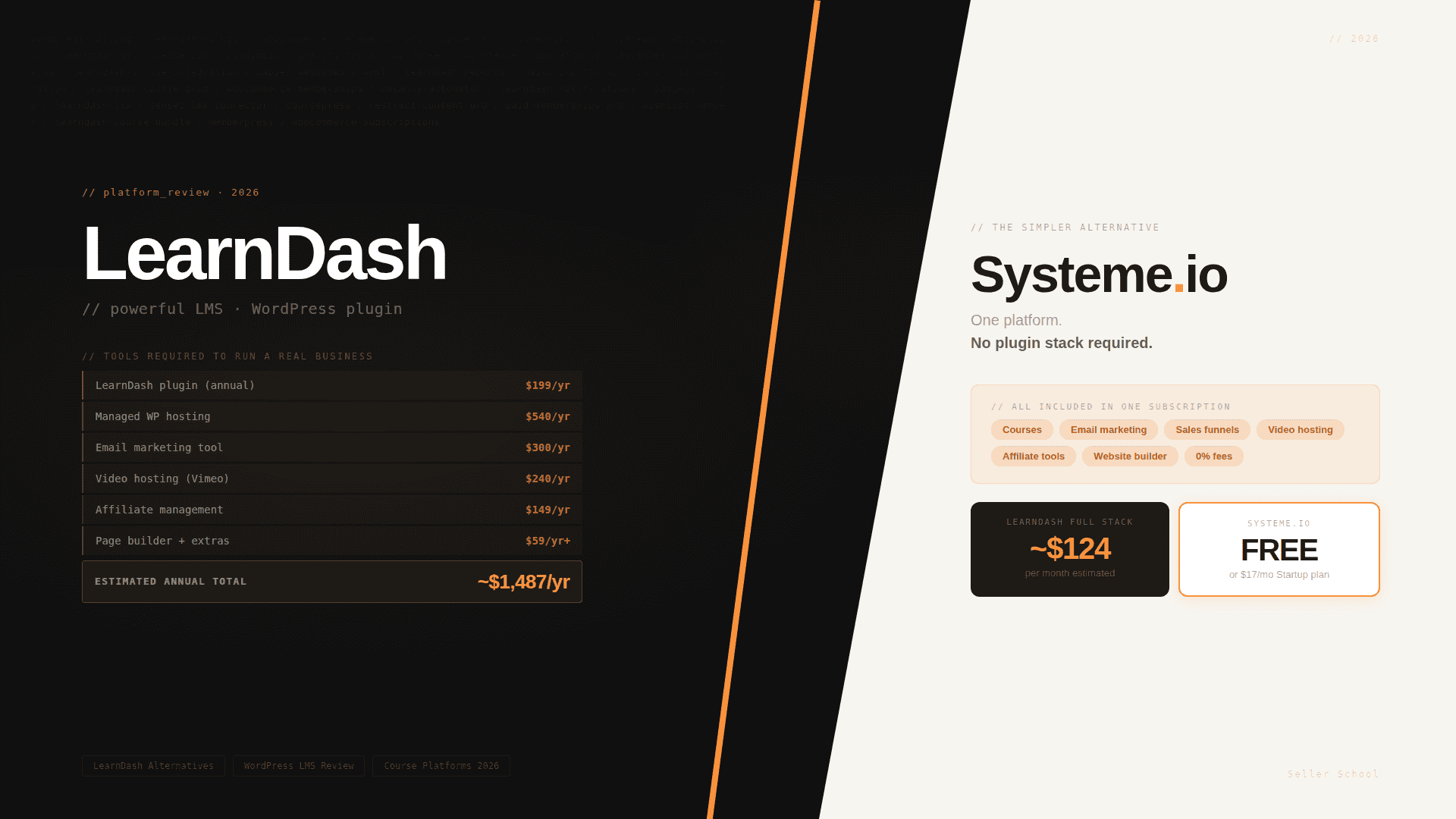
When people search for alternatives to Kajabi, they typically find a long list: Teachable, Thinkific, Podia, Mighty Networks, LearnDash, Circle, and more. Each has its merits, and this comparison has focused on Systeme.io specifically because it represents the most complete alternative for creators who want to do everything in one place without the Kajabi price tag.
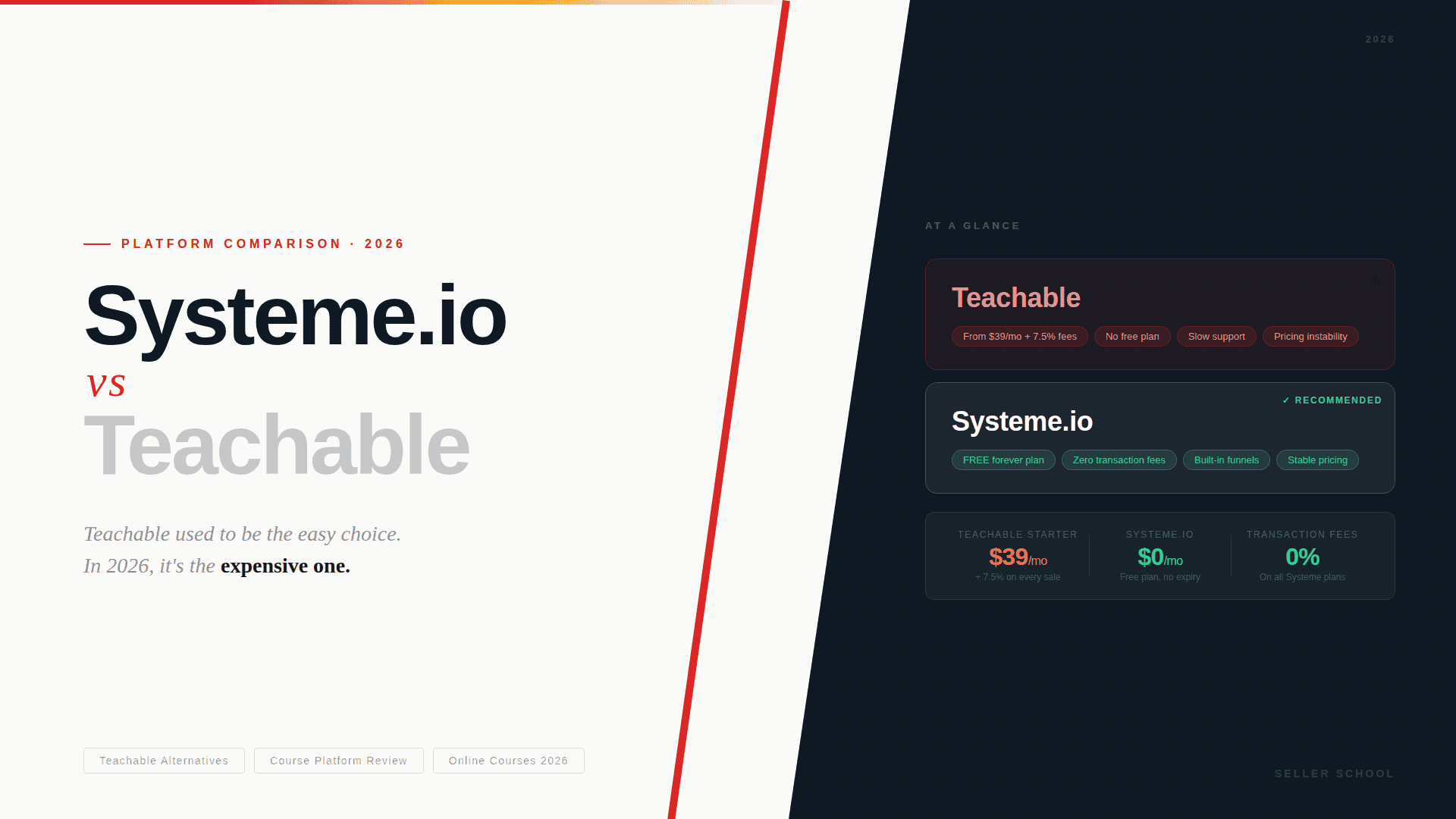
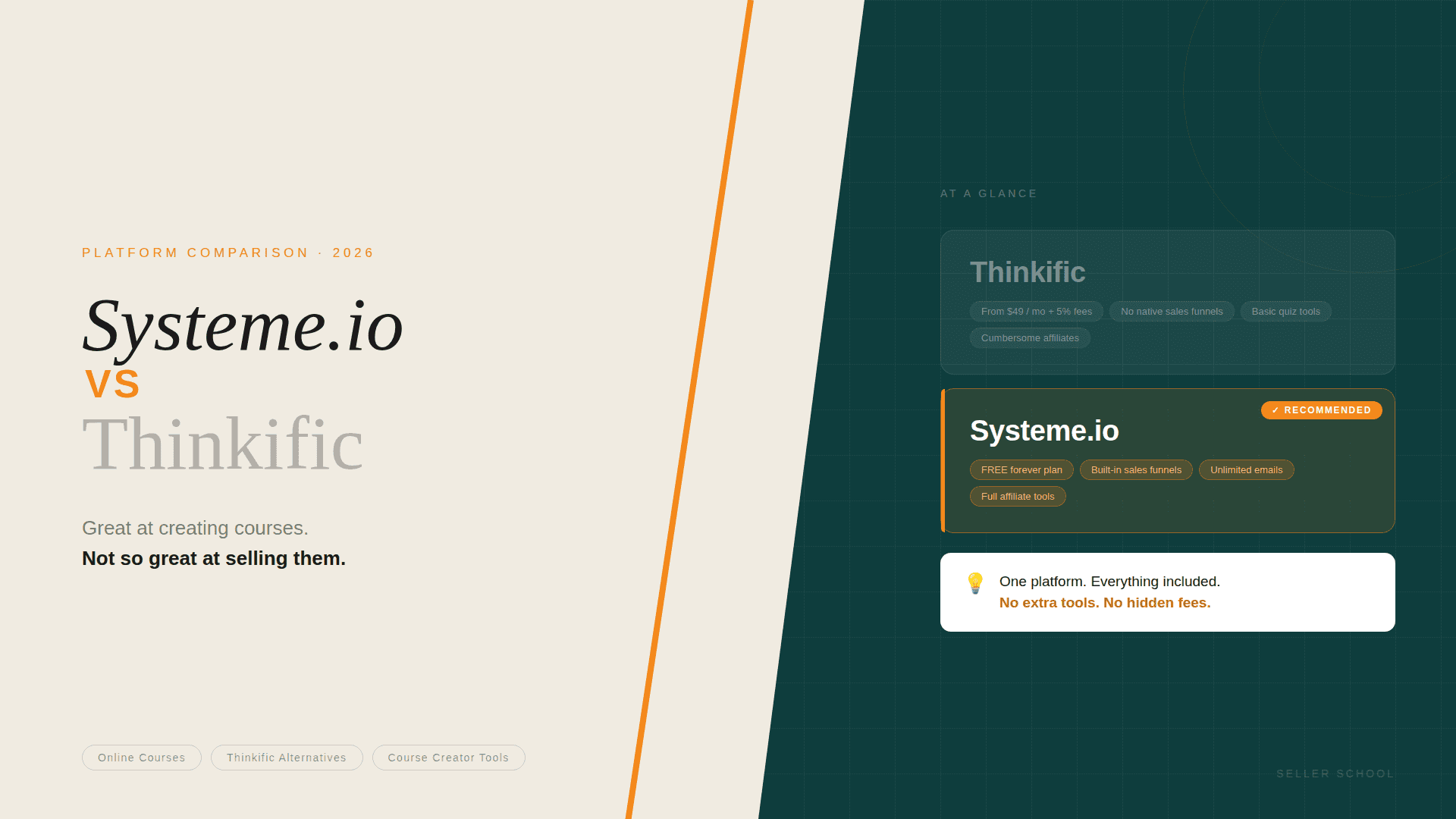
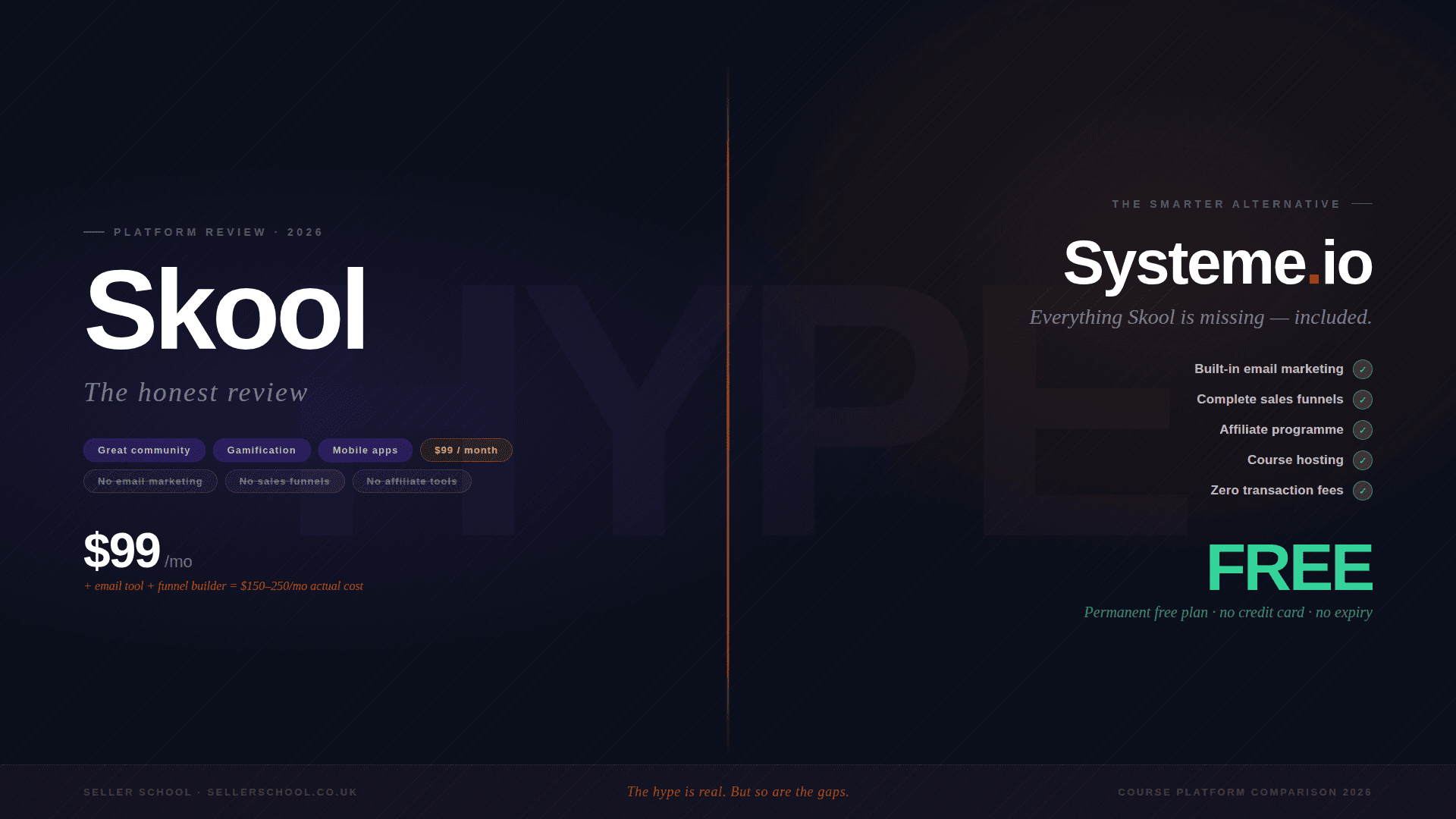
Teachable and Thinkific are strong on course delivery but lack the funnel-building and email marketing capabilities that Systeme.io bundles in. Podia is a solid mid-market option but more expensive than Systeme.io at the entry level. Circle is excellent for community but not designed as a course platform.
Systeme.io's unique advantage is that it genuinely replaces the combination of tools many new creators cobble together: a course platform, an email marketing tool, a funnel builder, and a checkout solution. Getting all four for free (or $17 a month) is, frankly, remarkable. It's the online course platforms comparison that most frequently surprises people when they see the pricing side by side.
When you're figuring out how to host an online course, the instinct is often to default to the name you've heard most. Kajabi has excellent brand recognition. But brand recognition isn't a reason to spend an extra $1,200 to $2,400 a year on a platform before you've proven your course concept.
The Most Common Mistakes When Choosing a Platform
Based on my own experience and conversations with other creators, here are the mistakes I see most often:
1. Choosing based on features rather than needs.
A feature you don't use is a cost you don't need. Audit what you actually need to launch and let that drive the decision.
2. Paying before you've proven the concept.
Why pay $149 a month before you know if anyone will buy your course? Start free or cheap, validate the idea, then invest in better infrastructure.
3. Letting platform-switching paralysis stop them from launching.
Yes, it's a mild inconvenience to move platforms if you grow out of one. But the cost of not launching while you deliberate is far higher. Pick something and go.
4. Equating price with quality.
An expensive platform doesn't make your course better. Better content, clearer positioning, and more consistent marketing will do more for your revenue than any platform upgrade.
5. Ignoring the learning curve.
A platform you can actually use is more valuable than a platform that can theoretically do everything. Systeme.io is notably easier to get started with than Kajabi. Time spent learning the platform is time not spent building your course or marketing it.
What I'd Actually Recommend (And Why)
If I were starting over today — knowing what I know now — I would not begin on Kajabi. I would start on Systeme.io, get my first course live, make my first sales, and scale from there.
The goal in the early stages isn't to have the most sophisticated infrastructure. It's to reach the people who need what you're teaching and help them get a result. Everything else — beautiful design, advanced automation, community features — is a second-chapter problem.
Once you've hit that first £10,000 milestone, the question of whether to invest in Kajabi or stay with Systeme.io becomes a much easier conversation to have. You've got revenue. You understand what features you actually use. You can make an informed decision rather than an aspirational one.
Until then, the best platform is the one that gets you moving.
Ready to Start? Here's the First Step.
If you've read this far and you're thinking, "okay, let me actually try Systeme.io and see what it can do," then I'd encourage you to take the logical next step: set up a free account and have a proper look around.
The free plan isn't a limited trial that expires. It's a working account that lets you build and launch a real business. You can have your first course live within a week if you commit to it.
If you like, you can get a free, fully functional Systeme.io account here without even needing a credit card: https://iosysteme.com
I put together a simple tools comparison guide for course creators that walks through exactly what you need at each stage of building your course business. You can access it here: https://pro.sellerschool.co.uk/course-creators-tools-comparison.
No tricks, no upsells — just a clear comparison of what tools actually matter when you're getting started, and a free account that gives you everything you need to launch.
Your course doesn't need to be perfect. It needs to be out there. The platform you choose should make that easier, not harder — and it definitely shouldn't cost you £1,500 a year before you've proven your idea works.
Go build something worth teaching. The rest will follow.
---
About the author: This article draws on several years of hands-on experience building and selling online courses using multiple platforms, including Kajabi, Systeme.io, Teachable, and others. The goal is always the same: to cut through the noise and help creators make smart, practical decisions that get them to results faster.